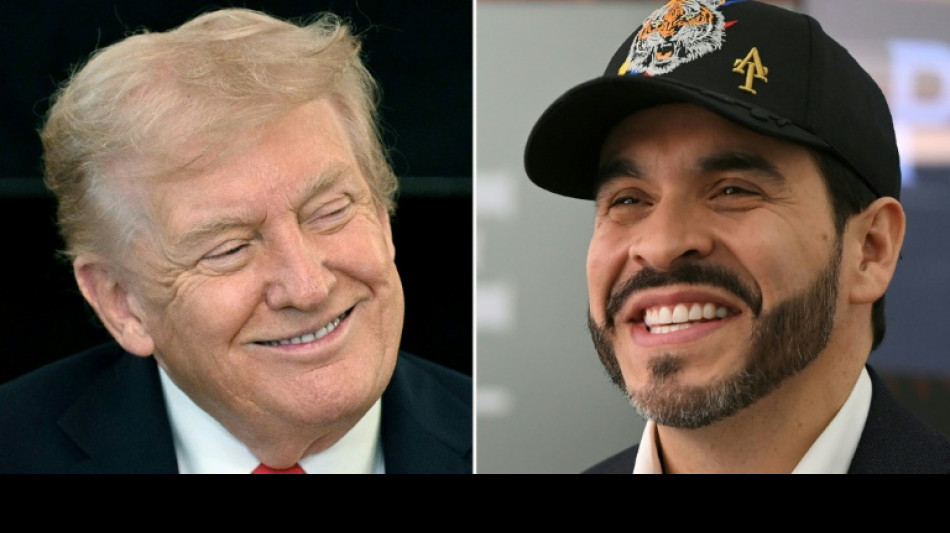
Trump consolidates rightward shift in Latin America / Photo: Jim WATSON, Luis ACOSTA - AFP/File

 How Britain's mapmakers track climate change

 Australian delivery drivers win 'world-leading' pay rise

 Meta meets its own 'tobacco' moment in court

 Art or medicine? Japan's cosmetic tattoo artists in limbo
 Rybakina ousts Osaka to book Toronto semi-final against Gauff
 Colombia rescuers find woman alive as quake death toll passes 240

 Charges dropped against Bondi Beach attack hero
 Parched and desperate for rain, Kazakhstan turns to cloud-seeding
 The perfect storm that turbocharged Venezuela's twin quakes
 2.4 million girls banned from Afghan schools since Taliban return: UNESCO
 Colombians dig through rubble as quake death toll surpasses 240
 New Zealand's ruling party meets to decide PM Luxon's fate

 Total solar eclipse to spellbind Europe

 Jodar, Nakashima to make Masters semis debuts in Montreal

 Chilean veteran Sanchez signs with MLS club Montreal
 Cristiano Ronaldo marries long-term partner Georgina Rodriguez

 Oil prices higher, stocks mixed ahead of inflation report
 Jacobs into 100m final with eye on third title
 Eight-try New Zealand cruise to tour victory over Sharks
 Trump's secret plane swap triggers questions and confusion
 California calls Paramount's threat to leave state 'blackmail'

 PSG 'want to win everything', says Luis Enrique

 Barred from elections, Russia's anti-war party vows to fight on

 Jaissle states Newcastle ambition but urges patience

 NBA star Cooper Flagg trading card a slam dunk for lucky buyer
A victory by hard-right candidate Abelardo de la Espriella in Colombia's presidential election was another diplomatic victory in Latin America for US leader Donald Trump, who is pushing for the region to crack down on organized crime and migration.
Since Trump returned to the White House a year and a half ago, Argentina, Bolivia, Chile, Colombia, Costa Rica, Ecuador and Honduras have shifted to the right or consolidated conservative realignments.
The shock US ouster of Venezuela's Nicolas Maduro in January has led to unprecedented collaboration with the administration of interim president Delcy Rodriguez, who remains in power as she bends to Washington's demands.
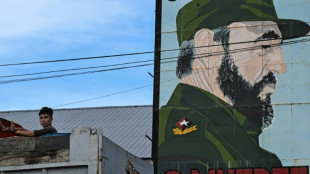
The Trump administration now has its sights set on Cuba, enforcing a choking oil embargo that has forced the communist government to hastily adopt economic reforms.
This heavy-handed approach has drawn barely any protest from Mexico and Brazil -- the last major leftist strongholds in Latin America -- or from Colombian President Gustavo Petro, whose days in office are numbered.
Millionaire lawyer-turned-politician De la Espriella "speaks the language many in Washington want to hear: tougher enforcement," said Rebecca Bill Chavez, president of the Inter-American Dialogue think tank.
Trump had enthusiastically backed De la Espriella in the Colombian vote and has pledged stronger cooperation "which will bring new levels of Greatness for both of our Countries!"
- Militarized approach -
In March, following the deadly military operation to seize Maduro in Caracas, Trump established the "Shield of the Americas" grouping alongside allies in Latin America to boost regional security.
Evan Ellis at the Center for Strategic and International Studies said a conservative-led Colombia will likely join the effort.
"I would indeed expect greater Colombian cooperation in supporting US actions against designated terrorist groups across the region, far beyond Colombia," he told AFP.
One point of friction in the ambitious US security agenda had been discord between Ecuadoran President Daniel Noboa and Colombia's Petro over anti-narcotics military operations conducted by Washington and Quito.
"With Daniel Noboa, de la Espriella, and Washington all pushing in the same direction, the politics are as aligned as they have been in years," Chavez said.
Across the region, several conservative governments have adopted Trump's militarized anti-narcotics strategy, as well as the mass incarceration model championed by El Salvador's Nayib Bukele.
Panama is preparing to announce changes to its prison system in July following inmate escapes, while Honduras plans to purchase drones from Ukraine for its anti-drug efforts.
- Ideological shift -
In Washington, debate at the Organization of American States underscores that this ideological shift is not being driven solely by Trump.
Latin American views on organized crime and migration pressures have shifted right, as evidenced by Chile, where ultra-conservative Jose Antonio Kast won the presidency on pledges of harsh crackdowns.
The solidarity that many Latin American nations showed Cuba over the years has largely evaporated.
"The next step, as in Venezuela, is logically (US) military demonstrations, possibly leading to a military strike," Ellis said.
The political winds blowing in the White House's favor in Latin America stand in contrast to Trump's difficulties at home, where his party could lose control of Congress in November's midterm elections.
This is compounded by constant friction with Europe, including with long-standing allies, and headaches over Iran and Israel.
V.Fontes--PC