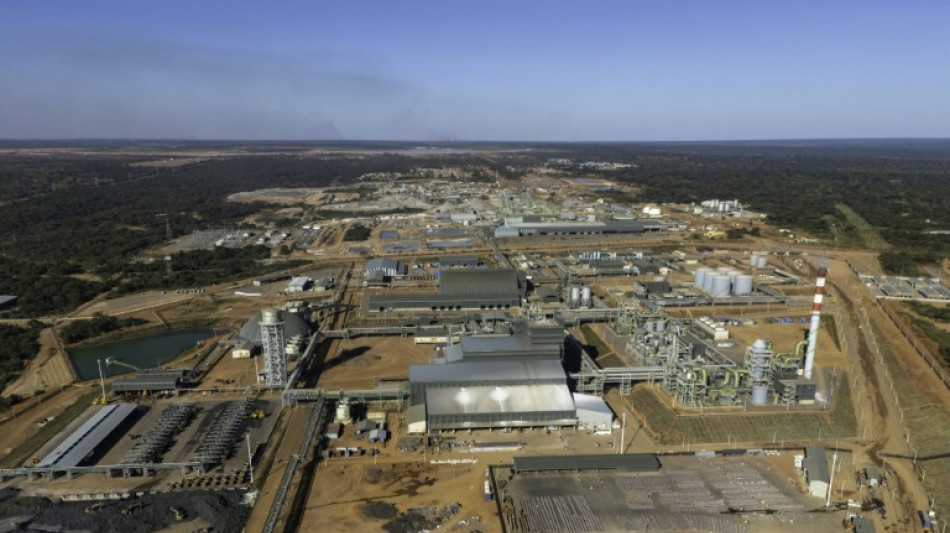
Red rocks yield coveted minerals in DR Congo / Photo: GLODY MURHABAZI - AFP

 2.4 million girls banned from Afghan schools since Taliban return: UNESCO
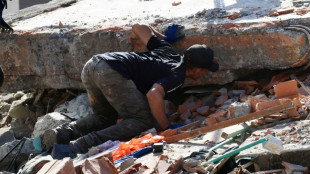
 Colombians dig through rubble as quake death toll surpasses 240

 New Zealand's ruling party meets to decide PM Luxon's fate
 Total solar eclipse to spellbind Europe

 Jodar, Nakashima to make Masters semis debuts in Montreal
 Chilean veteran Sanchez signs with MLS club Montreal
 Cristiano Ronaldo marries long-term partner Georgina Rodriguez

 Oil prices higher, stocks mixed ahead of inflation report
 Jacobs into 100m final with eye on third title
 Eight-try New Zealand cruise to tour victory over Sharks
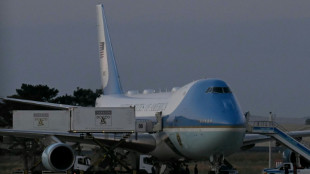 Trump's secret plane swap triggers questions and confusion
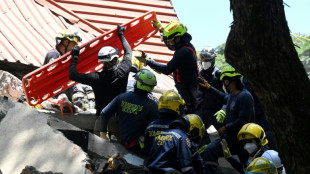
 California calls Paramount's threat to leave state 'blackmail'

 PSG 'want to win everything', says Luis Enrique

 Barred from elections, Russia's anti-war party vows to fight on
 Jaissle states Newcastle ambition but urges patience

 NBA star Cooper Flagg trading card a slam dunk for lucky buyer
 ForumPay Expands Payment Infrastructure with New Card and Bank Transfer Acceptance Solution
 Oil prices higher, stocks flat ahead of inflation report

 Orban-critic ex-judge becomes Hungary president after predecessor ouster
 US rights groups sue Trump over ICC sanctions

 Sphere 3D Corp. (Nasdaq: ANY) Attracts 6.5% Stake from Turnaround Bitcoin-Mining Investor
 Oil prices lower, stocks higher as Hormuz doubts drag on
 Colombia scrambles to find survivors as quake kills 181
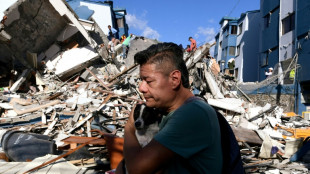 Colombia scrambles to find survivors as quake kills 169

 MEXC Report: 74.2% of Traditional Finance Users Have Shifted Their Trading Activity to Crypto Exchanges

In vast warehouses at the Kamoa copper mine in the southeastern Democratic Republic of Congo, mountains of reddish rocks pile up as the machines grind away day and night.
The deposit, reputed to be the largest in Africa, is one of the Democratic Republic of Congo's hidden treasures -- which are at the centre of a global race for critical minerals.
In the ultra-modern installations, thousands of workers churn out the red gold -- coveted by international markets for its exceptionally high copper content.
China has long been mining it, and now the United States is vying for a share in the country's mineral wealth, seeking to challenge Beijing's hold on the strategic resources used to make cars, phones and weapons.
"Kamoa at the moment is one of the largest copper mines in the world" with capacity to produce 300,000 tonnes a year, its managing director Annebel Oosthuizen told AFP.
It is "growing to become the largest copper mine in Africa and probably the fourth largest copper mine in the world", aiming to churn out half a million tonnes from 2028, she added -- "right up there in terms of world capacity".
- Mineral riches, poverty -
The DRC is one of the poorest countries in the world.
Of its roughly 100 million inhabitants, nearly two in three live below the poverty line, according to official statistics.
Yet the vast central African nation is also one of the world's biggest sources of critical metals indispensable to global industry.
It is Africa's top copper producer, with 3.4 million tonnes in 2025.
The ore mined at Kamoa has a copper content of 2.8 percent, four times the global average.
It is also the world's leading producer of cobalt, with 68 percent of world supply.
All this puts it at the heart of Chinese and US economic interests and they actively covet it.
Copper and cobalt are essential for the manufacture of smartphones, computers, cars and batteries.
Copper conducts electricity, while cobalt allows that energy to be stored.
These minerals are also vital to aeronautics, defence and renewable energy.
According to the United Nations Conference on Trade and Development (UNCTAD), global demand for copper is expected to rise by more than 40 percent by 2040, while demand for cobalt is set to quadruple by 2030.
"In terms of copper stocks available and what will be required, one has to... triple the current copper that's available over the next couple of years" at Kamoa, Oosthuizen told AFP.
- US-DRC deal -
Kamoa Copper S.A. is a joint venture owned in equal parts by Canada's Ivanhoe Mines and China's Zijin Mining, with the Congolese state holding a 20-percent minority stake.
China has invested massively in the country for nearly 20 years and is estimated to account for 70 percent of mining activity, according to the Congolese chamber of mines.
But in December, Kinshasa accepted a strategic partnership agreement with Washington -- part of a peace accord for the DRC, which has been plagued by conflict for more than 30 years.
The accord has so far failed to end the fighting in the violence-stricken east of the country but an initial list of 25 mining sites has been submitted to Washington for potential investment or exploitation licences.
In February, Swiss commodities giant Glencore signed a memorandum of understanding with the US-led Orion Critical Mineral Consortium to grant the latter a potential 40-percent stake in the Swiss conglomerate's mining assets in the DRC.
"This will allow the United States to benefit from production coming out of the DRC through Glencore," Marie-Chantal Kaninda, president of Glencore DRC, told AFP.
- Chinese interests -
Kolwezi, the closest town to the Kamoa site, is encircled by a dozen giant industrial mines.
They have earned it the nicknames "Copper capital" and "World cobalt capital".
Along the neatly paved road linking the city centre to the small, pristine local airport, many shops bear signs in Chinese characters.
English is widely spoken in local hotels and restaurants catering to a foreign business clientele.
"I was born and raised in Kolwezi. I've always seen mines and Chinese people here," said 26-year-old taxi driver Kevin Mwarabu.
Now DRC officials have indicated they are content to do business with both the big powers.
The country's subsoil remains largely under-explored.
Even so, the mining sector "drives the entire Congolese economy", said Economy Minister Daniel Mukoko.
The US–China rivalry in the global race for strategic minerals "is not our war", said Eric Kalala, head of the state-owned General Cobalt Company (EGC), which holds a monopoly over the marketing of non-industrial cobalt production in the country.
"There is room for everyone," he said at the Katanga Business Meeting in Kolwezi in May.
"The DRC covers 2.4 million square kilometres (0.9 million square miles) and across all that land there is exploration to be done."
A.Silveira--PC