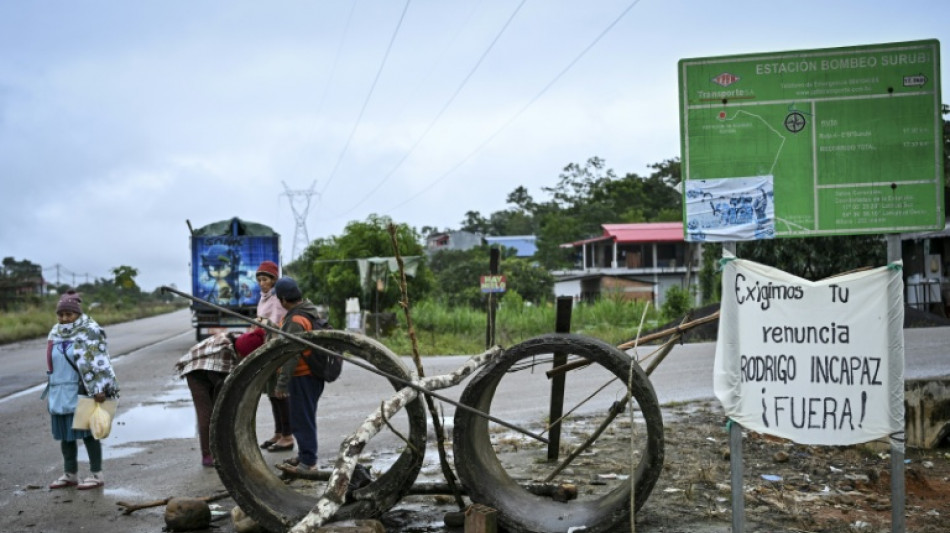
'Struggle continues' in Bolivia's Morales heartland / Photo: MARTIN BERNETTI - AFP

 All Blacks knew Nonu would perform solo Haka - coach Rennie

 Britain's Glave upstages Jacobs to win European 100m gold

 Greece's Tentoglou wins fourth European long jump title

 Doctors ignored 'warning signs' before Maradona's death, court hears

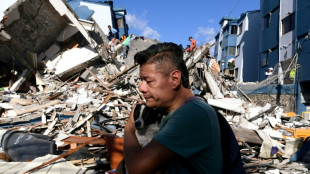
 Pereira, the 'zombie city' devastated by Colombia's earthquake

 UN says 2 staff arrested by Afghan intelligence agency

 Colombia scrambles to find survivors as quake kills 240
 Ramsay-Peaty out of medals as Italy's Martinenghi wins European gold

 AI firm Manus to resume 'independent' operations after China blocks Meta deal

 Caught between great powers: the cautionary tale of Manus

 Heatwave hits evicted families sleeping rough in Rome

 US company stokes Greenland tensions by unloading drilling gear

 Cambridge academic in plagiarism row publishes memoir

 LeBron's Sixers hope to spoil Knicks party on NBA opening night

 UK 'on course' to record warmest summer for second year in a row

 Spotify to launch badge identifying AI music

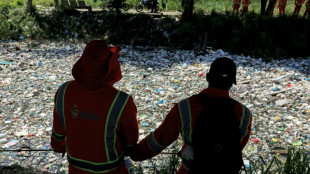 New plastic treaty document criticised for weaker ambition

 Hungary parliament approves Orban-critic judge as president
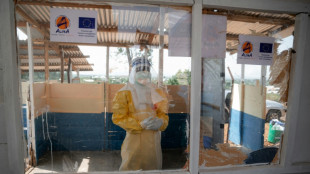 Ebola outbreak in DR Congo kills more than 2,000
 ChargeAfter Powers BYLD Finance Expansion into Consumer Financing for Equipment Retailers

 MEXC Upgrades RealStocks With Three New Features to Enhance U.S. Stock Trading Experience

 Israel demolishes home of slain Palestinian involved in deadly West Bank clash
 Liverpool fans seek clarity on Bezos bid to buy stake

 Solar eclipse sparks scramble for protective glasses across Europe

 Oil prices jump as US-Iran deal hopes falter

Bolivia's protest ban means nothing to coca growers loyal to former socialist president Evo Morales as they proudly defy the government measure.
Workers and Indigenous communities have spent weeks railing against Bolivia's worst economic crisis in decades, erecting roadblocks that paralyzed the country and calling for US-backed President Rodrigo Paz to step down.
Attempting to quell the movement, Paz last Saturday declared a state of emergency that authorizes him to outlaw protests, deploy the army and remove roadblocks that choked supplies to several cities.
But coca growers in the central Chapare region show no sign of backing down.
Supporters of ex-leader Morales -- whom Paz blames for fomenting the recent unrest -- line Chapare's winding roads, ready to reinstate protest blockades at a moment's notice.
These coca growers wave signs calling for Paz to resign and are cheered on by other locals.
"The struggle continues until this damn government is gone," 39-year-old Rosalia Vilca told AFP as she sold Bolivia's traditional "salchipapa" dish in Shinahota town's main square.
"We'll rise up here to protect Evito because with him we've lived 14 years of happiness," Vilca said, adding that Paz should come to Chapare "if he's man enough."
- No surrender -
The impoverished region's rainforests provide perfect cover for Bolivia's first-ever Indigenous president Morales, who is in hiding to escape charges of trafficking a minor.
He denies the allegations and his followers shield him from arrest, but Paz is planning on escalating efforts to capture his political foe.
Morales on Monday announced the temporary breakdown of the final roadblocks, insisting the move was "not a surrender."
In the small town of Lauca Ene, a loyal guard uses makeshift barricades, spears and shields to protect their beloved leader from arrest.
"I'm not going to give up," the ex-president told AFP in an interview Tuesday.
In office from 2006 to 2019, Morales first made his name as a union leader.
He is accused of having relations with a 15-year-old girl, with whom he is alleged to have fathered a child while in power.
The teenager's parents allegedly consented to the relationship in exchange for benefits.
- 'Prepared to give our lives' -
Paz has also claimed, without evidence, that Morales profits financially from drug trafficking.
Chapare cherishes the coca plant, which grows in small rural plots and is laid out to dry under the blazing sun along stretches of road.
Used in cocaine production, over 90 percent of the region's crop does not pass through authorized markets, according to the United Nations Office on Drugs and Crime.
But it doesn't all end up in drug trafficking either.
Local communities follow age-old Indigenous customs of chewing coca to ease fatigue, hunger and cold.
"In the cities they say that we people from Chapare are drug traffickers, but that's not true," said Shinahota bus terminal worker Zulma Torres, 42.
"We work, and we also suffer due to the blockades, even though they're for a just cause," Torres said. "We're prepared to give our lives for Evo."
- 'They don't want us' -
Something else has popped up on Chapare's roadsides: stalls selling jerrycans of gasoline at exorbitant prices.
The illegal market emerged following a dire fuel shortage in the landlocked South American nation that began before the blockades.
"We're discriminated against by the central government. They don't want us at all," said driver Nicolas Garcia, 52, complaining that fuel no longer reaches the area.
Power outages have also affected Chapare in recent days, which Morales has claimed amounts to government retaliation.
"This is only going to stir up the Bolivian people even more," said Shinahota shopkeeper Mario Flores, 51.
"They blame Evo for financing the blockades, but even if we're country people who haven't studied, we know that the government is at fault."
G.M.Castelo--PC