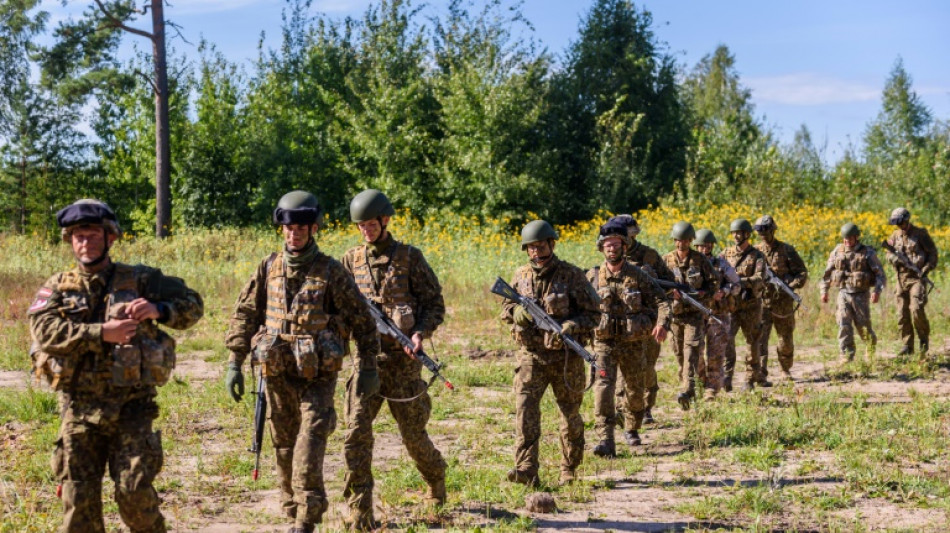
Neighbouring Russia, Latvians prep for war / Photo: Gints Ivuskans - AFP

 US Retail Sales and Fed Minutes Set Up a Critical Test for Consumers
 MotorTrend’s Top Hybrid Vehicle Picks for 2026

 Asian Markets Slide as AI Concerns Hit Chip Stocks
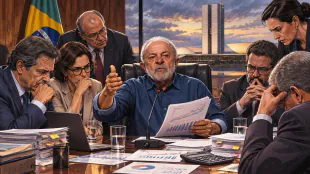 Brazil Faces Debt and Inflation Test as Lula Prepares Fourth Term

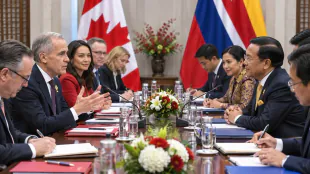 Canada Expands Asian Trade Push as US Negotiations Resume

 Jennie Earns Two Grammy Nominations as Major K-pop Agencies Boycott New Asian Pop Category
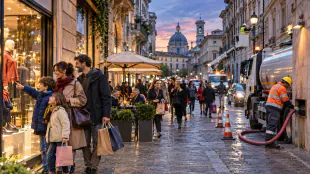 Italy Raises 2026 Growth View but Warns Energy Will Keep Inflation High
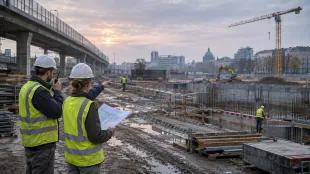
 UK Economy Grows 0.7% in Third Quarter as Services Lead Expansion

 India's Retail Inflation Reaches 6.09% as Food Prices Accelerate
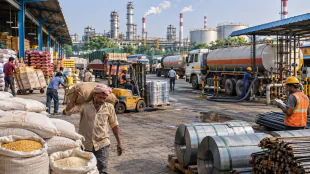
 China's October Activity Data Reveal a Weak Start to the Fourth Quarter

 Critics Demand Stronger Action from Jeffries and Schumer Following Democratic Wave
 Grand Theft Auto VI: Inside the Decade-Long Development of a Billion-Dollar Cultural Phenomenon

 Maldon Sea Salt Uses Imported German Rock Salt in Production Process
When war erupted in Ukraine, the head of Latvia's fashion chamber Dita Danosa did not hesitate to become an army reservist, swapping her usually stylish clothes for military fatigues.
"I really felt I couldn't be passive and just watch television," the 49-year-old told AFP at the Mezaine military training ground in western Latvia.
"So I decided, yes, the national guard was the place for me."
Since Russian forces invaded Ukraine in February, Baltic states like Latvia -- which shares a border with Russia -- are anxious about what Moscow might do next.
This fear has led to a four-fold increase in volunteers, like Danosa, for the army's reserve force known as the national guard, or Zemessardze in Latvian.
"When the war started, all European values were endangered," Danosa said, punctuating the silence between the bursts of two bullets.
While Latvia's EU and NATO membership reassured her, Danosa said she felt under threat "because Russian aggression is unpredictable and we don't know what can happen".
Dressed in full combat clothing, including a magazine belt, she recalled that Latvia has a "history of occupation". The former Soviet republic regained its independence in 1991.
Mezaine's location is symbolic. During the Cold War, it was home to the Skrunda-1 radar station, whose two large installations were to alert the Soviet Red Army in the event of a missile attack from the West.
Now the area is used for, among other things, urban guerrilla training.
- 4,000 applications -
Created in 1991, the national guard is the largest component of armed forces in the country of 1.85 million people.
Made up of some 9,600 volunteers, it is divided into four brigades. The national army meanwhile has around 6,000 professional soldiers.
The guard's commander-in-chief Egils Lescinskis hailed the "great increase" in volunteer interest and said fewer people were dropping out.
He said they had received around 4,000 applications since the beginning of 2022, up from around 1,000 candidates on average each year.
Around 20 percent of the volunteers this year are women.
The volunteers take part in 21 days of basic training, usually spread over seven weekends, after which they are ready to serve when called up.
On a recent Saturday, around 30 volunteers armed with rifles in camouflage fatigues waited in total silence at the edge of a thick forest.
Their only communication as they prepared to attack a convoy was through hand gestures or pulling on a wire.
When the vehicle arrived, the burst of heavy gunfire was deafening. A few seconds later, a car horn pierced through the air.
The driver, head against the wheel, played dead.
- 'Protect our loved ones' -
Training includes "everything from basic survival to understanding what is war," said recruit Rudolfs Aboltins.
"How to take up arms or even how to present yourself or talk to people, how to engage with unexpected situations in society as well as in combat," he added.
Like Danosa, Aboltins joined the guard after the invasion.
Although he felt no immediate threat to Latvia, the "atrocities" in Ukraine mean "what I'm doing right now could matter in the future", he said.
"Many of us have pacifist tendencies. We took arms and started learning to shoot because we want to be able to protect our loved ones," he told AFP.
After basic training, he will take part in a specialised course to improve communication between civilians and troops.
Others who wish can also specialise in areas such as anti-tank warfare, medical aid or train to become snipers.
"My wife said at least one family member needs to join and get some basic skills," said 35-year-old entrepreneur and father-of-two Juris Kukulis.
"So if something happens, we know what to do."
P.Serra--PC

