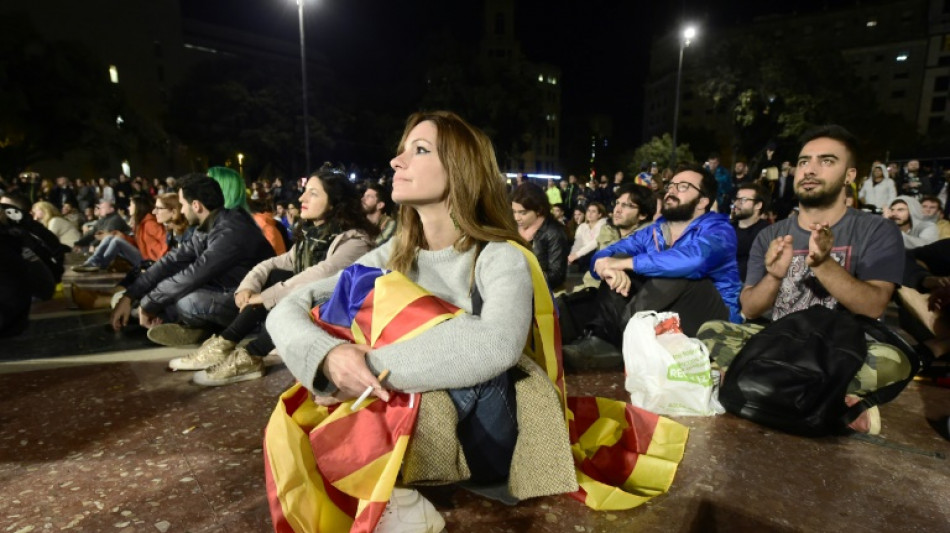
Catalan separatists in crisis 5 years after referendum / Photo: JOSE JORDAN - AFP/File

 What's behind the Pakistani strikes on Afghanistan?
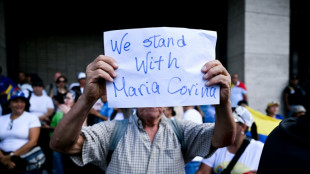 Hundreds protest for return of Nobel peace laureate Machado to Venezuela

 Aubameyang to miss two months for Deportivo after knee surgery

 Newsom says Trump presidency 'as we know it' ends in November
 Stocks fall as oil prices rise and bonds back under pressure

 Russell leads Mercedes 1-2 in Azerbaijan GP practice

 Ukrainian kills priest, wounds four at Polish abbey
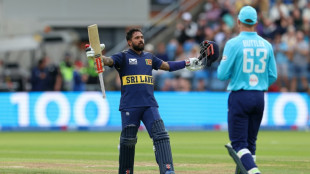 Sri Lanka captain Mendis hits century in 321-6 against England
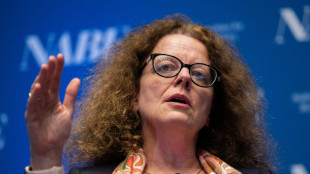
 Oscar-winner Cotillard fears being moved by AI actor
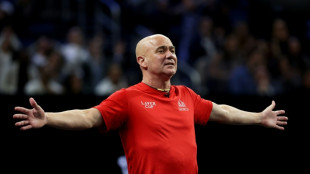 Agassi demands proper break for exhausted tennis stars
 Seixas 'crushes' teammates in training to draw Pogacar comparisons
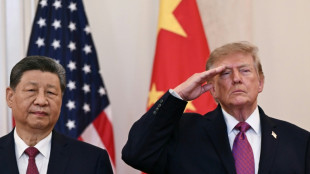
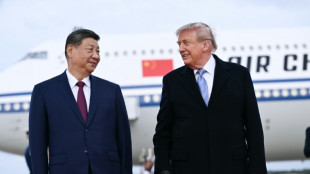
 Trump welcomes Xi to White House, touting agreement on AI
 Stocks fall, oil prices rise as global bonds back under pressure
 UK man died putting women, children first in Mozambique jihadist siege: coroner
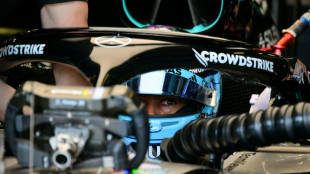 Russell leads Mercedes 1-2 at Azerbaijan GP practice
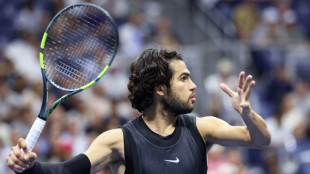 Alcaraz shrugs off pressure of packed calendar at 'joyful' Laver Cup

 Fury to face British rival Joshua in Cardiff on December 11

 Streamex Converts Interest Into Capital as GLDY Investment Strategy Secures $1M+ Institutional Allocation

 STARTRADER Named Best Fintech Forex Broker at Forex Expo Dubai 2026
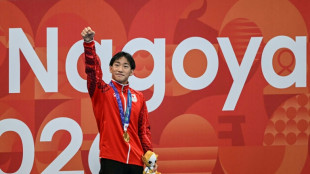 Japan swimmer Ohashi, 17, shrugs off Covid to smash world record
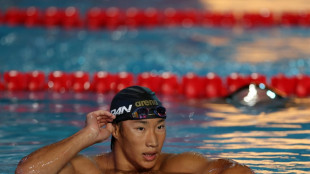 Shin Ohashi: Junk food-loving teen and new world record-holder

 Greek PM urges 'courage' in talks with UK over Parthenon Marbles
 'I was drowning': Iran Nobel winner exposes pain of separation from children
 Israel's US envoy says son fighting for life
 Olympic champion Yulo completes gymnastics gold collection at Asian Games
Josep Lluis Rodriguez has not given up hope of an independent Catalonia. But five years after a banned referendum, he no longer expects anything from the deeply-divided separatist leaders in Barcelona.
"Of course there is frustration and anger, because they didn't do what they should have done," the 62-year-old former company boss told AFP of the leaders who failed to make good on their separatist promises.
"It's clear they are no longer openly interested in independence," he said, standing outside the church in Arenys de Munt just north of Barcelona.
The ill-fated referendum of October 1, 2017 unleashed a political crisis from which the separatists have never recovered, and on the eve of the anniversary, Catalonia's pro-independence coalition was on the point of collapse.
Many Catalan independence flags can be seen fluttering from balconies along the main street in Arenys de Munt, a town of of 9,000 residents which was the first place to hold a symbolic referendum on independence in 2009.
Hundreds of municipalities followed suit, driving a groundswell of pro-independence activism which would reach its climax in the events of October 2017 under the regional government of Carles Puigdemont.
Despite being banned by the Spanish courts, the 2017 referendum organised by the separatist government went ahead but descended into chaos as police moved in to stop it, sparking confrontations marred by violence.
"October 1 was when civil society really came out en masse," catching the separatist parties by surprise who had not expected such a huge mobilisation in response to their moves towards independence, Rodriguez said.
"It was only later that we realised that they didn't have a concrete plan, nor structures in place (for achieving independence)," said Rodriguez, an activist with the ANC, the region's biggest grassroots separatist movement.
Despite the police crackdown, the fact the referendum took place at all was "a great victory for the Catalans", he said.
And to mark the anniversary this Saturday, he will attend a demonstration in Barcelona bent on securing a new referendum.
"We're organised and when the time comes, we will mobilise."
- Divided and squabbling -
The results of the October 2017 referendum were never independently corroborated, and weeks of confusion followed, culminating in a short-lived symbolic declaration of independence by the Catalan parliament.
That proved to be the straw that broke the camel's back, with Madrid sacking the Catalan government, suspending the region's autonomy and putting its leaders on trial as it struggled to handle Spain's worst political crisis in decades.
Despite passions running high over independence, the region itself remains divided, with only 41 percent in favour of separation while 52 percent want to remain in Spain, the latest survey suggested.
But it's a far cry from the 49 percent who wanted to break away in the October 2017 poll.
Last year, the separatists again won a majority in the regional elections and managed to cobble together a fragile coalition grouping the left-wing ERC and hardline JxC.
But they are sharply at odds over how to achieve independence, with ERC backing a negotiated strategy via dialogue with Madrid, while JxC prefers a confrontational approach given that Spain has ruled out any new referendum.
"The political deadlock is ongoing, the Catalan government is divided and every day they attack each other in the press over a thousand things," said Joan Botella, a political scientist at Barcelona's Autonomous University.
"Nobody is suggesting a way forward or how to resolve the conflict."
- 'Won't happen in my lifetime' -
Fed up with the impasse, the ANC called people onto the streets for the annual "Diada" march on September 11 with a rallying cry denouncing the politicians and insisting "only the people and civil society can achieve independence".
The powerful movement has been openly critical of the Catalan government's dialogue with Madrid, and this year its leader Pere Aragones did not attend the rally.
Police said 150,000 people turned out for the event, the lowest figure in a decade -- without counting the two years of the Covid-19 pandemic.
"People feel cheated and frustrated but it doesn't mean they will stop backing independence," said Josep Sanchez, mayor of Arenys de Munt, standing next to a small monument by the town hall marking the 2017 referendum.
But shopkeeper Magda Artigas has lost any hope of seeing the emergence of an independent Catalan republic, despite voting for one in successive referendums in 2009, 2014 and 2017.
"I'm already 64, it won't happen in my lifetime," she said with a sad smile.
B.Godinho--PC