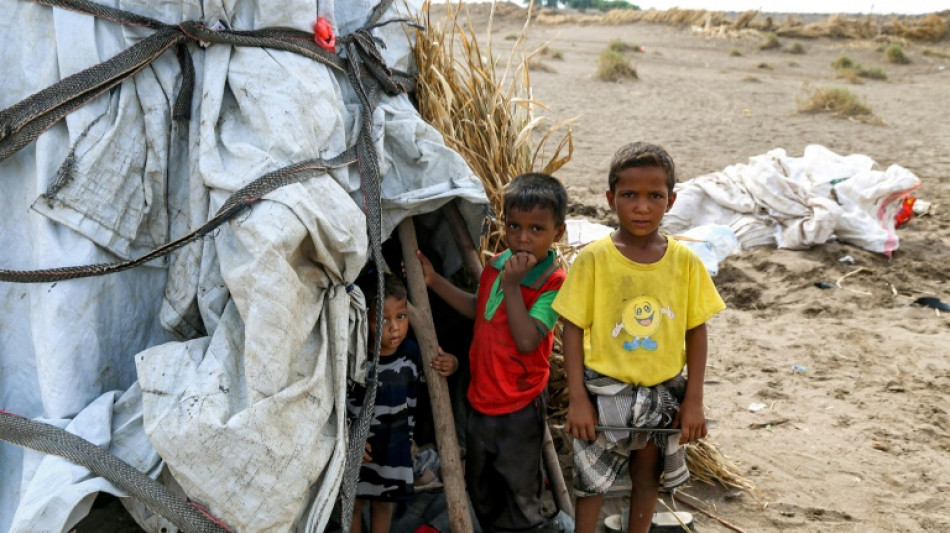
Yemen's fate hangs in balance as truce collapses / Photo: Khaled Ziad - AFP/File

 RBI Grants Paytm In-Principle Approval to Revive Wallet Business

 China's Factory Activity Contracts as Export Orders Weaken

 US Retail Sales and Fed Minutes Set Up a Critical Test for Consumers

 MotorTrend’s Top Hybrid Vehicle Picks for 2026

 Asian Markets Slide as AI Concerns Hit Chip Stocks

 Brazil Faces Debt and Inflation Test as Lula Prepares Fourth Term

 Canada Expands Asian Trade Push as US Negotiations Resume

 Jennie Earns Two Grammy Nominations as Major K-pop Agencies Boycott New Asian Pop Category

 Italy Raises 2026 Growth View but Warns Energy Will Keep Inflation High

 UK Economy Grows 0.7% in Third Quarter as Services Lead Expansion

 India's Retail Inflation Reaches 6.09% as Food Prices Accelerate

 China's October Activity Data Reveal a Weak Start to the Fourth Quarter

 Critics Demand Stronger Action from Jeffries and Schumer Following Democratic Wave
The United Nations envoy for Yemen scrambled Monday to revive a six-month truce after a missed deadline raised fears of a return to war and prompted rebel threats against Saudi Arabia and the United Arab Emirates.
Special envoy Hans Grundberg pledged "relentless efforts" to reinvigorate the truce, which lapsed on Sunday after bringing a sharp reduction in clashes since it came into force in April.
Iran-backed Huthi rebels have been fighting a Saudi-led pro-government coalition since 2015, in a war that has left hundreds of thousands dead and created the world's worst humanitarian crisis according to the United Nations.
Grundberg's plan to extend the truce -- which was initially set to last two months and was renewed twice, to half a year -- and to broaden it to new areas of agreement was rejected by the Huthis.
His proposal included paying civil servants' salaries, opening routes into the rebel-blockaded city of Taez, expanding commercial flights from the rebel-held capital Sanaa and allowing more fuel ships into the port of Hodeida, also controlled by the Huthis.
It also contained commitments to release detainees, resume an "inclusive" political process and tackle economic issues, including public services.
But the northern-based Huthis, who seized Sanaa in 2014 and control large swathes of the Arabian peninsula's poorest country, said the proposal "does not live up to the demands of the Yemeni people and does not establish the peace process".
"The Yemeni people will not be deceived by false promises," the Supreme Political Council said, demanding revenues from Yemen's oil and gas resources, according to the Huthis' Yemen News Agency.
Elisabeth Kendall, Middle East expert at Cambridge University, said there was still hope for a deal.
"There may still be a chance for the truce to be resurrected. It may simply be that the warring actors are jockeying for position by allowing the deadline to pass," she told AFP.
"But I think the most we can hope for at this stage is another interim measure rather than the expanded six-month truce that the UN was seeking."
- Sporadic clashes -
Aid groups have raised the alarm for the long-suffering people of Yemen, including 23.4 million Yemenis who are dependent on humanitarian aid.
"Over the past six months, the truce had given millions of people in Yemen respite from fighting and hope for a more lasting settlement of the conflict," said Fabrizio Carboni, regional director for the International Committee of the Red Cross.
"We call on all parties to keep the dialogue open and put the needs of the Yemeni people first."
As well as fighting on the ground, hostilities have been marked by coalition bombing raids and rebel drone-and-missile attacks on oil facilities in Saudi Arabia and the UAE, a major partner in the anti-Huthi alliance.
The Huthis' military spokesman Yahya Saree warned oil companies in Saudi Arabia and the UAE "to organise their situation and leave".
There was no immediate word from Riyadh or Abu Dhabi, but Yemen's internationally recognised government, via a tweet from its Washington embassy, urged the UN Security Council to deal "firmly" with the Huthis over their "latest threats" and refusal to extend the truce.
Grundberg, who has shuttled between Sanaa and Oman, which was acting as a moderator, said he will continue "relentless efforts to engage with the parties to quickly reach an agreement on a way forward."
"Ultimately, Yemenis need an end to the conflict through an inclusive political process and a negotiated settlement," he added.
The United States on Monday expressed its "deep concern" at the expired truce, and said that the UN-mediated deal "represents the best opportunity Yemenis have had for peace in years."
"The choice before the parties is simple: peace and a brighter future for Yemen, or a return to pointless destruction and suffering that will further fracture and isolate a country already on the brink," State Department spokesman Ned Price added in a statement.
As Yemen's fate remained unclear, government sources reported attacks by the Huthis south of Marib, the government's last northern stronghold and key to Yemen's oil resources.
Huthi shelling was also reported in Taez, Yemen's third-biggest city, which has been blockaded by the rebels since 2016. Sporadic clashes have continued even during the truce period.
F.Moura--PC