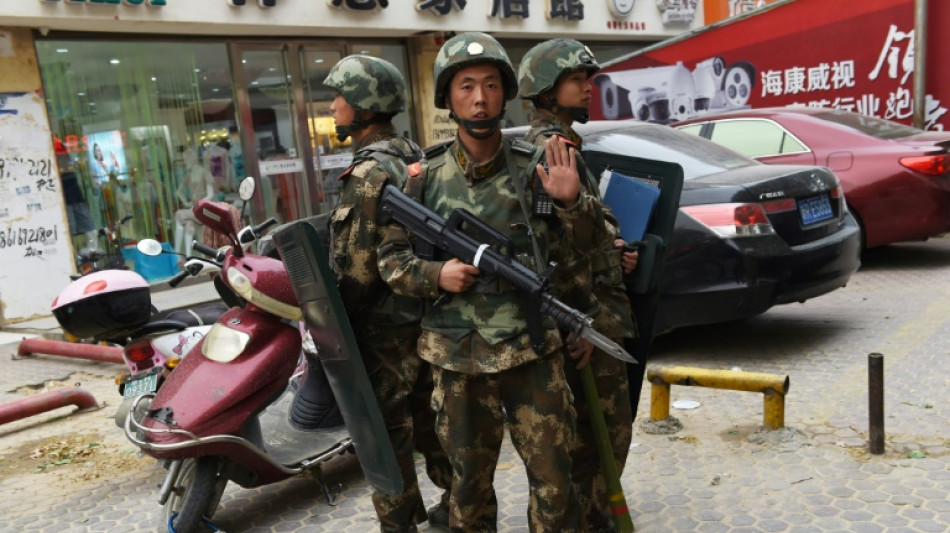
West bracing for defeat against China at UN rights vote / Photo: GREG BAKER - AFP/File

 RBI Grants Paytm In-Principle Approval to Revive Wallet Business

 China's Factory Activity Contracts as Export Orders Weaken

 US Retail Sales and Fed Minutes Set Up a Critical Test for Consumers

 MotorTrend’s Top Hybrid Vehicle Picks for 2026

 Asian Markets Slide as AI Concerns Hit Chip Stocks

 Brazil Faces Debt and Inflation Test as Lula Prepares Fourth Term

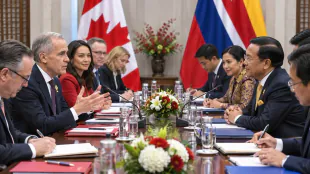 Canada Expands Asian Trade Push as US Negotiations Resume

 Jennie Earns Two Grammy Nominations as Major K-pop Agencies Boycott New Asian Pop Category

 Italy Raises 2026 Growth View but Warns Energy Will Keep Inflation High

 UK Economy Grows 0.7% in Third Quarter as Services Lead Expansion

 India's Retail Inflation Reaches 6.09% as Food Prices Accelerate

 China's October Activity Data Reveal a Weak Start to the Fourth Quarter

 Critics Demand Stronger Action from Jeffries and Schumer Following Democratic Wave
Western countries trying to pass an unprecedented resolution at the UN's top rights body targeting China for widespread abuses were scrambling Thursday for votes and bracing for possible defeat.
Washington last month presented the first-ever draft resolution to the UN Human Rights Council seeking a "debate" on Xinjiang after allegations of crimes against humanity against Uyghurs and other Muslim minorities in the far-western region.
It was co-sponsored by Britain, Canada, Sweden, Denmark, Finland, Iceland, Norway, Australia and Lithuania and is expected to go to a council vote later Thursday in Geneva.
But after weeks of frenzied lobbying from both sides, Western diplomats appeared to be bracing that the resolution will not pass in the 47-member council.
"It's going to be a very tight vote," a Western diplomat acknowledged, stressing though that even if the resolution failed, the debate has put the spotlight on Xinjiang.
"The number one objective has been fulfilled," the diplomat said.
China is under intense scrutiny after former UN rights chief Michelle Bachelet released her long-delayed Xinjiang report last month, citing possible crimes against humanity.
- 'The fight goes on' -
The report, which was published on August 31 minutes before Bachelet's term ended, highlighted "credible" allegations of widespread torture, arbitrary detention and violations of religious and reproductive rights.
It brought UN endorsement to long-running allegations by campaigners and others, who accuse Beijing of detaining more than one million Uyghurs and other Muslims and forcibly sterilising women.
Beijing vehemently rejected the charges and accused the UN of becoming a "thug and accomplice of the US and the West".
It insists it is running vocational training centres in the region to counter extremism.
While the draft resolution may look tepid, observers say it is highly significant to simply aim to put China on the council agenda.
"The issues don't get more basic," Human Rights Watch's China director Sophie Richardson said in a tweet, urging countries to "vote yes today, and make history."
China has launched an all-out offensive in Geneva and in country capitals to dismiss the report and to hammer home the "truth" about the rights situation in Xinjiang.
African countries, where China is the leading creditor after making massive infrastructure and other investments, have faced particularly heavy lobbying, observers say.
An analysis last month of voting patterns of the 13 African countries on the council indicated they traditionally abstain from any votes on country-specific resolutions.
But it showed that recently they have increasingly bowed to pressure from China and others to vote against the resolution, thereby torpedoing it.
"We know the amount of leverage that the Chinese have, particularly in Africa," the Western diplomat said, adding that many nations are loathe to vote against a permanent member of the UN Security Council.
"It's genuinely a difficult call for a lot of countries," the diplomat acknowledged.
"The fight goes on, whatever happens today."
F.Santana--PC