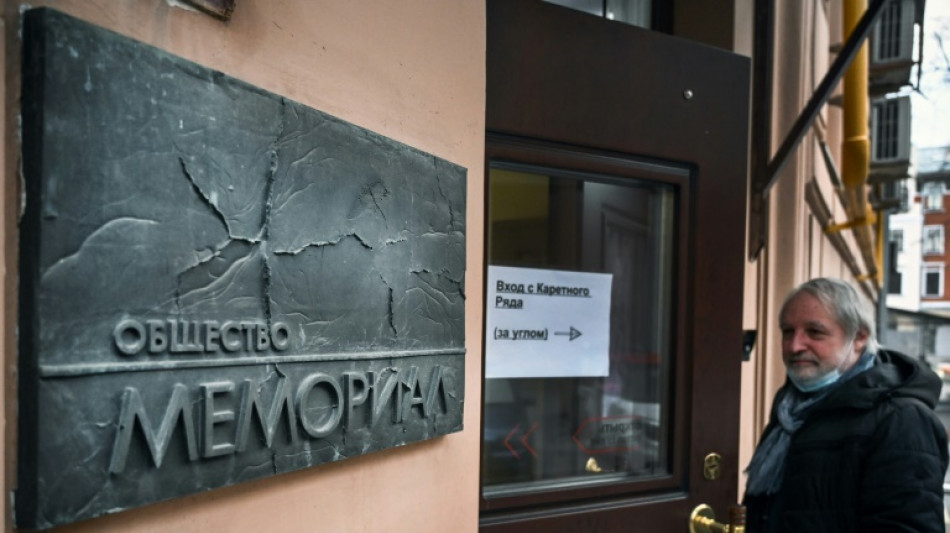
Memorial: the conscience of Russia banned under Putin / Photo: Alexander NEMENOV - AFP/File

 UN approves resolution on dealing with rising sea levels
 Yalcouye makes dream debut as Ivory Coast beat Ghana in AFCON qualifier
 Chicago's White Sox and Cubs book MLB playoff berths
 Last-gasp Gakpo strike snatches Dutch draw to sour Klopp debut
 Global stocks mostly fall as oil prices and bond yields rise
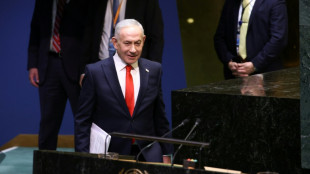 Israel's Netanyahu denounces enemies, allies in fiery UN speech
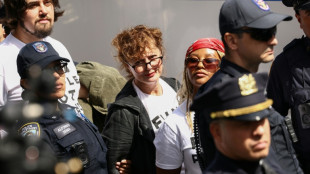 Hollywood stars among arrests in NY anti-Netanyahu protest
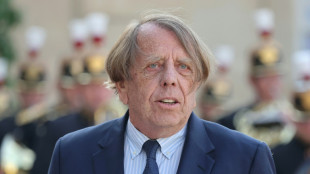 Losing start in AFCON qualifying for 78-year-old coach Le Roy
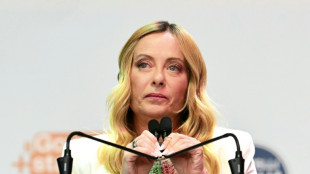 Italy bans burqas in schools, caps numbers of foreign students per class
 Israel policies threaten 'life and existence' of Palestinians, Abbas says

 Paolini steers Italy past China in BJK
 Zidane admits emotion on eve of first game as France coach
 Breetzke and Maharaj sink Australia in first one-day international
 Zelensky broke confidentiality with North Korea POWs disclosure: South's president
 Former Liverpool star Carroll reveals he was sexually assaulted
 Dominican Republic calls for Haiti force to be strengthened
 Dolly Parton's nephew ordered to stay away from estate staff, properties
 Early exit for Philippine darling Eala at Singapore Open
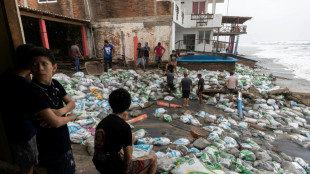 Hurricane Polo triggers huge waves in coastal Mexican city
 What happens if the US bans diesel exports
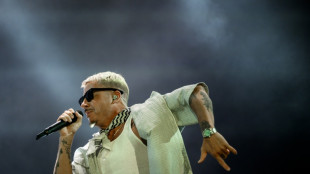 Macklemore hits back with 'Free Palestine Tour' after Sheeran split
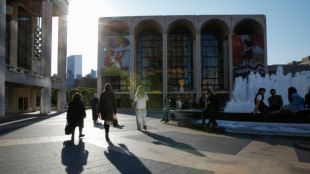 Met Opera to give New Yorkers free tickets in affordability push
 Top ECB official to resign to take up IMF role
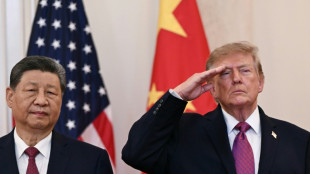
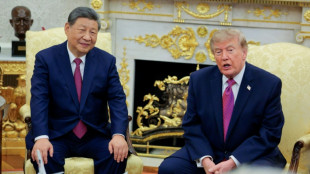
 Xi and Trump call for peace in lavish White House state visit
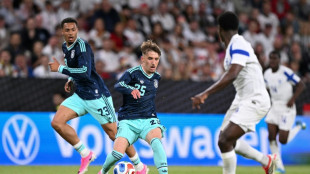 Five up-and-coming players looking to make mark in Nations League

Memorial, Russia's most respected rights group, has been co-awarded the Nobel Peace Prize less than a year after it was ordered to shut down during a wave of repression against critical voices.
The group, which emerged as a hopeful symbol during Russia's chaotic transition to democracy in the early 1990s, was dissolved late last year, in a sign of the tightening authoritarian tendencies under President Vladimir Putin.
Memorial established itself as a key pillar in civil society by battling to preserve the memory of victims of Communist repressions and campaigning against rights violations linked to Russia's brutal wars in Chechnya and beyond.
The group maintained a massive archive of Soviet-era crimes and questioned official narratives that glossed over horrors committed under Joseph Stalin, but showed concern for contemporary rights abuses too by bringing legal cases against Russian mercenaries in Syria.
Rights activists in December last year asked Putin to intervene in legal moves to shut it down.
But the Russian leader told his human rights council that Memorial had been advocating on behalf of "terrorist and extremist organisations", clearly signalling his backing for its closure.
Memorial had been compiling a list of political prisoners who include members of banned religious groups like the Jehovah's Witnesses, and Putin's most prominent critic Alexei Navalny, who was thrown into jail after surviving a near-fatal poisoning attack.
Memorial's closure came amid an unprecedented crackdown in Russia that intensified after Putin sent troops into Ukraine on February 24.
But the enormity of outlawing the country's most prominent rights group stood out even amid the intense clampdown.
"The disappearance of Memorial in Russia will become a symbol of a deep moral fall and the definitive symbolic estrangement of the Russian man from the civilisation of the 21st century," dozens of prominent Russian figures said in an open letter at the time.
"The wounds, which have not healed over the 30 post-Soviet years, are bleeding again."
Memorial was founded in 1989 in the final years of Communist rule under late Soviet leader Mikhail Gorbachev.
Its first chairman was the Nobel Prize-winning Soviet dissident Andrei Sakharov.
The group, which was regularly cited as a potential Nobel Peace Prize winner, had been in the crosshairs of the Russian authorities for years.
The Memorial Human Rights Centre was put on the government's register of "foreign agents" in 2015. Memorial International was added a year later.
The "foreign agents" label, which has dark Soviet-era connotations, requires individuals or groups to disclose sources of funding and mark all publications -- including social media posts -- with a tag.
Memorial has labelled claims it broke the law or backed terror and extremist groups as "absurd".
- 'Ever more repressive' -
Memorial gained prominence for chronicling the victims of Communist repression -- a painful subject that modern Russia has been reluctant to address -- and investigating executions and kidnappings committed against civilians during Moscow's two wars to subdue Chechen separatists.
Last year Memorial and several other groups released a report on Moscow's role in the Syria campaign and urged Russians to take responsibility for abuses in the war-torn country.
But Memorial's crusading work has come at huge personal cost to those involved.
Natalya Estemirova, one of the group's main employees in Chechnya who gained worldwide renown, was found dead in 2009 with gunshot wounds hours after she was seen being bundled into a car outside her home.
Another Memorial employee, Yury Dmitriyev, who spent decades locating mass graves in the northwestern region of Karelia, was jailed in 2020 on a controversial child sex charge.
Supporters insist the 66-year-old historian was targeted for his work.
Irina Shcherbakova, a senior member of Memorial, said the Kremlin was sending a clear signal to the West by banning the group.
"We are doing whatever we feel like with civil society. We will put whoever we want behind bars. We will close down whoever we want," she said.
"The dictatorship is becoming ever more repressive."
A.Seabra--PC