
UK sets scene for Hallowe'en forecasts after budget spooks investors / Photo: Oli SCARFF - AFP

 RBI Grants Paytm In-Principle Approval to Revive Wallet Business

 China's Factory Activity Contracts as Export Orders Weaken

 US Retail Sales and Fed Minutes Set Up a Critical Test for Consumers

 MotorTrend’s Top Hybrid Vehicle Picks for 2026

 Asian Markets Slide as AI Concerns Hit Chip Stocks

 Brazil Faces Debt and Inflation Test as Lula Prepares Fourth Term
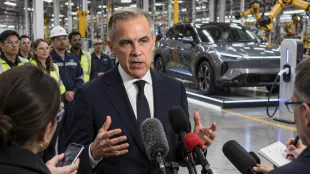
 Canada Expands Asian Trade Push as US Negotiations Resume

 Jennie Earns Two Grammy Nominations as Major K-pop Agencies Boycott New Asian Pop Category

 Italy Raises 2026 Growth View but Warns Energy Will Keep Inflation High

 UK Economy Grows 0.7% in Third Quarter as Services Lead Expansion

 India's Retail Inflation Reaches 6.09% as Food Prices Accelerate

 China's October Activity Data Reveal a Weak Start to the Fourth Quarter

Britain on Monday brought forward key economic forecasts to Hallowe'en and the Bank of England boosted liquidity, after markets were spooked by a much-criticised tax-slashing budget.
Finance minister Kwasi Kwarteng will unveil debt-reduction plans and independent economic predictions later this month after his borrowing-fuelled budget sparked markets turmoil.
In his latest U-turn, Kwarteng revealed he would publish his medium-term fiscal plan alongside the forecasts on October 31 rather than late November.
"It's clear there is still much scepticism about the government's plans. The risk is that if the numbers don't add up, the markets could take fright again on Halloween," said Hargreaves Lansdown analyst Susannah Streeter.
It comes after Chancellor of the Exchequer Kwarteng was already forced to axe a tax cut for the richest earners, in the face of outrage as millions of Britons face a cost-of-living crisis with UK inflation around 10 percent.
Markets have been shaken by the budget from the government of new Prime Minister Liz Truss, which also included a costly energy price freeze for households and businesses in the budget.
The plans that are aimed at supporting Britain's recession-threatened economy sent UK bond yields soaring and the pound tumbling to a record low against the dollar.
- Bank of England action -
The Bank of England earlier Monday revealed it was launching a temporary facility aimed at easing liquidity pressures that arose after the budget shocked markets.
The BoE in a statement announced "additional measures to support market functioning".
It added that the central bank was ready to increase the size of its UK government bond purchases under an emergency measure due to end Friday.
The BoE said it was launching a Temporary Expanded Collateral Repo Facility, enabling "banks to help to ease liquidity pressures facing" client funds beyond the end of this week.
Budget turmoil triggered the emergency buying of long-dated bonds by the BoE.
The central bank has so far made purchases of so-called gilts totalling around £5 billion ($5.5 billion), far less than its £65-billion limit, under a plan ending Friday.
The purchases are "to restore market functioning in long-dated government bonds and reduce risks from contagion to credit conditions for UK households and businesses", the BoE stressed in its statement Monday.
The budget was widely criticised, including by the International Monetary Fund, over fears that government debt would balloon to pay for the tax cuts.
Fitch last week lowered the outlook on its credit rating for British government debt to negative from stable.
The pound was down against the dollar Monday but above the record-low level that was close to parity.
- Calm for now -
Despite the measures calming volatility, yields on Britain's bonds remain elevated on concern over sustainability.
The yield on 30-year UK government bonds, which spiked to 5.14 percent following the budget, stood at 4.54 percent on Monday.
"The central bank's action has helped to calm government debt markets but there are concerns about what happens next week after the BoE's support package ends," noted Victoria Scholar, head of investment at Interactive Investor.
Monday's intervention comes as Britain suffers a cost-of-living crisis caused by the highest inflation in decades after energy and food prices have rocketed.
The BoE has piled on further pressure by hiking its main interest rate to a 14-year high of 2.25 percent in a bid to cool inflation.
This in turn has seen retail banks ramp up interest rates on mortgages, with analysts predicting heavy price falls for property.
B.Godinho--PC