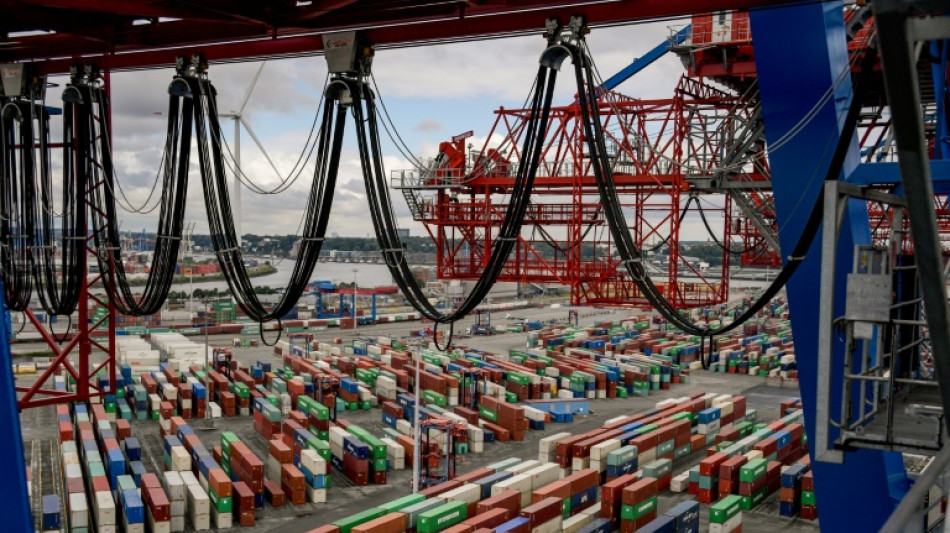
Germany forecasts 2023 recession as energy crisis bites / Photo: Axel Heimken - AFP/File

 Bacteria suspected in deaths of hundreds of baby whales off Argentina

 US 'must choose' whether to end war: Iran president to Fox News

 UN approves resolution on dealing with rising sea levels

 Yalcouye makes dream debut as Ivory Coast beat Ghana in AFCON qualifier

 Chicago's White Sox and Cubs book MLB playoff berths

 Last-gasp Gakpo strike snatches Dutch draw to sour Klopp debut

 Global stocks mostly fall as oil prices and bond yields rise

 Israel's Netanyahu denounces enemies, allies in fiery UN speech
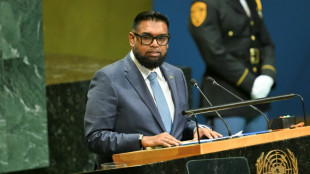
 Hollywood stars among arrests in NY anti-Netanyahu protest

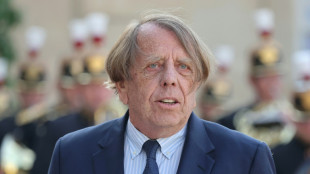 Losing start in AFCON qualifying for 78-year-old coach Le Roy
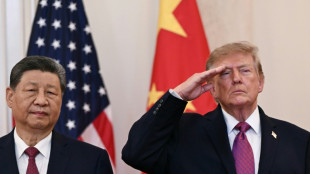
 Italy bans burqas in schools, caps numbers of foreign students per class

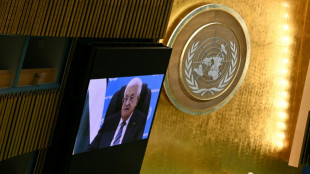 Israel policies threaten 'life and existence' of Palestinians, Abbas says

 Paolini steers Italy past China in BJK

 Zidane admits emotion on eve of first game as France coach

 Breetzke and Maharaj sink Australia in first one-day international

 Zelensky broke confidentiality with North Korea POWs disclosure: South's president

 Former Liverpool star Carroll reveals he was sexually assaulted
 Dominican Republic calls for Haiti force to be strengthened

 Dolly Parton's nephew ordered to stay away from estate staff, properties

 Early exit for Philippine darling Eala at Singapore Open

 Hurricane Polo triggers huge waves in coastal Mexican city
 What happens if the US bans diesel exports
 Macklemore hits back with 'Free Palestine Tour' after Sheeran split

 Met Opera to give New Yorkers free tickets in affordability push

 Top ECB official to resign to take up IMF role

Germany will sink into recession next year and inflation will soar, the government forecast Wednesday, as Europe's top economy battles skyrocketing energy prices following Russia's gas shutdown.
The official predictions were the latest warning that Germany's economy, which was just getting back on its feet after the pandemic, is set to shrink in 2023 due to the fallout of Moscow's invasion of Ukraine.
Unveiling the government's latest forecasts of 0.4 percent economic contraction and seven percent inflation for 2023, Economy Minister Robert Habeck painted a dark picture of a "serious energy crisis".
It "threatens to become an economic and social crisis", he warned -- but insisted that Russian President Vladimir Putin will "fail in this attempt to destabilise the basic economic and political order".
Putin "will also fail on the battlefield in Ukraine", he added.
Moscow's move to cut off gas supplies to Europe amid tensions over Ukraine has triggered an energy crisis across the continent, with consumers and businesses facing high prices as winter approaches.
Germany has been particularly hard hit, as 55 percent of its gas supplies came from Moscow prior to the Ukraine conflict.
The soaring energy costs are expected to send inflation to eight percent in 2022 and seven percent in 2023, the government forecast.
Nevertheless, Germany's economy is still set to register growth of 1.4 percent in 2022, according to the government forecasts, after having enjoyed a post-pandemic rebound earlier in the year.
But it will then shrink in 2023, with the economy ministry saying the "central reason" for the downgrade from forecasts earlier this year was "the halt to Russian gas supplies".
High energy prices are acting as "a brake on industrial production -- above all in energy-intensive sectors". The economy will return to growth with expansion of 2.3 percent in 2024, according to the forecasts.
- Energy price cap -
The government recently unveiled a 200-billion-euro ($194-billion) fund to shield consumers and businesses from surging prices, which includes a cap on energy costs.
Without the cap, consumer prices would be much higher in 2023, the forecasts said.
Forecasts by leading economic institutes late last month showed inflation coming in at 8.4 percent for the year as a whole in 2022 -- and climbing further to 8.8 percent in 2023.
Warnings are mounting that global growth will slow further next year due to myriad crises, with the IMF this week downgrading its 2023 global GDP growth forecast.
It forecast that Germany, along with Italy, will become the first advanced economies to contract in the wake of Russia's invasion of Ukraine.
Signs are rapidly multiplying of Germany's escalating economic crisis.
Last week, official figures showed that industrial production -- the pillar of the German economy -- produced 0.8 percent less in August compared with the previous month, with energy-intensive industries badly impacted.
Inflation meanwhile hit a 70-year high of 10 percent in September.
The European Central Bank has started aggressively tightening monetary policy to bring inflation under control, lifting rates a historic 75 basis points last month, but some are worried the move adds to recession risks.
Berlin has been scrambling to find alternative energy sources, accelerating the construction of infrastructure to import gas from further afield, and is preparing to keep two nuclear plants running longer than initially anticipated.
Despite the crisis, Habeck sought to strike a positive note about efforts to find new partners to supply energy.
"We are making very good progress in loosening the grip of Russian energy imports," he said.
X.Brito--PC