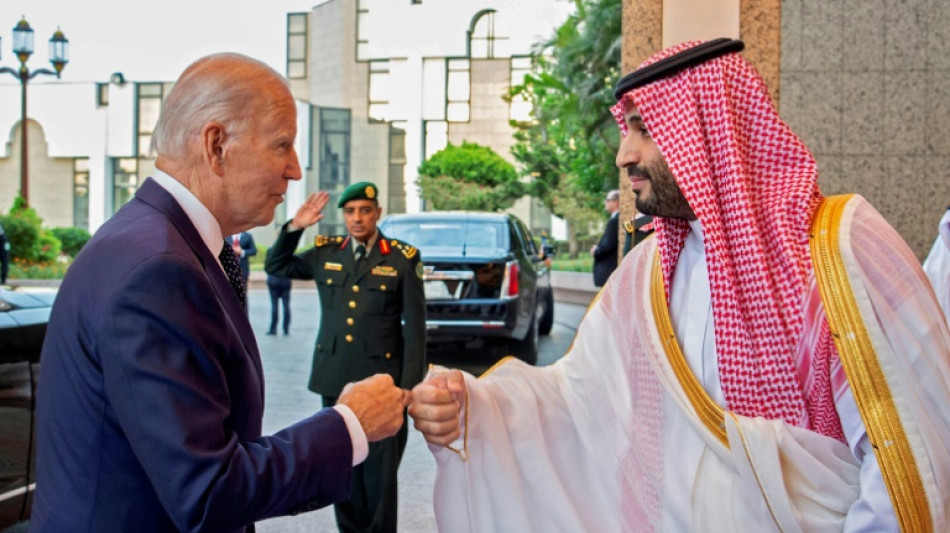
US and S. Arabia clash in public over oil cut, Russia / Photo: Bandar AL-JALOUD - Saudi Royal Palace/AFP/File

 RBI Grants Paytm In-Principle Approval to Revive Wallet Business

 China's Factory Activity Contracts as Export Orders Weaken
 US Retail Sales and Fed Minutes Set Up a Critical Test for Consumers

 MotorTrend’s Top Hybrid Vehicle Picks for 2026

 Asian Markets Slide as AI Concerns Hit Chip Stocks

 Brazil Faces Debt and Inflation Test as Lula Prepares Fourth Term
 Canada Expands Asian Trade Push as US Negotiations Resume

 Jennie Earns Two Grammy Nominations as Major K-pop Agencies Boycott New Asian Pop Category

 Italy Raises 2026 Growth View but Warns Energy Will Keep Inflation High

 UK Economy Grows 0.7% in Third Quarter as Services Lead Expansion
 India's Retail Inflation Reaches 6.09% as Food Prices Accelerate
 China's October Activity Data Reveal a Weak Start to the Fourth Quarter
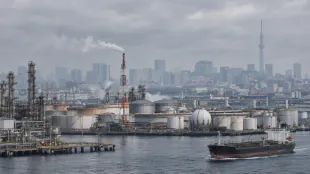
The United States and Saudi Arabia traded barbs Thursday over last week's OPEC+ oil output cut, with Washington accusing Riyadh of knowingly boosting Russian interests.
The Saudi-led OPEC+ cartel -- which includes Russia -- angered the White House by cutting production by two million barrels a day from November, raising fears that oil prices would soar.
Saudi Arabia issued a rare press release on Thursday, shrugging off accusations it was "taking sides in international conflicts" as Russia's war in Ukraine rages on.
But US National Security Council spokesman John Kirby quickly fired back, saying that Saudi Arabia knew the cut "would increase Russian revenues and blunt the effectiveness of sanctions. That is the wrong direction."
The United States has vowed to re-evaluate ties with the oil-rich kingdom since the cut, which was widely seen as a diplomatic slap in the face for Washington.
President Joe Biden traveled to Saudi Arabia in July and met with Crown Prince Mohammed bin Salman -- with the two greeting each other with a high-profile fist bump.
Biden had previously vowed to make the country an international "pariah" following the murder of journalist Jamal Khashoggi.
"The Saudi Foreign Ministry can try to spin or deflect, but the facts are simple. The world is rallying behind Ukraine in combatting Russian aggression," Kirby said in a unusually strong statement.
Other OPEC+ nations "felt coerced to support Saudi’s direction," he added.
The oil cut comes at a sensitive moment for Biden as the Democratic Party faces tricky midterm elections in November with rising consumer prices a key concern for voters.
- Oil funds key to Russian war -
In its press release, Saudi Arabia defended itself against "statements that are not based on facts and which are based on portraying the OPEC+ decision out of its economic context."
The kingdom insisted that decisions by OPEC+ were taken "purely on economic considerations."
And it suggested that Biden's administration had asked the cartel to delay any cuts until after the US midterm voting.
Biden has promised "consequences" for Saudi Arabia, but given no further details.
President Vladimir Putin relies on high oil prices to fund Russia's floundering invasion of Ukraine, and some US lawmakers have called for Washington to halt all cooperation with Riyadh.
"We wanted to know that when the chips were down, when there was a global crisis, that the Saudis would choose us," said Senator Bob Menendez this week. "Well, they didn't. They chose Russia."
The partnership between the United States and Saudi Arabia was sealed after World War II, providing the kingdom with military protection in exchange for American access to oil.
Fraught with crises, the relationship was revived by Biden's predecessor Donald Trump, whose single term saw Riyadh accounting for a quarter of US arms exports, according to the Stockholm International Peace Research Institute.
Continuing the rapprochement, the United States announced in August that Saudi Arabia would buy 300 Patriot MIM-104E missile systems, which can be used to bring down at long-range incoming ballistic and cruise missiles, as well as attacking aircraft.
Saudi Arabia, which backs the Yemeni government, has faced rocket threats from Yemen's Huthi rebels, who have been supplied with Iranian equipment and technology.
V.Dantas--PC



