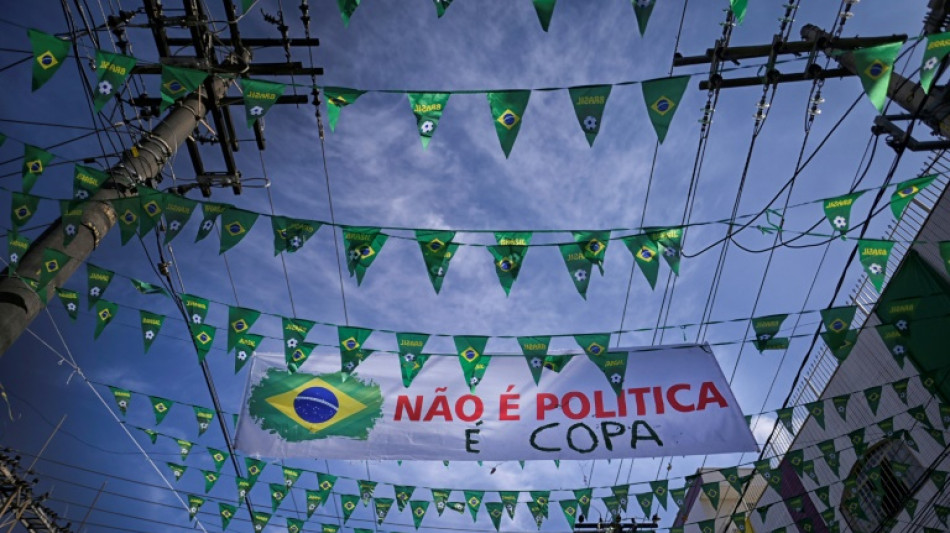
Brazil jersey hostage to politics a month from World Cup / Photo: DOUGLAS MAGNO - AFP

 Kauaʻi Writers Garden Challenges Honolulu-Centric Literary Scene
 French Economy Shrinks 0.1% as Consumer Confidence Slumps
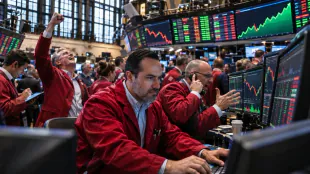 Wall Street Ends Turbulent Week Higher Despite Inflation and AI Jitters

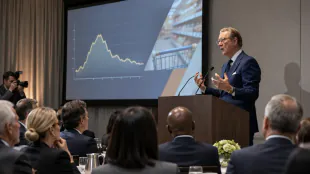 Kansas City Fed Chief Says Inflation Is Still Running Too Hot
 Oil Heads for Second Weekly Loss as Supply Surplus Emerges
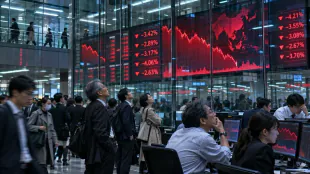
 Middletown High School Football Team Ends Legal Battle After Playoff Forfeit
 Canada Signals Openness to Chinese Automakers if US Trade Talks Fail
 US Mortgage Rate Falls for Fourth Week but Remains Above 7%

 US Jobless Claims Rise to 200,000 but Layoffs Remain Historically Low
 Euro-Area Growth Slows to 0.4% While Employment Stalls
 US Wholesale Inflation Eases Monthly but Hits a Four-Year Annual High
 India's Wholesale Inflation Jumps to 12.29% as Fuel Costs Surge
 Japan's Economy Edges Into Contraction as Costly Oil Weighs on Demand
Every four years, there is an explosion of green and yellow in Julio Cesar Freitas's neighborhood as locals cover the streets in the colors of the Brazilian flag.
But this year, Freitas felt compelled to add an explanation alongside the sea of decorations outside his family's construction supply shop: "It's not politics, it's the World Cup."
Football-mad Brazil is famously passionate about the World Cup, which it has won more than any other country -- five times. But this year, the signs of football fever have taken on a different meaning.
Battling to win reelection in an October 30 runoff against veteran leftist Luiz Inacio Lula da Silva, far-right President Jair Bolsonaro has adopted the flag and the national football team's jersey as symbols of his own.
Bolsonaro regularly sports the colors of the flag, his rallies are drenched in yellow and green, and he urged supporters to wear the national team Selecao's iconic jersey to vote in the first-round election on October 2, in which he finished a closer-than-predicted five percentage points behind Lula.
With Brazilians bitterly divided by the elections, yellow and green have become politicized -- sometimes dampening outward displays of World Cup fever in Brazil, whose team head to Qatar as favorites ahead of the November 20 kickoff.
The unease is visible in Freitas's neighborhood, Caicara, in the southeastern city of Belo Horizonte.
The city organizes a decoration contest for every World Cup.
Freitas, whose family has been taking part since 1994, says there were negative reactions this year in the politically divided community after they hung their decorations two weeks ago -- rows upon rows of mini triangular flags strung across the street.
Two days later, they added the above-mentioned sign.
"Unfortunately, the World Cup coincided with the elections this year. I had to put up the sign so people would know the decorations aren't about supporting any candidate," says Freitas, 26.
"I could see people were upset," he says.
But after adding the sign, "people who had been angry with us about it started praising us instead."
- 'Losing our identity' -
Elsewhere, many restaurants and bars have postponed putting up their usual World Cup-themed decorations.
"Everyone is on edge. As a business owner, I don't want any trouble," Sao Paulo bar owner Decio Lemos told newspaper O Globo.
"We bought Brazil jerseys for the staff to wear, but we're not going to start using them yet."
The Brazilian flag and Selecao jersey first became widespread conservative symbols in 2015, during protests against leftist ex-president Dilma Rousseff, Lula's hand-picked successor.
The trend has only increased under Bolsonaro, despite efforts by the Brazilian Football Confederation (CBF) to keep the jersey apolitical.
Before the first-round election, Nike, which sponsors the Selecao, barred online shoppers from ordering customized Brazil jerseys with candidates' names on the back.
"People are dragging (the jersey) into politics. It's making us lose the identity of the shirt and the flag," Brazil and Tottenham Hotspur striker Richarlison said recently.
Many Brazilians have taken to keeping their yellow jerseys in the closet, for fear of being harassed or attacked.
To Bolsonaro backers, however, it is a proud symbol of his motto, "Our flag will never be red" -- the color of Lula's Workers' Party.
- To the 'rescue' -
Lula, for his part, has vowed to "rescue" the flag and jersey from "that fascist" Bolsonaro -- a rallying cry supported by the likes of pop superstar Anitta.
But glowing memories of Pele, Ronaldo and Ronaldinho aside, Brazilians' interest in the Selecao has been declining for years.
Fifty-one percent say they are not interested in the World Cup, according to an August survey.
Ticket sales and TV audiences for the team's matches have been declining.
Experts say the politicization of the jersey plays a part, but also the team's humiliating 7-1 elimination by Germany on home soil in the 2014 World Cup and the fact so many young talents leave for Europe, lessening the connection with fans back home.
But sports historian Joao Malaia predicts the negativity and divisions will dissipate when the tournament starts.
"Once it's kickoff time, most people will forget all about it," he says.
"They'll want Brazil to win."
L.E.Campos--PC