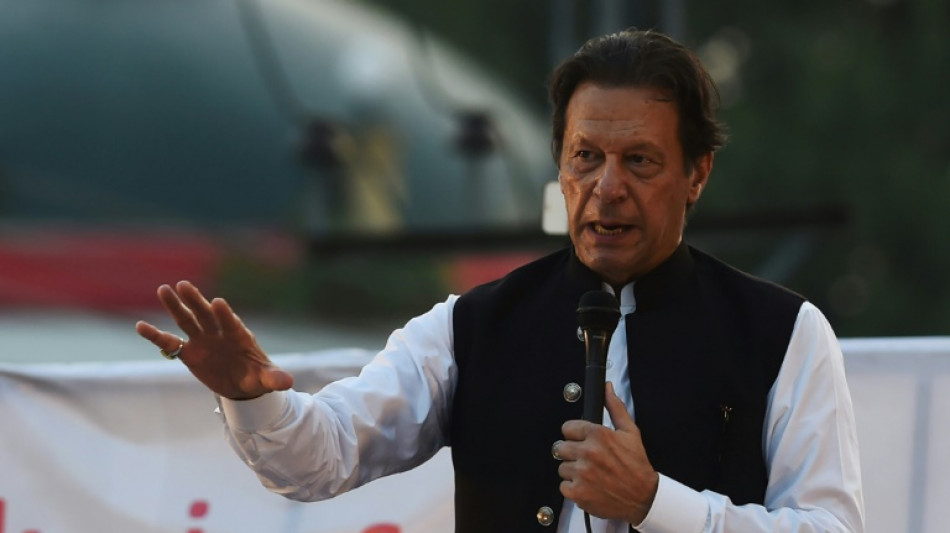
Former Pakistan PM Khan facing politics ban in gifts case / Photo: Arif ALI - AFP/File

 Kauaʻi Writers Garden Challenges Honolulu-Centric Literary Scene
 French Economy Shrinks 0.1% as Consumer Confidence Slumps

 Wall Street Ends Turbulent Week Higher Despite Inflation and AI Jitters

 Kansas City Fed Chief Says Inflation Is Still Running Too Hot

 Oil Heads for Second Weekly Loss as Supply Surplus Emerges

 Middletown High School Football Team Ends Legal Battle After Playoff Forfeit
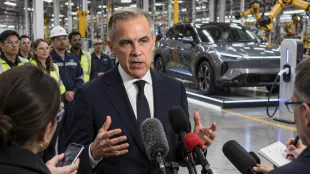 Canada Signals Openness to Chinese Automakers if US Trade Talks Fail
 US Mortgage Rate Falls for Fourth Week but Remains Above 7%

 US Jobless Claims Rise to 200,000 but Layoffs Remain Historically Low

 Euro-Area Growth Slows to 0.4% While Employment Stalls

 US Wholesale Inflation Eases Monthly but Hits a Four-Year Annual High

 India's Wholesale Inflation Jumps to 12.29% as Fuel Costs Surge

 Japan's Economy Edges Into Contraction as Costly Oil Weighs on Demand
Former Pakistan prime minister Imran Khan could be barred from political office Friday when the election commission rules on charges he misled officials about gifts he received from foreign leaders while in power.
The case is another twist in political wrangling that began even before Khan's April 10 ouster, and is one of several being fought by the former international cricket star and his Pakistan Tehreek-e-Insaf (PTI) party.
Pakistan's courts are often used to tie up lawmakers in long-winding proceedings that rights monitors criticise for stifling political opposition, but the commission's involvement in this case stems from the obligation of elected officials to declare all their assets.
"In our opinion the Election Commission of Pakistan is not a court, therefore they can't give a declaration to disqualify anyone," PTI senator Syed Ali Zafar, a barrister representing Khan, told a press conference Friday ahead of the ruling.
The case centres on a government department known as "Toshakhana", which during the Mughal era referred to the "treasure houses" kept by the sub-continent's princely rulers to store and display gifts lavished on them.
Government officials must declare all gifts, but are allowed to keep those below a certain value.
More expensive items must go to Toshakhana, but in some cases the recipient can buy them back at around 50 percent of their value -- a discount Khan raised from 20 percent while in office.
Pakistan newspapers have for months carried lurid stories alleging Khan and his wife received lavish gifts worth millions of dollars during trips abroad.
They included luxury watches, jewellery, designer handbags and perfumes.
Khan is accused of failing to declare some gifts or the profit made from selling them.
The complaint to the election commission was first brought when Khan was still in office by the Pakistan Democratic Movement, a coalition whose members now make up the government.
At the time Khan said he had not made public some gifts on national security grounds, but in a written submission admitted buying items worth nearly 22 million rupees ($1 million), and later selling them for more than twice that amount.
He says the valuation was done through proper channels.
If the commission does rule against Khan, he could face punishment ranging from suspension to being banned from public office, but extreme rulings are usually challenged in court and frequently overturned.
F.Moura--PC