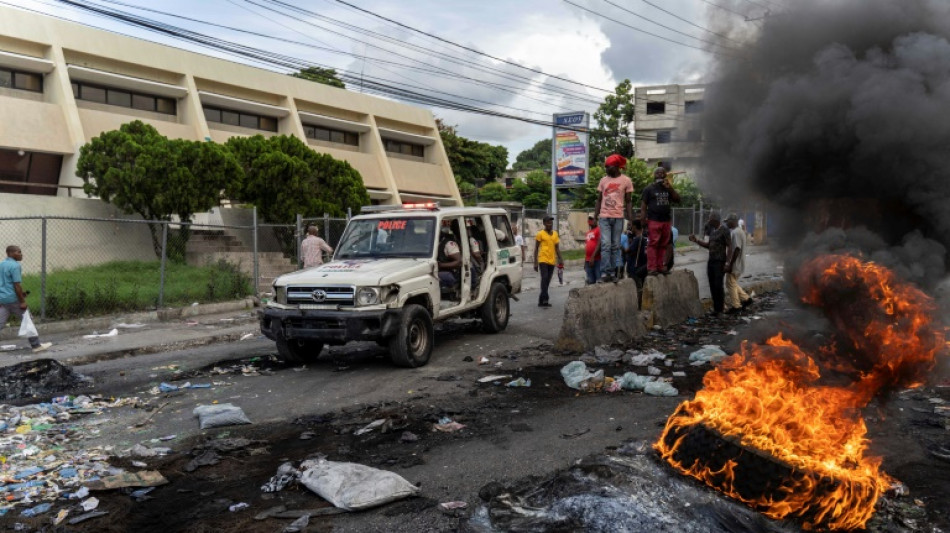
Skepticism about another intervention force for Haiti / Photo: Richard Pierrin - AFP

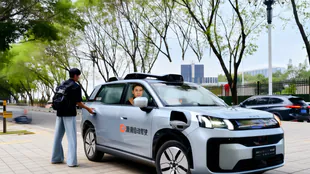 DiDi Advances Robotaxi Operations in China with New R2 Vehicle and Expanded Safety Infrastructure

 RBI Grants Paytm In-Principle Approval to Revive Wallet Business

 China's Factory Activity Contracts as Export Orders Weaken

 US Retail Sales and Fed Minutes Set Up a Critical Test for Consumers

 MotorTrend’s Top Hybrid Vehicle Picks for 2026

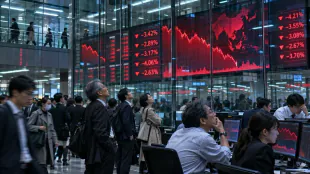 Asian Markets Slide as AI Concerns Hit Chip Stocks

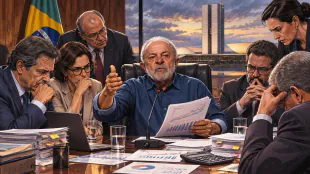 Brazil Faces Debt and Inflation Test as Lula Prepares Fourth Term
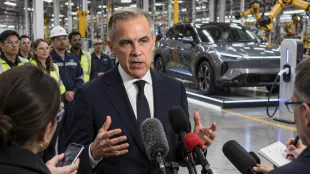
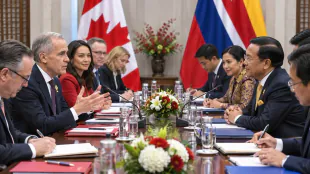 Canada Expands Asian Trade Push as US Negotiations Resume

 Jennie Earns Two Grammy Nominations as Major K-pop Agencies Boycott New Asian Pop Category

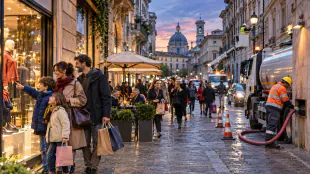 Italy Raises 2026 Growth View but Warns Energy Will Keep Inflation High

 UK Economy Grows 0.7% in Third Quarter as Services Lead Expansion

Sending a special international force to Haiti could provide much-needed relief to a population choked by powerful gangs, but any new stabilization mission has little chance of ending the chaos without a long-term political solution, experts say.
Since mid-September, the gangs have blocked access to the all-important oil terminal, paralyzing a nation which already lacks fuel for critical tasks like distributing drinking water and powering hospital facilities.
Faced with such turmoil -- the latest chapter in a chronic security, political and humanitarian crisis which now includes a deadly resurgence of cholera -- Prime Minister Ariel Henry has launched an appeal to the international community.
His SOS call was echoed by United Nations Secretary-General Antonio Guterres, who recently asked the Security Council to consider sending an international armed mission to put an end to what he said was a "nightmarish situation" in the poorest country of the Americas.
But the idea of a new foreign force does not have unanimous support among Haiti's population, or in the Security Council.
"At a time when the Haitian government... is unable to govern, will sending such a rapid action force to Haiti receive the understanding support and cooperation from the parties in Haiti, or will it face resistance or even trigger violent confrontation?" Geng Shuang, China's deputy permanent UN representative, asked recently.
Haitians have already hosted US, French, and Canadian troops, along with UN stabilization missions -- one of which brought cholera to the country in 2010, causing an epidemic that killed more than 10,000 people.
"It's been 25 years of the international community doing the same thing, and it hasn't produced any results," bemoaned Gilles Rivard, Canada's former ambassador to Haiti who told AFP he believes the country's citizens are "right to be bitter."
Some hope that sending troops would help, at least in the short term.
"The international forces could bring immediate relief to Haitians," said Renata Segura, the International Crisis Group's deputy program director for Latin America and the Caribbean.
The mission could regain control of oil depots, restore access to potable water that is crucial to fight cholera, and "open the roads that are blocked by gangs and allow passing of humanitarian aid and other basic goods," she added.
- It's 'complicated' -
But, with thousands of Haitians having taken to the streets to protest both the government and outside intervention, a foreign force could become "a source of further division and antagonism," Segura also warned, fearing such a deployment could be interpreted as support for the controversial prime minister.
Appointed just two days before the assassination of president Jovenel Moise in July 2021, Ariel Henry has since clung to power despite parts of civil society and the political opposition questioning his legitimacy.
"The country is ungovernable," and the Haitians are "incapable of delivering a roadmap that leads to elections," said Canada's Rivard, who considers such a plan a prerequisite for sending an international force.
"The Haitian government needs to be pushed to make a compromise with the other political parties and civil society," University of Virginia professor Robert Fatton told AFP.
A foreign force could "breathe life" into a population that seeks to "eat and go about their business without the continuing fear of being killed by gangs or by the police," he added.
But "without a political accord, without compromise, after one or two years we'll have the same disaster," he said, suggesting instead that any international mission focus on shepherding a "transitional government" towards elections.
In a geopolitical context dominated by the war in Ukraine, "who could lead such a mission?" Rivard posed.
All eyes are on the United States, which along with Mexico is drafting a resolution on a non-UN mission.
An international force remains an "urgent priority" for Washington, State Department spokesman Ned Price said Monday, calling Haiti's security and public health situation "unsustainable."
It would be difficult for US President Joe Biden to send troops to Haiti before his country's midterm elections on November 8, noted Fatton. And no other nation seems enthusiastic.
"It's going to be complicated," the professor said.
Nogueira--PC