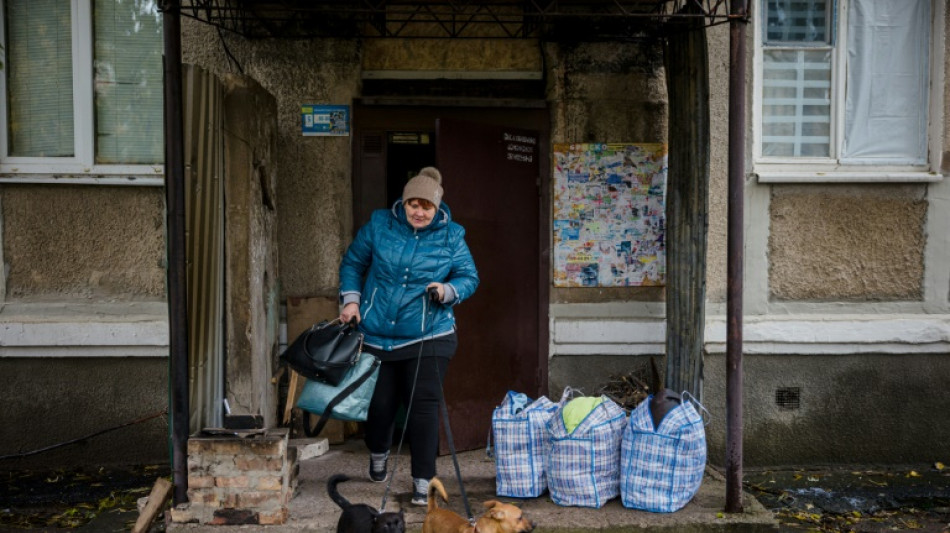
In Ukraine's blitzed Bakhmut, residents accustomed to death / Photo: Dimitar DILKOFF - AFP

 DiDi Advances Robotaxi Operations in China with New R2 Vehicle and Expanded Safety Infrastructure

 RBI Grants Paytm In-Principle Approval to Revive Wallet Business
 China's Factory Activity Contracts as Export Orders Weaken

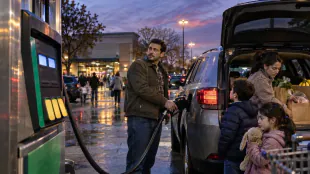 US Retail Sales and Fed Minutes Set Up a Critical Test for Consumers

 MotorTrend’s Top Hybrid Vehicle Picks for 2026

 Asian Markets Slide as AI Concerns Hit Chip Stocks

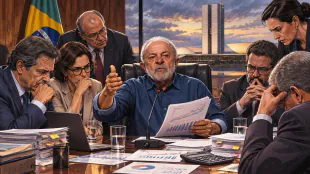 Brazil Faces Debt and Inflation Test as Lula Prepares Fourth Term

 Canada Expands Asian Trade Push as US Negotiations Resume

 Jennie Earns Two Grammy Nominations as Major K-pop Agencies Boycott New Asian Pop Category

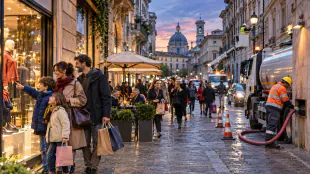 Italy Raises 2026 Growth View but Warns Energy Will Keep Inflation High
 UK Economy Grows 0.7% in Third Quarter as Services Lead Expansion

Elderly people quietly cycle under bombardment, and children ride scooters on sidewalks that vibrate from artillery fire.
Bakhmut, a ghost town in eastern Ukraine torn apart by four months of brutal battles with invading Russian forces, has seen so much destruction that its few remaining residents have grown accustomed to death.
As Russian troops aided by paramilitaries from the shadowy Wagner group exchange fire with Ukrainian forces on a daily basis, locals say they have learned to live under constant fire.
Sergiy, a 56-year-old resident, said he no longer even raises his head when Russian missiles whistle past above.
"It happened just like that. One day we got used to it," he told AFP, clad in a tracksuit and slippers.
"At first, each boom scared us, but we got used to it," he said, declining to give his last name.
On the wet pavement near his house, the blood of one of Sergiy's neighbours was still visible among the green and yellow autumn leaves.
He was one of seven people killed in bombardment on Monday.
Bakhmut, once a quiet town of some 70,000 people, is now a shadow of its former self, with no electricity, water or phone connection.
Survivors dressed day and night in their winter clothes, cluster together to cut wood for heating and to cook meals over fire outside their apartment buildings.
- 'I can't stay anymore' -
Several thousand people remain on the Ukraine-controlled side of Bakhmut, according to local officials. It's unclear how many have stayed in the occupied part of town.
When a mortar shell hit an apartment building on Monday, Sergiy ran to take shelter under a porch.
But a fellow local was not spared.
"We came out and saw this man lying here with his chest open and without a head," Sergiy said coldly. "We can't even know who it was, he was there like a piece of meat."
Zoya Timoshenka, a 73-year-old retiree, lives on the first floor of the bombed-out building.
"Be careful, there's lots of glass here," she told AFP journalists as she led them to what remained of her flat.
Icy wind and autumn drizzle blew through a gaping hole in the wall where the window once stood between embroidered curtains.
After Monday's attack, Timoshenka had finally decided to leave.
Her daughter-in-law, Natalya Timoshenka, said both would evacuate to the city of Dnipro some 250 kilometres (155 miles) further west.
"With what happened yesterday, with this man killed downstairs, I can't stay anymore," said the 48-year-old.
Her retired mother-in-law had packed her entire life into three shopping bags.
"If we stay here, we don't have 36,000 options: Either we are buried under the rubble, or we lose an arm or a leg, or we die," said the elder Timoshenka, before boarding a yellow evacuation bus.
V.Fontes--PC