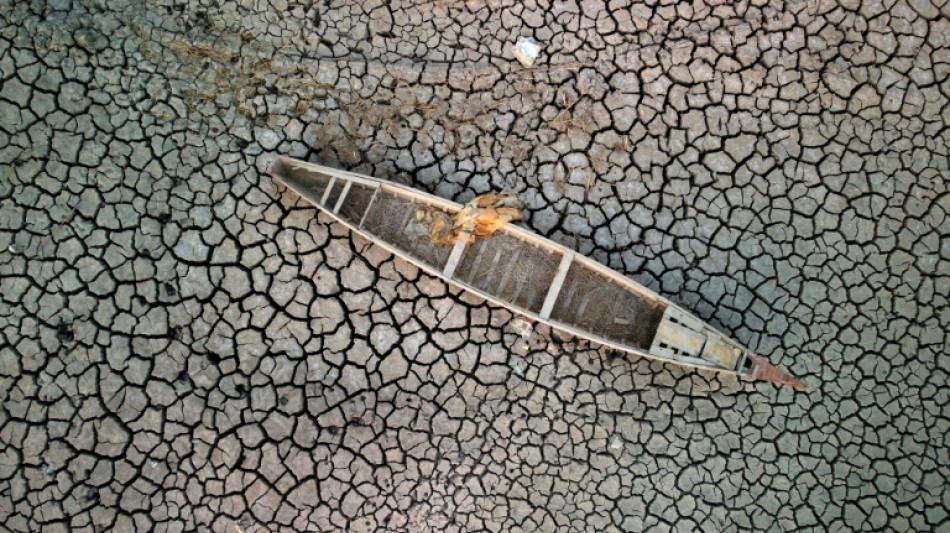
Climate pledges still 'nowhere near' enough for 1.5C: UN / Photo: Asaad NIAZI - AFP

 DiDi Advances Robotaxi Operations in China with New R2 Vehicle and Expanded Safety Infrastructure

 RBI Grants Paytm In-Principle Approval to Revive Wallet Business

 China's Factory Activity Contracts as Export Orders Weaken

 US Retail Sales and Fed Minutes Set Up a Critical Test for Consumers

 MotorTrend’s Top Hybrid Vehicle Picks for 2026

 Asian Markets Slide as AI Concerns Hit Chip Stocks

 Brazil Faces Debt and Inflation Test as Lula Prepares Fourth Term

 Canada Expands Asian Trade Push as US Negotiations Resume

 Jennie Earns Two Grammy Nominations as Major K-pop Agencies Boycott New Asian Pop Category

 Italy Raises 2026 Growth View but Warns Energy Will Keep Inflation High

 UK Economy Grows 0.7% in Third Quarter as Services Lead Expansion

International climate pledges remain far off track to limit temperature rises to 1.5 degrees Celsius, according to a UN report released Wednesday, less than two weeks ahead of high-stakes negotiations to tackle global warming.
The combined climate pledges of more than 190 nations that signed up to the 2015 Paris climate deal put Earth on track to warm around 2.5C (36 degrees Fahrenheit) compared to pre-industrial levels by the century's end, the UN said.
With the planet already battered by climate-enhanced heatwaves, storms and floods after just 1.2C of warming, experts say the world is still failing to act with sufficient urgency to curb greenhouse gas emissions.
"We are still nowhere near the scale and pace of emission reductions required to put us on track toward a 1.5 degrees Celsius world," said Simon Stiell, Executive Secretary of UN Climate Change.
"To keep this goal alive, national governments need to strengthen their climate action plans now and implement them in the next eight years."
The UN's climate experts have said emissions -- compared to 2010 levels -- need to fall 45 percent by 2030 in order to meet the Paris deal's more ambitious goal.
In this latest report, the UN said that current commitments from governments around the world will in fact increase emissions by 10.6 percent by 2030.
When nations met in Glasgow last year for a previous round of climate negotiations, they agreed to speed up their climate pledges to cut carbon pollution and increase financial flows to vulnerable developing nations.
- 'Disappointing' -
But only 24 countries, of 193, had updated their plans at the time of the report, which Stiell said was "disappointing".
"Government decisions and actions must reflect the level of urgency, the gravity of the threats we are facing, and the shortness of the time we have remaining to avoid the devastating consequences of runaway climate change," he said.
He called on governments to revisit and strengthen their carbon cutting plans in line with the Paris temperature goals before the UN climate meeting, which will be held from November 6 to 18 in Sharm el-Sheikh, Egypt.
Nations are meeting in the shadow of Russia's invasion of Ukraine and cascading global crises of hunger, energy prices and living costs, exacerbated by extreme weather.
Scientists have warned that any rise above 1.5C risks the collapse of ecosystems and the triggering of irreversible shifts in the climate system.
In the last year alone, the world has seen unprecedented floods, crop-withering heatwaves and wildfires across four continents.
With the impacts slamming hardest into countries least responsible for fossil fuel emissions, calls have grown louder for richer polluters to pay "loss and damage" to vulnerable nations.
In a landmark report this year on climate impacts and vulnerabilities, the UN's 195-nation Intergovernmental Panel on Climate Change (IPCC) warned that time had nearly run out to ensure a "liveable future" for all.
That report was signed off by the same governments that will return to negotiations in Egypt.
P.Queiroz--PC



