Nigeria's kidnapped schoolgirls: two years gone

 Drone owners rush to offload devices ahead of Beijing ban

 Trump's beef policies irk Texas ranchers, testing their loyalty

 Nvidia, OpenAI CEOs to attend Xi dinner at White House

 Anthropic picks Accenture for in-house AI safety evaluation

 Balogun returns as Monaco beat Lens to continue strong Ligue 1 start

 'Pause' on overt repression in Venezuela, but reforms still needed: HRW

 Global stocks mixed as yen falls despite Bank of Japan rate hike

 Cuba hit with seventh major blackout of the year

 Murray out with concussion so Wentz will start for Vikings

 UN chief 'deeply regrets' US visa refusal to Abbas for annual meeting

 England quick Carse to face no charges over alleged nightclub assault

 Mancini brings nine newcomers into the first squad of his Italy comeback

 Czechs level Davis Cup tie against USA as South Korea eye Finals

 New France boss Zidane confirms Mbappe as captain after naming first squad

 California governor signs order to explore AI 'kill switch'

 Head leads run spree as Australia win Zimbabwe ODI series

 In-form Raphinha wants to finish career at Barcelona

 Warren Buffett steps down as Berkshire Hathaway chairman

 Carrick confident Man Utd can 'work through' tough time

 Mbappe ends Nike partnership to join Swiss brand On

 Liverpool boss Iraola puts Bournemouth love affair on hold

 'A disaster' if Man City do not win says Maresca after flawless start

 Kerry James Marshall: American 'blackness' painter celebrated in Europe

 Spain coach De la Fuente offers 'full support' to people of Ceuta

 Russia seizes assets of Nestle, French firms over West's Ukraine support

Here is a snapshot of key events since the abduction of more than 200 schoolgirls from the remote town of Chibok in northeastern Nigeria two years ago.
Nigeria's army confirmed on Wednesday that one of the girls has been found.
- Snatched from school -
On April 14, 2014, gunmen from the Islamist group Boko Haram seize 276 girls from the Government Girls Secondary School in Chibok, Borno state.
The girls are forced from their dormitories onto trucks and driven into the bush. Fifty-seven girls manage to flee.
An international media campaign is launched, backed by personalities including US First Lady Michelle Obama and Nobel Peace Prize laureate Malala Yousafzai.
The hashtag #BringBackOurGirls underpins a social media storm that ultimately achieves little.
Boko Haram leader Abubakar Shekau claims responsibility for the mass abduction in a video released on May 5, and vows to sell the girls as slave brides.
- Global response -
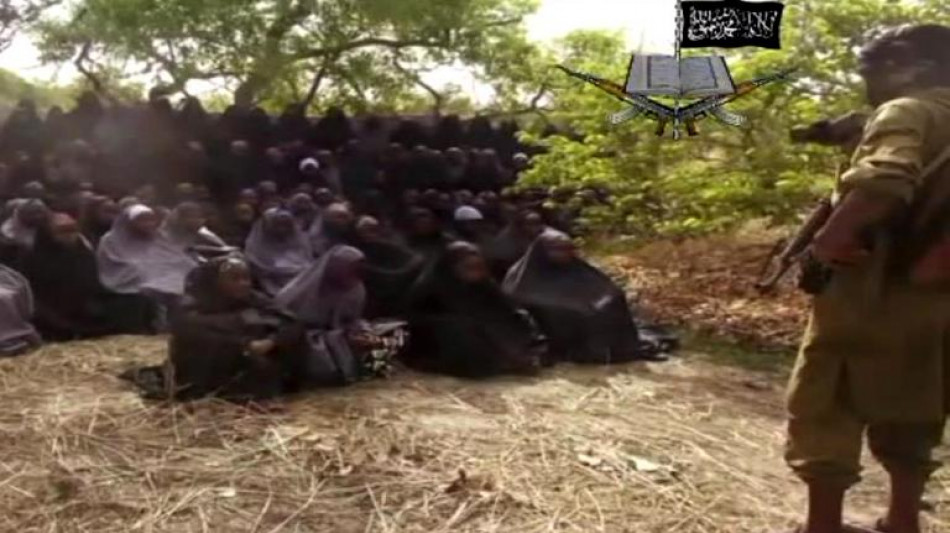
One week later, a second video shows about 100 of the missing girls. Boko Haram says they have converted to Islam and will not be released unless militant fighters held in custody are freed.
On May 17, Benin, Cameroon, Chad, Niger and Nigeria vow to fight Boko Haram together, in what Cameroon President Paul Biya terms a "declaration of war".
The UN Security Council says the kidnappings "may amount to crimes against humanity," after Britain, China, France, Israel and the US offer help.
US military specialists deploy to neighbouring Chad but later move elsewhere after Nigeria stops requesting their services.
On May 26, Nigeria's Chief of Defence Staff Alex Badeh says the girls have been located but warns a rescue operation would put their lives at risk.
- 'Married off' -
On October 31, Shekau quashes rumours of a deal with Nigerian authorities and says the girls have converted to Islam and been "married off".
- One year on -
On April 14, 2015, Nigeria's president-elect Muhammadu Buhari warns he "cannot promise that we can find" the girls, as vigils are held in many countries to mark their first year as hostages.
Amnesty International believes the girls have been separated into three or four groups and are being held in camps, some of which might be in Cameroon or Chad.
- Others freed -
Buhari says in late December he is willing to negotiate with any "credible" Boko Haram leadership, a week after claiming the country has "technically" won the war against Boko Haram.
Throughout 2015, the Nigerian military announces the rescue of hundreds of people, most of them women and children, who have been kidnapped by Boko Haram.
But the missing schoolgirls are not among them, despite several unconfirmed sightings.
Suicide attacks using women and young girls increase against "soft" civilian targets such as mosques, markets and bus stations, fuelling fears about Boko Haram's use of its captives.
In March 2016, it emerges that Boko Haram also seized 500 women and children from the Borno town of Damasak just months after the Chibok abduction. The kidnapping had been denied at the time.
- 'Proof of life' -
On April 13, 2016, US television station CNN reports that Boko Haram has sent a "proof of life" video which shows 15 of the girls, the first concrete indication that at least some are still alive.
On May 18, 2016 the Nigerian army confirms the first of the schoolgirls has been found.
O.Gaspar--PC