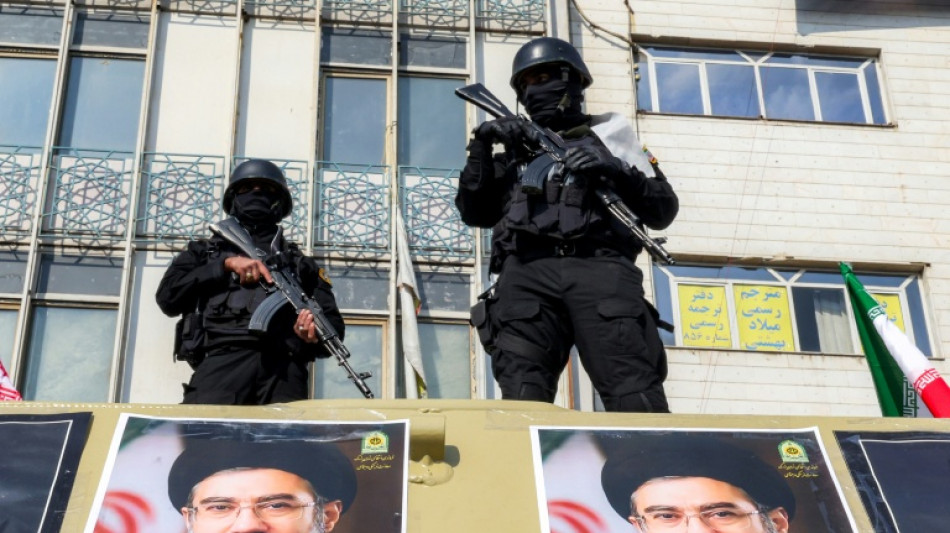
Armed teenagers on patrol strike fear into Tehran residents / Photo: Atta KENARE - AFP

 Barca sign Croatia goalkeeper Livakovic
 Rain delays England's bid to put off-field incidents behind them
 World record holder Sawe withdraws from Berlin Marathon

 Driven by faith, activists stand up to fellow Jews to protect Palestinians
 Therapy Culture Performance: How the Lindsay Clancy Trial Sparked a Trend of Viral Maternal Distress
 Norway's King Harald, 89, in 'extremely serious' condition

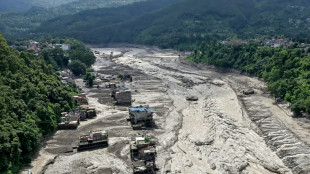 How a glacier collapse may have caused Nepal-Tibet disaster

 Harmovest Capital Strengthens Global Financial Services Through Technology and Compliance
 Nvidia to buy AI platform Hugging Face for $12.9 bn: report
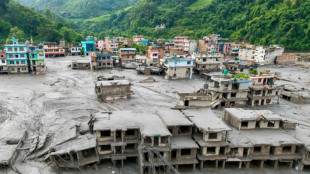
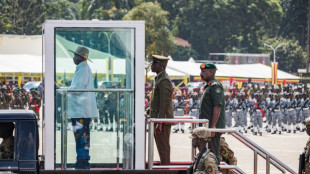 Palace intrigue in Uganda as succession battle heats up
 'Housing First' approach gets Swedish city's homeless off streets
 Czech duo Muchova and Mensik win US Open mixed doubles title
 Japan's 'polka dot queen' artist Yayoi Kusama dies aged 97
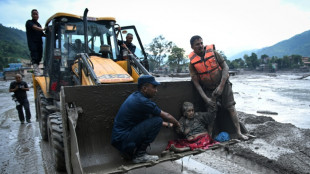 Nepal-Tibet disaster: what we know

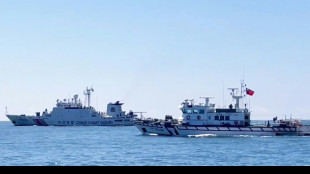 China deploys record number of ships around Taiwan as pressure grows

 Ruthless Bayern target treble as rivals reboot on Bundesliga return

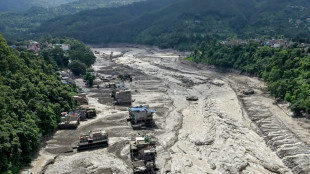 What experts know so far about Nepal's deadly floods

 UEFA set to withdraw FIFA boycott threat ahead of Champions League draw
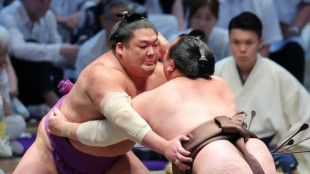 Sumo moves to beat Japan summer heat as temperatures rise
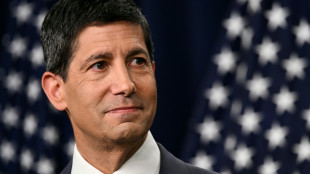 'Be more honest': Markets crave clarity from cryptic Fed chair

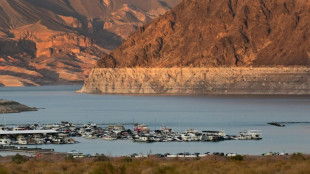 Climate change leaves its mark on America's largest reservoir
 CIA director warned Russia not to attack NATO members: US media

 Search for missing after Nepal-Tibet floods kills at least 160

 Meta, US states agree $18 bn settlement in landmark teen safety case

 What scientists know so far about Nepal's deadly floods

In the security crackdown ordered by Iranian authorities since the start of the war, an unsettling new sight on the streets of Tehran has put residents on edge: teenagers armed with machine guns.
During the first weeks of the war against the United States and Israel, checkpoints sprang up around the capital, often comprising police or military vehicles, with traffic cones and barriers blocking the roads.
In recent days, following highly publicised airstrikes on their positions, some of the most visible barriers have been removed, but security forces remain a noticeable presence on the streets.
Iranian authorities have confirmed they are recruiting children as young as 12 for paramilitary group patrols, traffic checks and other duties.
"Around 9 pm, I was feeling suffocated and nostalgic, so I got in the car to drive around town," a 28-year-old woman told AFP on Monday on condition that her identity be protected.
"I came across two checkpoints in the north of Tehran, with teenagers aged 13 or 14, weapons in their hands, who were stopping vehicles," she added in a message sent to an AFP correspondent abroad.
One of the boys opened the passenger door and sat down next to her.
"He asked for my mobile phone and checked everything, even my photographs. It was extremely intrusive," she added.
Hundreds of Iranian authorities have been arresting people for connecting to the international internet, which remains banned and largely inaccessible, while those caught sending information overseas have been accused of spying.
Another Tehran resident told AFP last week he had been through a checkpoint of military vehicles, then "just 100 metres (330 feet) ahead, there are several private cars with teenagers stopping vehicles".
"They open car doors without permission, open dashboards and check phones," he added.
- 'Do not abandon' -
Iranian authorities say minors as young as 12 are being allowed to join the country's much-feared Basij volunteer paramilitary force, reviving memories of the 1980s when thousands of children fought during the Iran-Iraq war.
Basij units, part of the ideological army of the Revolutionary Guards, are believed to have played a role alongside other security forces in the violence against anti-government protesters in January which left thousands dead.
Rahim Nadali, an official with the Revolutionary Guards in Tehran, said on state television last week that Basij units had been inundated with volunteers.
"Considering the ages of those requesting to join, we have now lowered the minimum age to 12 years old, because children aged 12–13 want to be involved," he said.
Analysts have varying interpretations of the move, with some seeing it as a sign of desperation, or a lack of volunteers.
Others said the move was evidence of a more radical turn by authorities.
In a statement at the weekend, the powerful speaker of parliament Mohammad Bagher Ghalibaf urged supporters to "not abandon the streets, because missiles, streets and straits have squeezed the enemy's throat".
The reference to "straits" was to the Strait of Hormuz, the strategic shipping route off Iran's coast that Tehran has all but closed.
- 'Hardline support base' -
The crackdown is designed to suppress any chances of a popular uprising, which was encouraged by US President Donald Trump and Israeli Prime Minister Benjamin Netanyahu at the start of the war, analysts said.
As well as manning checkpoints, pro-government supporters form street patrols at night.
"They take cars fitted with speakerphones and they give them flags and they march with lots of noise and shout slogans in the streets," another resident in a Tehran suburb told AFP recently.
Hamidreza Azizi, an academic and author on Iran, said the idea was "to prevent any opposition calls for people to come onto the streets".
Azizi, a visiting fellow at the German Institute for International and Security Affairs, said that Iran's government was leaning on its most devout supporters.
"The legitimacy deficit in the Islamic republic has led it to rely on its minority hardline support base which has proved to be effective in supporting the regime in the middle of the war," he told a discussion organised by the International Crisis Group, a think-tank, on Monday.
The New York-based Human Rights Watch campaign group said the recruitment of children for military purposes was "a war crime when the children are under 15" and would put them at risk of US-Israeli attacks.
"What this boils down to is that Iranian authorities are apparently willing to risk children's lives for some extra manpower," Bill Van Esveld, associate children's rights director at the group said in a statement.
burs-adp/sw/dcp
J.V.Jacinto--PC