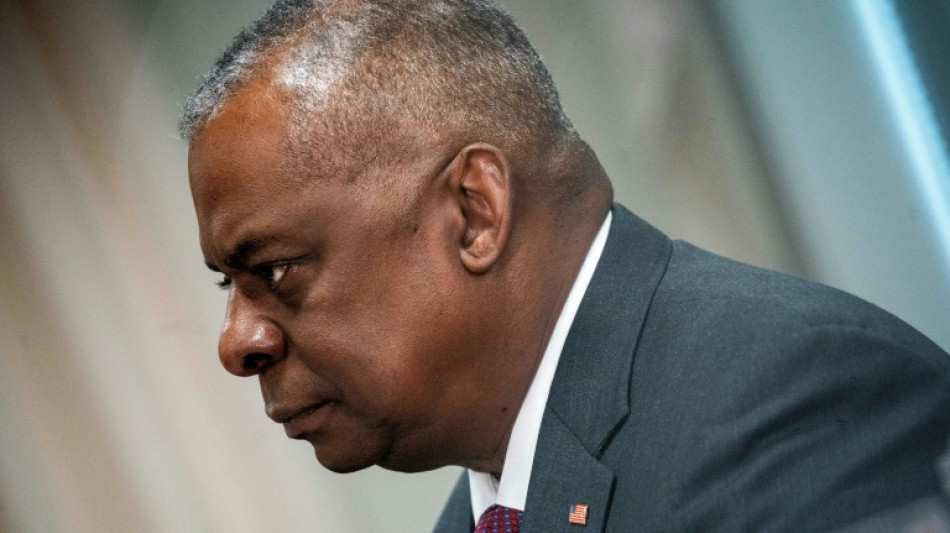
US sees 'acute threat' from Russia, but says China is main challenge / Photo: Stefani Reynolds - AFP/File

 Verstappen edges Russell in final practice in Azerbaijan

 English, Spanish, Italian, German football leagues call for FIFA reform

 Pope arrives in France on first official visit in 18 years

 Pope arrives in France on first state visit in 18 years

 Heavy fighting, internet disruption as Ethiopia conflict rages

 From transit to consumption: drug use surges in Mozambique
 Chicago teams, Guardians and Padres all book MLB playoff berths

 Bijan Robinson destroys Packers in 35-14 win for Falcons

 Harimoto hails new era as Japan dethrone table tennis kings China

 India rape cases turn focus back onto women's safety

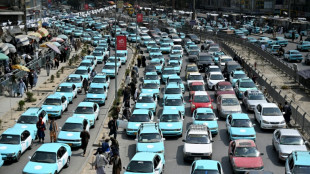 Rebellious Afghan taxi drivers defy ban on music

 Brazil candidates mount digital armies for fierce online campaign
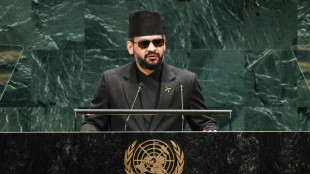 Nepal PM says floods 'a warning to the world' about climate change

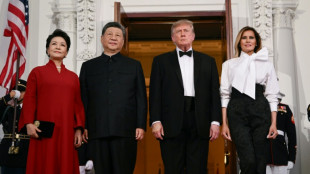 Trump hosts Xi for state dinner as pomp masks tensions
 Scheffler and Burns give US 3-2 Presidents Cup lead
 Hollywood stars among 100 arrested in NY anti-Netanyahu protest

 Klopp denied on Germany debut as Portugal win in Nations League

 Rich nations should foot climate bill, says Nepal minister

 Wellalage and Mendis star as Sri Lanka level England series in thriller

 Felix gives Portugal win over Wales as Ronaldo misfires
 Wellalage and Mendis star as Sri Lanka level England ODI series
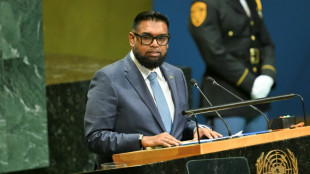 Guyana urges Venezuela at UN to respect ICJ's ruling on Essequibo region

 Argentina coach says Messi deserves to go out on own terms

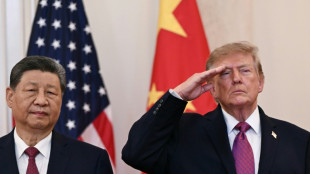 Xi sets red lines for Trump despite lavish White House welcome

 Cowboys, Ravens happy with footing for first Rio NFL clash
Russia's invasion of Ukraine highlights the "acute threat" posed by Moscow, but China is the most consequential challenge for the United States, the Pentagon said Thursday.
The dangers are both conventional -- Moscow's aggression toward its neighbors and Beijing's efforts to gain control of Taiwan -- and nuclear, with Russia possessing an extensive arsenal and China's stocks of atomic weapons growing fast.
US Defense Secretary Lloyd Austin highlighted the different challenges posed by China and Russia as he unveiled the unclassified versions of several military strategy documents.
China "is the only competitor out there with both the intent to reshape the international order, and increasingly the power to do so," Austin said.
"Unlike China, Russia can't systemically challenge the United States over the long term. But Russian aggression does pose an immediate and sharp threat."
The National Defense Strategy, which was released Thursday, likewise places the primary emphasis on China.
Beijing is seeking to "refashion the Indo-Pacific region and the international system to suit its interests and authoritarian preferences," it says, describing this dynamic as "the most comprehensive and serious challenge to US national security."
The strategy says Chinese rhetoric about and "coercive activity" toward self-ruled Taiwan -- which Beijing has vowed to take control of, by force if necessary -- is a destabilizing factor that risks miscalculation and threatens peace in the area.
As for Russia, it says the "acute threat" posed by Moscow has been most recently demonstrated by Moscow's February invasion of Ukraine.
- 'Emerging threat' of climate change -
"The Department (of Defense) will support robust deterrence of Russian aggression against vital US national interests, including our treaty Allies," the strategy says.
In a departure from the previous National Defense Strategy, which was issued during Donald Trump's presidency, the newly released document classifies climate change as an "emerging threat."
The US "will integrate climate change into threat assessments," as well as increasing the "resiliency of military installations" and taking "climate extremes" into account in decisions on training and equipping the armed forces, the strategy says.
In an updated report on US nuclear posture released in parallel with the National Defense Strategy, the Pentagon defines the role of its nuclear arsenal as deterring both nuclear and non-nuclear attacks that have strategic consequences.
"This includes nuclear employment of any scale, and it includes high-consequence attacks of a strategic nature that use non-nuclear means," a senior defense official told journalists.
The Nuclear Posture Review emphasizes that China's nuclear arsenal is growing, but says Russia's is currently more extensive.
- Warning to North Korea -
"By the 2030s the United States will, for the first time in its history, face two major nuclear powers as strategic competitors and potential adversaries," the document says.
It emphasizes the importance of modernizing US strategic assets, while scrapping a submarine-launched nuclear cruise missile program and saying a type of obsolete nuclear bomb will be retired.
The document also contains a stark warning for Kim Jong Un against employing North Korea's growing nuclear arsenal.
"Any nuclear attack by North Korea against the United States or its allies and partners is unacceptable and will result in the end of that regime. There is no scenario in which the Kim regime could employ nuclear weapons and survive," it says.
The Missile Defense Review -- also released Thursday -- likewise points to growing threats from China and Russia.
Beijing is closing the gap with Washington when it comes to ballistic and hypersonic missile technology, while Moscow is modernizing its intercontinental-range missile systems and developing advanced precision-strike missiles.
The document says drones -- which Russia has used to strike against Ukrainian cities and energy infrastructure -- are also a threat that is likely to grow.
Russian President Vladimir Putin meanwhile offered a distinctly different take on the international strategic environment Thursday, saying Moscow is trying to "defend its right to exist" in the face of Western efforts to "destroy" his country.
"Ahead is probably the most dangerous, unpredictable and at the same time important decade since the end of the Second World War," he said.
O.Salvador--PC