
Japan to approve $200 bn budget to tackle inflation / Photo: Philip FONG - AFP

 Verstappen edges Russell in final practice in Azerbaijan

 English, Spanish, Italian, German football leagues call for FIFA reform

 Pope arrives in France on first official visit in 18 years

 Pope arrives in France on first state visit in 18 years
 Heavy fighting, internet disruption as Ethiopia conflict rages

 From transit to consumption: drug use surges in Mozambique

 Chicago teams, Guardians and Padres all book MLB playoff berths

 Bijan Robinson destroys Packers in 35-14 win for Falcons
 Harimoto hails new era as Japan dethrone table tennis kings China

 India rape cases turn focus back onto women's safety

 Rebellious Afghan taxi drivers defy ban on music

 Brazil candidates mount digital armies for fierce online campaign

 Nepal PM says floods 'a warning to the world' about climate change

 Trump hosts Xi for state dinner as pomp masks tensions

 Scheffler and Burns give US 3-2 Presidents Cup lead
 Hollywood stars among 100 arrested in NY anti-Netanyahu protest

 Klopp denied on Germany debut as Portugal win in Nations League

 Rich nations should foot climate bill, says Nepal minister

 Wellalage and Mendis star as Sri Lanka level England series in thriller

 Felix gives Portugal win over Wales as Ronaldo misfires
 Wellalage and Mendis star as Sri Lanka level England ODI series

 Guyana urges Venezuela at UN to respect ICJ's ruling on Essequibo region

 Argentina coach says Messi deserves to go out on own terms

 Xi sets red lines for Trump despite lavish White House welcome

 Cowboys, Ravens happy with footing for first Rio NFL clash

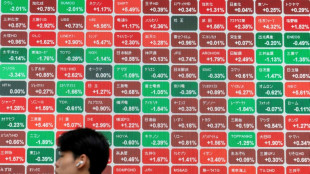
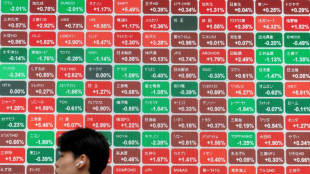
Japan's cabinet was expected to approve an extra budget worth $200 billion Friday to cushion the economy from the weak yen and inflation, though the central bank refused to budge from the ultra-loose policy that has hammered the currency.
Prime Minister Fumio Kishida said the government would "seek swift approval" of a 29.1 trillion yen budget aimed at encouraging wage growth and supporting households with soaring energy bills.
Total fiscal spending on the stimulus measures could be as high as 39 trillion yen, according to the Nikkei business daily and other major Japanese media.
That figure could rise to 71.6 trillion yen when private-sector investments that ministers hope will also be made are taken into account, the reports said.
Prices are rising in Japan at their fastest rate in eight years, although the three-percent inflation rate remains well below the sky-high levels seen in the United States and elsewhere.
The yen has also lost more than a fifth of its value against the dollar this year, with one dollar fetching 146 yen on Friday.
Japan spent nearly $20 billion in September in an effort to curb the yen's slide, and further expensive government interventions have reportedly taken place in recent days.
The yen's steep falls have been driven by the widening gap between the monetary policies of the US and Japanese central banks -- with the Bank of Japan keeping rates ultra-low to encourage sustainable growth, while the Federal Reserve ramps them up.
Following a two-day policy meeting, the BoJ said it would continue to keep its easy policy, defying growing pressure to tweak its strategy as the yen slides.
Bank Governor Haruhiko Kuroda told reporters officials would stick to their guns until prices rise "in a sustainable manner", adding there would be no change "any time soon".
- Stability sought -
Kuroda declined to comment on suspected currency interventions in the past week, which the finance ministry has not confirmed.
But "having said that, it is extremely important that (forex rates) reflect economic fundamentals, and move in a stable manner", he added.
"The recent depreciation of the yen is rapid and unilateral," which is "negative for the Japanese economy", Kuroda said.
Japan -- which has one of the world's highest debt-to-GDP ratios -- has already injected hundreds of billions of dollars into its economy over the past two years to support recovery from the Covid-19 pandemic.
Friday's spending package is expected to include measures to encourage wage growth and support households with energy bills, which have spiked since Russia's invasion of Ukraine.
Ahead of the BoJ meeting, UBS economists Masamichi Adachi and Go Kurihara said that a mix of continued easing by the central bank and the government's stimulus measures would be "optimal".
That is because Japan's inflation is not demand-driven, but largely down to soaring energy costs, they explained in a commentary.
This view was echoed by Yoshiki Shinke, chief economist at Dai-ichi Life Research Institute.
"Japan's economy faces weak demand due to price rises, in contrast to the United States, where demand is strong, with the Fed trying to cool down inflation," he told AFP.
"It's impossible that Japan would hike rates to curb inflation, for this reason."
Ferreira--PC