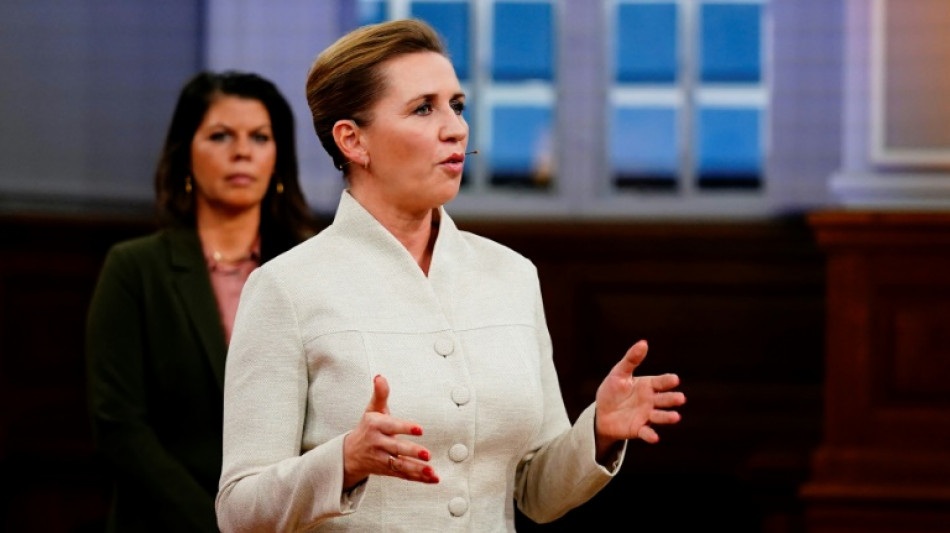
Uncertain outcome as Danes head to the polls / Photo: Bo Amstrup - Ritzau Scanpix/AFP

 Williams boss hails Chadwick as F1 inspiration for women
 World No.1 Sinner delays return with China Open withdrawal
 South Lebanon children return to school destroyed by Israel strike

 Jewish group urges Berlin far-left vote winners to tackle antisemitism
 European stock markets climb as oil prices drop

 Trump accuser E. Jean Carroll finally has her damages

 Germany's Havertz, Musiala ruled out of Greece match with injury

 Ireland's Gaza stance spills from Eurovision into football
 Welcome aboard the Costa Serena, the Asian Games floating hotel
 Asian markets mixed after recent oil surge
 Cash for nature protection: hotelier's offer to Principe islanders
 US miner KoBold bets on AI to gain edge in DR Congo mineral hunt

 Internet disrupted in Ethiopia as conflict rages

 Asian markets mixed after oil gains

 'Genius' Ohashi bids for third Asian Games gold after world record
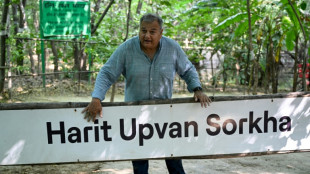 India's 'Tree Father' plants for a greener future
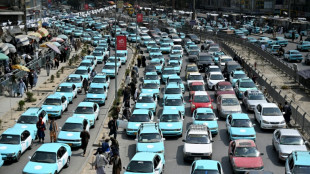
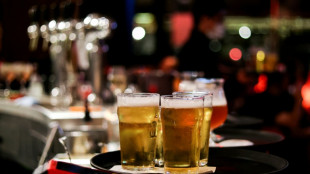 Hopping mad: New health warning stirs up Belgian brewers
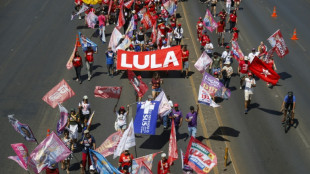
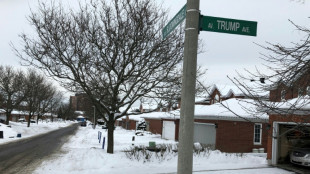 Canadian capital to rename 'Trump Ave'
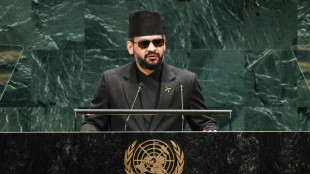
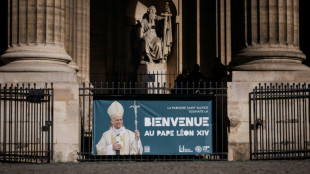 Pope heads to France on first state visit in 18 years
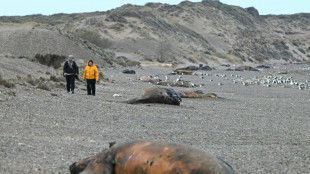 Bacteria suspected in deaths of hundreds of baby whales off Argentina

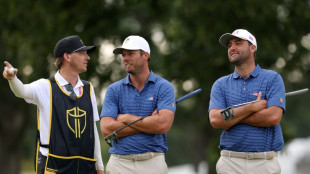 Scheffler and Burns give US 3-2 Presidents Cup lead
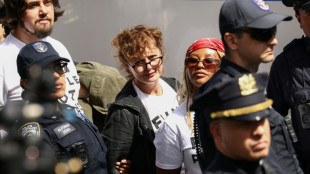 Hollywood stars among 100 arrested in NY anti-Netanyahu protest
 Klopp denied on Germany debut as Portugal win in Nations League
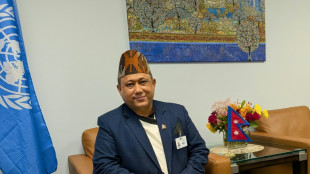 Rich nations should foot climate bill, says Nepal minister

 Wellalage and Mendis star as Sri Lanka level England series in thriller

Denmark votes on Tuesday in what promises to be a tight parliamentary election in which incumbent Prime Minister Mette Frederiksen's survival in the face of the far-right depends on a new centrist party.
Voting stations are open from 8 am to 8 pm (0700 to 1900 GMT) and the first results are expected around 9:30 pm in this election triggered by the "mink crisis" that has kept the country in suspense for over a year.
A party propping up the minority Social Democrats government threatened to topple it if it did not call elections to regain the confidence of voters after a decision -- which turned out to be illegal -- to cull the country's roughly 15 million minks over fears of a mutated strain of the novel coronavirus.
Recent polls give the left-wing "red bloc", led by Frederiksen's Social Democrats, 47.1 to 49.1 percent against 40.9 to 43.6 percent for the "blues", an informal alliance of liberal and conservative parties, supported by three populist parties.
With neither bloc looking likely to gain their own majority, they will not be able to govern without the help of the Moderates, a centrist party founded this year by former Liberal Party leader and two-time prime minister Lars Lokke Rasmussen, who is polling at 9.3 to 10 percent of the vote.
"That's the most interesting part. If there is no majority, it seems to be the case, the Moderates are required to form a government," Rune Stubager, a professor of political science at Aarhus University, told AFP.
- Volatile voters -
Both the left and the right have been making repeated appeals to Lokke Rasmussen, who has campaigned on reforming the healthcare system.
Frederiksen has floated the idea of a coalition government, led by herself, and has said she is also willing to discuss healthcare reforms.
Liberal Party leader Jakob Ellemann-Jensen has meanwhile called for Lokke Rasmussen to align with his former party colleagues on the right.
"If you want the things you dream of, which were grown in our common old backyard, then come home," Ellemann-Jensen said during one of the last televised debates.
After a campaign dominated by climate concerns, inflation and healthcare, almost a quarter of voters were still undecided heading into election day, according to polls.
"There is a fairly high degree of volatility with Danish voters, about 40 percent change parties," Stubager said.
First-time voter Antesa Jensen told AFP she was still hesitant.
"I don't know yet who I'm voting for," Jensen said.
The 40-year-old American has just obtained Danish citizenship after what she described as an exhausting process, highlighting the Scandinavian country's restrictive policy towards foreigners.
- 'Zero refugee' -
Protective of the prosperity and social cohesion of the Nordic welfare state, Denmark championed ever stricter migration policies for over 20 years.
Advocating a "zero refugee" policy, the sitting Social Democrats government is working on setting up a centre to house asylum seekers in Rwanda while their applications are being processed.
As most parties back the restrictive policies the issue is rarely up for debate.
Climate, on the other hand, is of great concern to Denmark's 5.9 million inhabitants.
On Sunday, some 50,000 people, including the prime minister, gathered for the "People's Climate March" in Copenhagen.
"I think this election is very important for what's going to happen with the Earth in the future," 23-year-old student Esther Ronn told AFP.
"It's important that climate is the number one priority for the politicians and for the voters when they vote on Tuesday," she added.
The left has promised a biodiversity law and the government intends to introduce a carbon tax on agriculture, a measure supported by most other parties.
On the right, the Liberal Party is betting on the development of green solutions, while the far-right "New Right" is open to the construction of nuclear power plants, of which there are none in Denmark.
In total, no fewer than 14 parties are in the running for the 179 seats in the Folketing -- Denmark's parliament.
Four seats are reserved for the overseas autonomous territories: Greenland and the Faroe Islands.
Voter turnout is traditionally high in Denmark. In the 2019 election, 84.6 percent of some 4.2 million voters turned out to vote.
E.Ramalho--PC