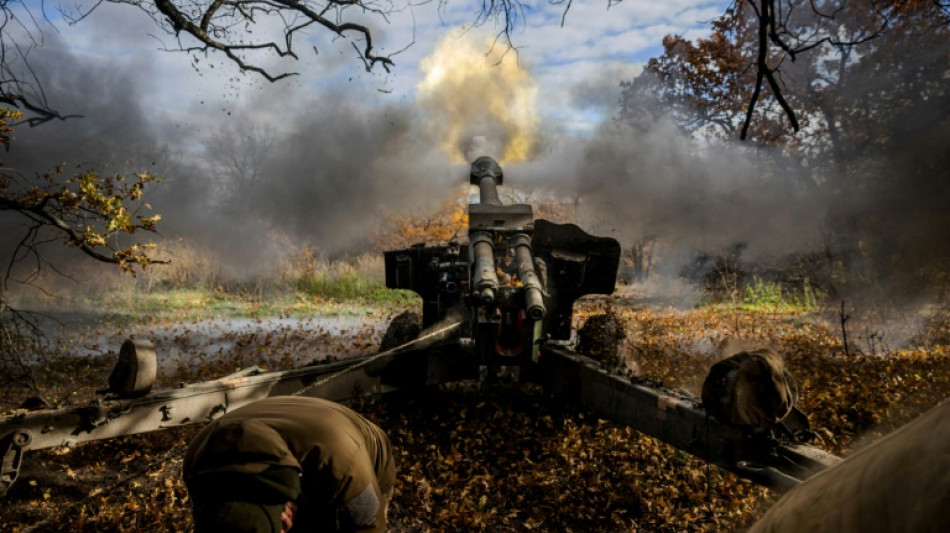
Ukraine's 58th brigade in the heart of the Bakhmut mire / Photo: Dimitar DILKOFF - AFP

 Williams boss hails Chadwick as F1 inspiration for women
 World No.1 Sinner delays return with China Open withdrawal

 South Lebanon children return to school destroyed by Israel strike

 Jewish group urges Berlin far-left vote winners to tackle antisemitism
 European stock markets climb as oil prices drop

 Trump accuser E. Jean Carroll finally has her damages
 Germany's Havertz, Musiala ruled out of Greece match with injury
 Ireland's Gaza stance spills from Eurovision into football
 Welcome aboard the Costa Serena, the Asian Games floating hotel
 Asian markets mixed after recent oil surge
 Cash for nature protection: hotelier's offer to Principe islanders
 US miner KoBold bets on AI to gain edge in DR Congo mineral hunt
 Internet disrupted in Ethiopia as conflict rages
 Asian markets mixed after oil gains
 'Genius' Ohashi bids for third Asian Games gold after world record

 India's 'Tree Father' plants for a greener future
 Hopping mad: New health warning stirs up Belgian brewers
 Canadian capital to rename 'Trump Ave'
 Pope heads to France on first state visit in 18 years
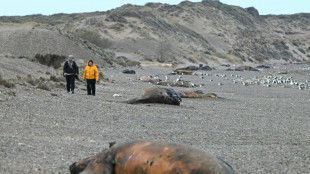 Bacteria suspected in deaths of hundreds of baby whales off Argentina

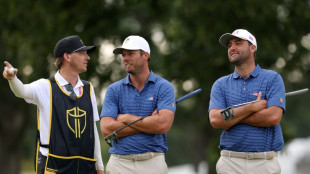 Scheffler and Burns give US 3-2 Presidents Cup lead
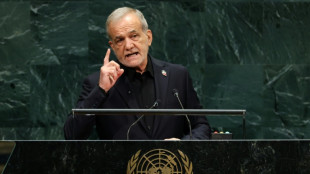
 Hollywood stars among 100 arrested in NY anti-Netanyahu protest

 Klopp denied on Germany debut as Portugal win in Nations League

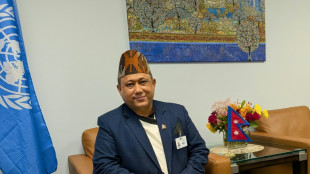 Rich nations should foot climate bill, says Nepal minister
 Wellalage and Mendis star as Sri Lanka level England series in thriller
In the east Ukrainian city of Bakhmut, 15 kilometres (nine miles) from the positions held by Russian forces, an artillery unit waits for the signal.
"Ready!" The four soldiers duck and put their hands over their ears. "Fire!"
The shell shoots out of the cannon towards the Russian forces in a burst of flames and smoke.
"According to the coordinates we received, the target is infantry," says Oleksandr, 37, between two radioed orders.
Oleksandr commands this small group of artillerymen, part of the Ukrainian army's 58th motorised infantry brigade.
Around 30 seconds later, the 50 kilo (110-pound) "fragmentation" shell, pinched from the Russians after their retreat from a nearby town, will explode above the position held by Moscow's troops, showering them with its payload.
A Ukrainian drone supports the operation "in real time", monitoring the effectiveness of the strike from the old Soviet D-20 cannon in order to better calibrate the next one.
Bakhmut, in the Donbas, has been the scene of active fighting for the last four months. Since the start of the Russian invasion in February, it is said to be one of the longest and most lethal battlefields for both sides, though there is no estimate of the exact losses.
The front here has almost not budged since the beginning of October, despite a few small gains made by one or other of the opposing forces, only to soon be lost again.
On the Russian side, Moscow is pushing hard, supported by mercenaries from the paramilitary Wagner group, sent to their death on the frontlines and dubbed "disposable soldiers" by the Ukrainians.
For their part, the Ukrainians are holding their lines as they focus on a counter-offensive in the south, while trying to limit losses in the war of attrition being waged by the Russians.
"As the military proverb goes: the sweat of the artillery spares the blood of the infantry," says Oleksandr, who after another lethal attack on the enemy hopes to have saved the lives of some of his comrades.
The artillery unit now has a few minutes to move before the Russian riposte. In the meantime, they open a packet of sunflower seeds and share them out to celebrate the strike.
- 'The limousine' -
Just five kilometres from the Russian position in the city neighbourhoods devastated by the war, the basement of an anonymous-looking building shelters the brigade's command post and garrison.
It is "the Monday rotation" and 15 or so new soldiers have just arrived, making their way through the underground corridors by the light on their mobile phones.
The infantry wear serious expressions. The quagmire of Bakhmut has a bad reputation.
The 58th, whose motto is "together to victory", fought the first part of the war on the southern Donbas front, in Pisky, before being redeployed to Bakhmut.
In the smoke-filled room, lit by candlelight when the generator is not working, a soldier sits on a chair filling ammunition, another fetches a barrel of borscht soup, while one more takes a nap in his chair, still wearing his gear.
What awaits them? "The less we know about it, the better," says a 25-year-old volunteer soldier with the nom-de-guerre "Bullet".
Above ground the morning's bombardment is intensifying. From here, the approach towards the frontline will be by armoured vehicle.
Outside, "the limousine" has arrived.
In the BMP-1, a Soviet-era vehicle with somewhat outmoded armour and sometimes referred to as "the tomb of our brothers", a mix of superstition and good sense prompts the soldiers to sit on the side of the vehicle not exposed to the Russian positions.
The tracks of the BMP-1 cross the river, headed to the northeast sector of Bakhmut, where the 58th brigade has the guard.
- 'Total war' -
One-and-a-half kilometres from the line of contact, the last covered Ukrainian position in the north east of Bakhmut sits in an old industrial park.
In this hideout, the last before the "zero line", five soldiers are tasked daily with high-risk patrols to supply the line of contact with munitions and provide logistical support, as well as to evacuate the injured or dead. AFP is not authorised to go any further than here.
"We go out in two (armoured) vehicles. One covers the other," says "Demon", 29, his hair plastered to his face as he takes off his helmet.
All the 58th's actions are done under Russian fire and are covered by RPG rocket-launchers aimed at the enemy.
"Our mission is to leave as quickly as possible and without losing anyone," Demon says.
"Petrokha", their sergeant, smokes a cigarette by the entrance to the hangar, keeping one eye on the sky in case any Russian drones might be lurking.
"It's total war," he says.
"Total because we're using everything. Artillery, aviation and..." he says before his voices trails off as he gets to the last item: his men.
"(The Russians) are pouring in human meat, men that they no longer think of as men but as munitions," he says. "It's 70 years since we've seen anything like it."
L.E.Campos--PC