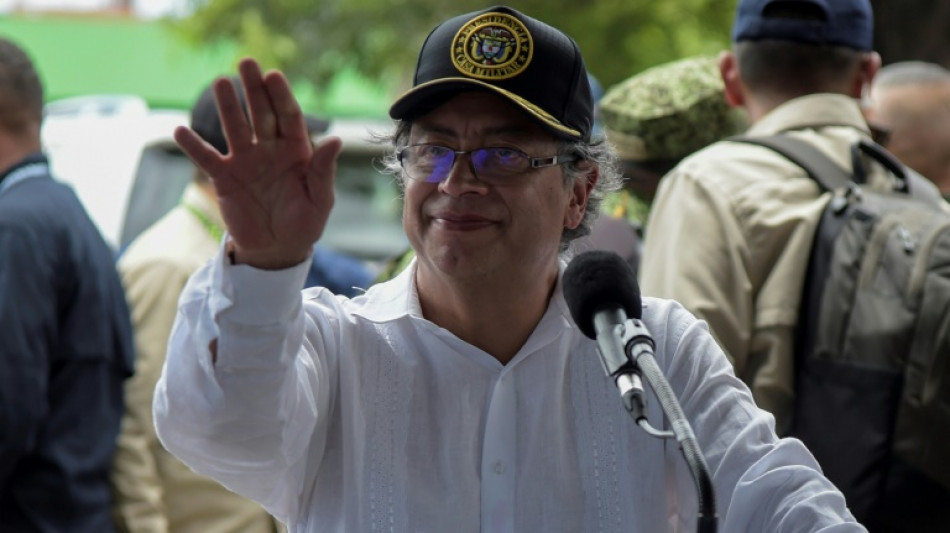
'Lot to talk about' as Colombian, Venezuelan leaders meet / Photo: Schneyder MENDOZA - AFP/File

 DiDi Advances Robotaxi Operations in China with New R2 Vehicle and Expanded Safety Infrastructure
 Freezz Italia Awarded ESA Contract for IRIS(2) Low-LEO Pre-Operational and De-Risk Activities
 French Economy Shrinks 0.1% as Consumer Confidence Slumps
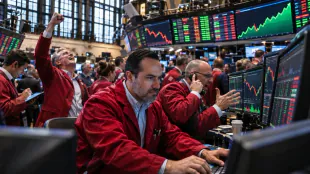 Wall Street Ends Turbulent Week Higher Despite Inflation and AI Jitters
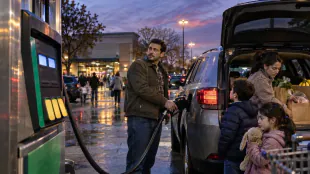
 Kansas City Fed Chief Says Inflation Is Still Running Too Hot

 Oil Heads for Second Weekly Loss as Supply Surplus Emerges

 Middletown High School Football Team Ends Legal Battle After Playoff Forfeit
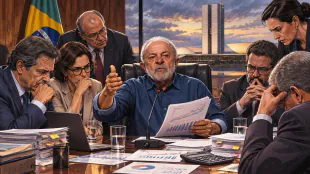
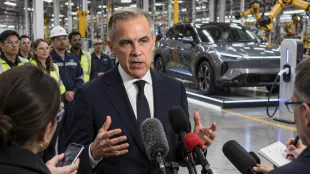 Canada Signals Openness to Chinese Automakers if US Trade Talks Fail
Colombia's Gustavo Petro arrived in Venezuela Tuesday for the first talks at presidential level since the neighbors reestablished diplomatic ties after a three-year break.
Petro is to sit down with his counterpart Nicolas Maduro in Caracas in what will be the first visit by a Colombian president to Venezuela's capital since 2013.
"There is a lot to talk about after all this time," Petro said at the military airport in Bogota before departing for Caracas to end what he described as "years of political vacuum between two neighbors."
Trade, migration and Venezuela's "re-entry into the inter-American human rights system" were among the items on the agenda, according to the Colombian presidency.
Venezuela severed diplomatic relations in 2019 after increasingly strained ties with Petro's predecessors Juan Manuel Santos and conservative Ivan Duque -- who Maduro even accused of orchestrating plans to assassinate him.
The final straw came when Duque backed Venezuelan opposition leader Juan Guaido -- recognized by dozens of countries as the victor in 2018 elections claimed by Maduro.
Embassies and consulates in both countries were closed, and flights between the neighbors grounded.
- Visit could 'normalize' violations -
Since Petro succeeded Duque in August, Colombia's first ever left-wing president has moved to mend relations with Venezuela's populist leftist government.
Caracas and Bogota formally reestablished diplomatic relations on August 29 by sending ambassadors to each other's capitals.
Guaido on Tuesday criticized Petro's decision "to visit the dictator Maduro... and to call him 'president'."
It was an "action that could dangerously normalize human rights violations... and the worst migration crisis in the world," he wrote on Twitter.
More than seven million Venezuelans have left their country since 2014, according to the UN.
Some 2.5 million find themselves in Colombia, as part of an open-door policy followed under Duque, in support of Guaido.
Apart from migration, Petro said he and Maduro would discuss protection of the Amazon rainforest and "democratic construction" of the region.
In September, Colombia and Venezuela reopened their shared 2,200-kilometer (1,350-mile) border to vehicles transporting goods -- considered the first step toward resuming commercial relations worth about $7.2 billion in 2008 but only $400 million last year.
Petro was elected on a platform of ambitious environmental, economic and social change, and making peace with armed groups that continue fighting despite Colombia's 2016 peace deal.
A string of recent leftist victories in South America meanwhile appear to have placed Maduro in a stronger position.
On Monday he said he had spoken to Brazil's president-elect Luiz Inacio Lula da Silva, to "resume the binational agenda of cooperation" all but paralyzed under far-right leader Jair Bolsonaro.
V.Fontes--PC



