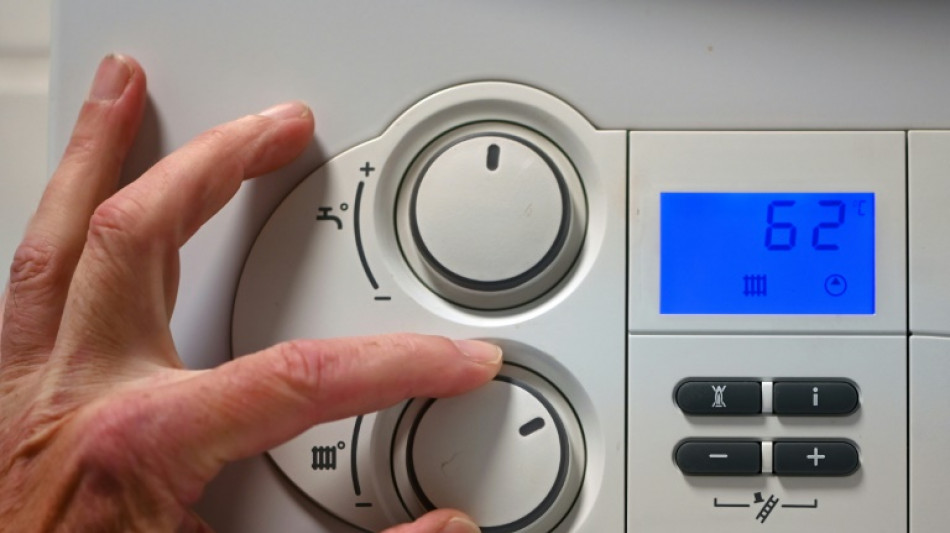
Germany primes energy price cap as bills soar / Photo: Ina FASSBENDER - AFP/File

 Antonelli 'mad' about crash in Azerbaijan qualifying

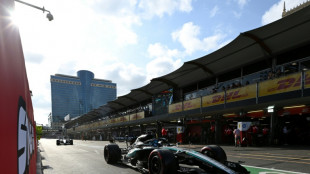
 'Perfect lap' gives Russell pole for Azerbaijan GP as Antonelli crashes out

 UN Security Council condemns Houthi attacks on Saudi Arabia
 China swimmer makes Asian Games history as Thai wins 100m sprint

 Top French literary prize drops best-selling novel over AI claims

 US 'must choose' whether to end war: Iran president
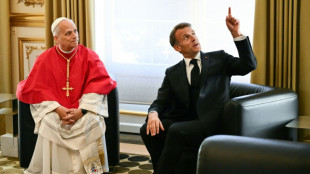 Pope warns against losing humanity in AI-driven 'paradise of machines'

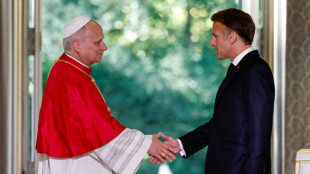 Pope warns against losing humanity in 'paradise of machines'

 From FBI warning to literary acclaim: the Russian journalist who took on Putin

 China swimmer in Asian Games first as North Korea lifters reign
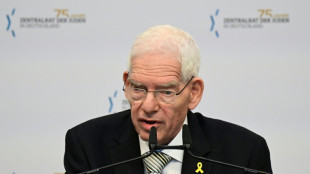
 French literary prize removes novel from longlist after AI claims
 China's Zhang wins record seventh Asian Games swimming gold

 Verstappen edges Russell in final practice in Azerbaijan

 English, Spanish, Italian, German football leagues call for FIFA reform

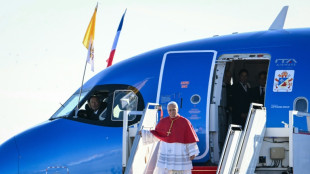 Pope arrives in France on first official visit in 18 years

 Pope arrives in France on first state visit in 18 years
 Heavy fighting, internet disruption as Ethiopia conflict rages

 From transit to consumption: drug use surges in Mozambique

 Chicago teams, Guardians and Padres all book MLB playoff berths

 Bijan Robinson destroys Packers in 35-14 win for Falcons
 Harimoto hails new era as Japan dethrone table tennis kings China

 India rape cases turn focus back onto women's safety

 Rebellious Afghan taxi drivers defy ban on music

 Brazil candidates mount digital armies for fierce online campaign
 Nepal PM says floods 'a warning to the world' about climate change

Germany on Wednesday put the finishing touches on an energy price cap, the cornerstone of a massive 200-billion-euro ($198-billion) package to shield households and businesses from rising costs.
"Immediate help is on its way!" Chancellor Olaf Scholz said on Twitter, who has ploughed ahead with plans despite criticisms from European partners.
The major energy market intervention is deemed necessary to support consumers at a time when Europe's largest economy is drifting towards recession and inflation has shot past 10 percent.
The plan will see the price for a percentage of household and businesses' typical consumption capped at lower-than-market prices, according to a position paper from the government.
For gas, 25,000 larger businesses, as well as almost 2,000 hospitals and schools will benefit from the cap as soon as January 1 next year, under the plans.
Households and smaller businesses meanwhile could have to wait until March 1 at the latest for the price brake to come into force.
Policymakers will "seek" to apply the relief retroactively from February 2023.
A similar price cap will also apply to electricity from the start of the new year in January, with the measures set to last through to the end of April 2024.
- December help -
While the cap for smaller consumers will only come into force later, the government will pick up the bill for household heating in December.
For households the price of a kilowatt-hour of gas will be capped at 12 cents for up to 80 percent of their typical usage.
The same unit of gas currently costs billpayers 18.6 cents, according to the price comparison site Check 24.
All in all, the support measures could save a single-person household with a typical gas consumption of 5,000 kWh around 264 euros over a year, the site estimates.
The partial price cap was designed to maintain "incentives to save energy" despite lowering prices for consumers, according to the government paper.
Scholz will meet with state premiers later Wednesday to finalise the details of the plan.
Ahead of the meeting, some regional leaders pressed the federal government to apply the gas cap for households sooner.
"People need reliable protection from the higher costs, especially in the cold months of January and February, when they use heating intensively," Hendrik Wuest, the regional leader of North Rhine-Westphalia, told Der Spiegel magazine.
- European discontent -
Germany, long reliant on Moscow for energy imports, has been hit hard by the sharp rise in prices since the invasion of Ukraine and the cut to supplies.
Despite the Germany economy eking out 0.3-percent growth between July and September, most analysts still expect the country to slip into recession as the high costs of energy drags on production.
Businesses that have been crying for support from the government welcomed the plans.
The price cap measures should "create a bit of security and at the same time ease worries", the BDI industrial lobby said Monday ahead of the final agreement.
Berlin's massive go-it-alone plan to shield its economy has ruffled feathers among European partners who would have preferred a common solution.
They feared that more highly indebted EU countries could not afford the outlay made by Germany, while the plan could affect their own energy costs.
Germany's energy price shield will be partly financed through new borrowing through an economic stabilisation fund created during the coronavirus pandemic.
Berlin also intends to fund the cap by skimming off part of the bumper profits made by energy companies as prices have risen.
L.Torres--PC