East Ukraine hospital that stayed open despite war, occupation / Photo: Dimitar DILKOFF - AFP

 Antonelli 'mad' about crash in Azerbaijan qualifying
 'Perfect lap' gives Russell pole for Azerbaijan GP as Antonelli crashes out
 UN Security Council condemns Houthi attacks on Saudi Arabia

 China swimmer makes Asian Games history as Thai wins 100m sprint

 Top French literary prize drops best-selling novel over AI claims

 US 'must choose' whether to end war: Iran president
 Pope warns against losing humanity in AI-driven 'paradise of machines'

 Pope warns against losing humanity in 'paradise of machines'

 From FBI warning to literary acclaim: the Russian journalist who took on Putin
 China swimmer in Asian Games first as North Korea lifters reign
 French literary prize removes novel from longlist after AI claims

 China's Zhang wins record seventh Asian Games swimming gold

 Verstappen edges Russell in final practice in Azerbaijan
 English, Spanish, Italian, German football leagues call for FIFA reform

 Pope arrives in France on first official visit in 18 years

 Pope arrives in France on first state visit in 18 years

 Heavy fighting, internet disruption as Ethiopia conflict rages

 From transit to consumption: drug use surges in Mozambique
 Chicago teams, Guardians and Padres all book MLB playoff berths
 Bijan Robinson destroys Packers in 35-14 win for Falcons

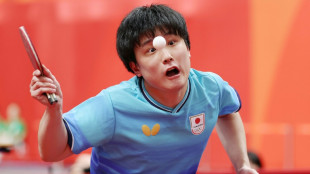 Harimoto hails new era as Japan dethrone table tennis kings China

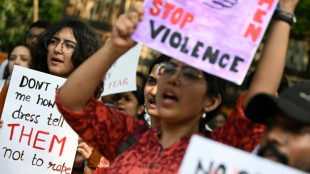 India rape cases turn focus back onto women's safety
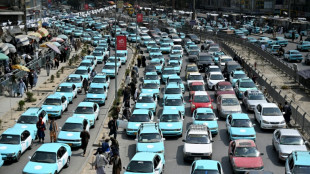 Rebellious Afghan taxi drivers defy ban on music

 Brazil candidates mount digital armies for fierce online campaign
 Nepal PM says floods 'a warning to the world' about climate change
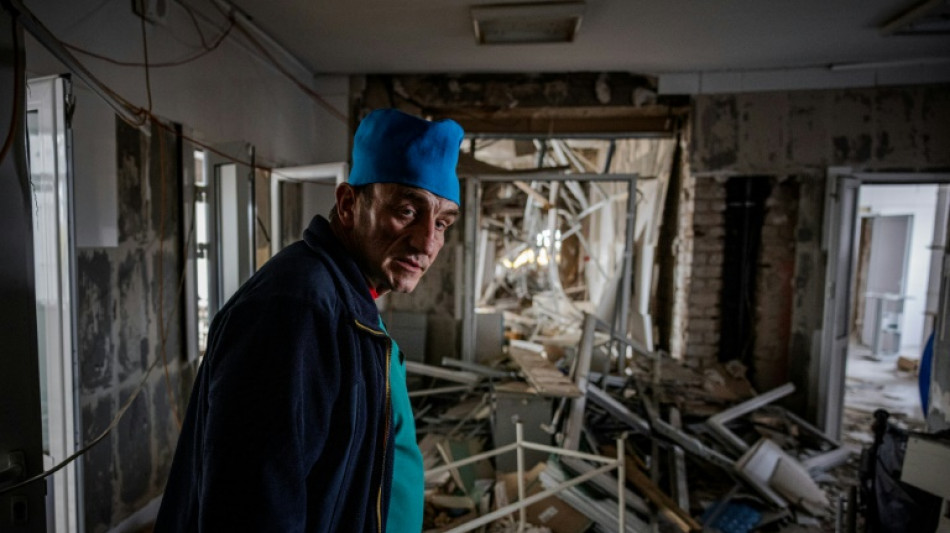
In six months of Russian occupation and eight months of fighting, Izyum hospital in eastern Ukraine never stopped working, operating on wounded civilians in its basement while awaiting liberation.
This small but strategic town in the Kharkiv region was seized by Moscow in March and fully occupied a month later.
Its recapture by Ukrainian troops on September 11 was a strategic victory for Kyiv, although its pre-war population of some 46,000 residents has dwindled to around 8,000 or 9,000.
Since then, the hospital has managed to regain some semblance of normality after being connected to a generator and workers gradually replaced shattered windows.
In a heated ground-floor corridor that smells of bleach, a patient wanders by in his pyjamas as a cleaner mops the floor and a secretary busies herself with admission files.
"We have about 200 patients today, compared with 50 in June," says Yuri Kuznetsov, a 52-year-old surgeon who runs the hospital.
"This was where our operating theatre and intensive care unit used to be," he says, pointing to the gaping hole and destruction left by a missile attack in March.
- 'Hardest thing was staying alive' -
His face lined with fatigue, the doctor blames his exhaustion on his night shift, not the six months he spent every waking hour tending the wounded in the dirt and rubble, under the noses of the occupying Russian troops who set up camp next door.
"The most difficult time was at the start (of the occupation) with so much uncertainty about what they were going to do to us," he recalls.
Kuznetsov said there were "some struggles at the beginning" but the Russians let him continue treating Ukrainian patients, helped by a couple of nurses who stayed behind.
The Russian troops set up their own field hospital in a neighbouring basement.
"They were right there, about 20 metres (yards) from my office," says Kuznetsov, who spoke with them every day but says they never asked him to operate on wounded Russian soldiers.
"Doing our job wasn't the hardest thing, the hardest thing was just staying alive" he recalls of those dark days.
Several weeks after the town of Izyum was recaptured, Ukraine said it discovered a mass grave containing at least 450 bodies, most bearing signs of violent death, in a nearby forest.
Thirty of them showed "signs of torture", regional officials said.
- Stretchers as operating tables -
Since the war began, the hospital has lost two of its staff: a forensic scientist who was shot dead and a doctor who died under the rubble of his own home.
With the town ravaged by constant bombardment, the hospital set up an emergency room in the basement where stained stretchers served as operating tables among piles of cardboard boxes and dirt.
"We lost patients because we didn't have the right equipment and medication but by the grace of God, we were able to limit the number of deaths," he said.
One of those saved was a man who sustained a gunshot wound to the abdomen.
"Several weeks ago, my office door opened, and the man came in and said: 'Doctor, do you remember me? I'm alive!'," Kuznetsov says.
"We have all had moments when we thought of fleeing. We've all had meltdowns and periods of depression," he admits.
"But it's moments like that and the solidarity of my colleagues that have kept me here," he smiles, eager to get home and finally put his head down for some rest.
A.Seabra--PC