
What are the Premier League's profit and sustainability rules? / Photo: Darren Staples - AFP

 Trump's beef policies irk Texas ranchers, testing their loyalty

 Nvidia, OpenAI CEOs to attend Xi dinner at White House

 Anthropic picks Accenture for in-house AI safety evaluation

 Balogun returns as Monaco beat Lens to continue strong Ligue 1 start

 'Pause' on overt repression in Venezuela, but reforms still needed: HRW

 Global stocks mixed as yen falls despite Bank of Japan rate hike

 Cuba hit with seventh major blackout of the year

 Murray out with concussion so Wentz will start for Vikings

 UN chief 'deeply regrets' US visa refusal to Abbas for annual meeting

 England quick Carse to face no charges over alleged nightclub assault

 Mancini brings nine newcomers into the first squad of his Italy comeback

 Czechs level Davis Cup tie against USA as South Korea eye Finals

 New France boss Zidane confirms Mbappe as captain after naming first squad

 California governor signs order to explore AI 'kill switch'

 Head leads run spree as Australia win Zimbabwe ODI series

 In-form Raphinha wants to finish career at Barcelona

 Warren Buffett steps down as Berkshire Hathaway chairman

 Carrick confident Man Utd can 'work through' tough time

 Mbappe ends Nike partnership to join Swiss brand On

 Liverpool boss Iraola puts Bournemouth love affair on hold

 'A disaster' if Man City do not win says Maresca after flawless start

 Kerry James Marshall: American 'blackness' painter celebrated in Europe

 Spain coach De la Fuente offers 'full support' to people of Ceuta

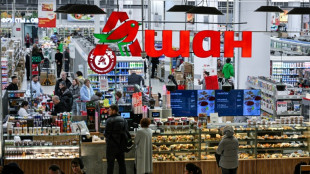 Russia seizes assets of Nestle, French firms over West's Ukraine support

 England can build on World Cup 'spirit', says Tuchel

Everton and Nottingham Forest could face points deductions after admitting to being in breach of the Premier League's profit and sustainability rules at the end of the 2022/23 season.
The financial regulations have been put in place to minimise the losses clubs can make as they chase success on the field.
Everton have already been hit this season with a 10-point deduction for exceeding the allowable losses at the end of the 2021/22 season.
AFP Sport looks at the rules and why they are often criticised.
What are the rules?
Premier League clubs are allowed to lose a maximum of £105 million ($134 million) across a three-year assessment period.
However, for every season a club was in the second-tier Championship, that amount is reduced by £22 million.
Forest, therefore, were only permitted losses of £61 million as they were promoted back to the Premier League for the first time in 23 years in 2022/23.
There are a number of deductions allowed for spending on costs that are deemed to be in the general interest of the club and the game.
These include spending on infrastructure, youth development and women's football.
Clubs also use an accounting tool called amortisation to minimise the impact of transfer fees in their accounts.
For example, a player signed for £50 million on a five-year contract will appear as a £10 million charge for each of the five years rather than a £50 million upfront cost, no matter when the cash is actually transferred between the clubs.
That was part of Chelsea's rationale in dishing out eight-year contracts last year to Premier League record signings Enzo Fernandez and Moises Caicedo.
A change to Premier League rules from December now imposes a limit of five years on spreading the cost of a transfer in the club's books.
Why were they introduced?
A form of the profit and sustainability rules have been in place since the 2013/14 season.
That followed the introduction of financial fair play rules by UEFA, designed to bring down rampant loss making in European football and protect clubs from going bust.
In 2010, Portsmouth became the only Premier League club to date to go into administration.
"They were brought in in 2013-14 with the specific purpose of ensuring that unsustainable spending couldn't go too far and a wrapper was put around how much clubs could invest in pursuit of their aims," Premier League chief executive Richard Masters said on Tuesday.
Why are they controversial?
Financial sustainability rules are designed to limit clubs to spend within their means of what they generate in revenue.
However, as a result they are often criticised for helping the established elite clubs maintain their privileged position as they make the most money thanks to larger stadiums, better commercial deals due to bigger fanbases and are regularly involved in lucrative European football.
Despite being backed by the Saudi sovereign wealth fund, Newcastle chief executive Darren Eales admitted last week that the Magpies may be forced to sell one of their prized assets to be able to invest again in Eddie Howe's squad due to profit and sustainability rules.
"It is counter-intuitive and part of the inherent system of PSR that there is an incentive to trade your players if you want to re-invest, by the nature of the boundaries," said Eales.
Many believe PSR rules were designed specifically to put the brakes on spending of the state-backed clubs like Newcastle, Manchester City and Paris Saint-Germain.
City now boast the biggest revenue in the Premier League, making a English record £713 million for their treble-winning season in 2022/23.
However, the English champions are facing over 100 Premier League charges for historic breaches of financial regulations.
City lost hundreds of millions in amassing a competitive squad and off-field infrastructure in the early years after an Abu Dhabi-backed takeover in 2008.
R.Veloso--PC