
Malaysia's 'stupid' football naturalisation drive gets red card

 Fallout far-reaching for Australian Rules after latest scandal

 Rafts on Rome's Tiber River cool down overheated tourists
 Top seeds Sabalenka, Zverev stunned in Cincinnati fourth round

 Australia says relations with Israel 'difficult' after aid worker death

 PSG start Ligue 1 defence with eye on Champions League hat-trick

 Arsenal can become world's best club: Arteta

 Japan's King Kazu, 59, scores twice from spot to make cup history

 Kyiv's desperate vendors persevere outside obliterated flea market
 Australia races to shield little penguins from H5N1 bird flu
 Messi scores first goal since father's death
 US national debt exceeds $40 trillion for first time

 Brazilian narco violence spills over into tranquil Bolivia

 Trump's devoted 'human printer' in media glare

 Top seed Zverev bundled out by Paul in rain-hit Cincinnati upset

 WADA pledges vigilance on Russian athletes ahead of 2028 Olympics

 NASA satellite rescue mission fails

 Cobolli halts Jodar to reach Cincinnati quarter-finals

 As election looms, Netanyahu puts Turkey in Israel's crosshairs

 McIlroy questions LIV stars 'value' as talk of PGA return builds

 'Breakthrough' mRNA cancer drug curbs melanoma in large trial

 Many US Fed policymakers back interest rate hikes if inflation stays high

 Robinson and Tongue star as Pakistan collapse in England opener

 All Blacks must get 'everything right' to beat Springboks, says legend Fitzpatrick

 Robinson and Tongue star as Pakistan all out for 171 in England opener

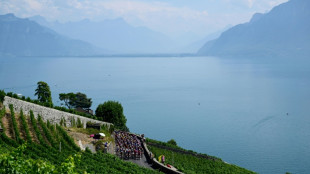 Lake Zurich sees water level hit record low amid drought

A drive to ramp up Malaysia's footballing fortunes with naturalised players has failed, critics say, with the national team no nearer a first World Cup appearance and soul-searching about the state of the game in the country.
Football is among the most popular sports in the nation of more than 30 million people but at international level Malaysia are minnows -- 154th in the FIFA rankings, a spot below tiny Andorra.
Long-suffering Malaysian fans had high hopes when football authorities launched the naturalisation programme in 2018, ahead of qualifying for the 2022 World Cup in Qatar, and several overseas-born players were handed citizenship.
But the scheme was put on hold in August after Malaysia's tilt at the World Cup came up short once more, with naturalised players taking some of the flak.
Already naturalised players can still play for the country but there will be no new ones coming through the door in the near future.
Santokh Singh, who played for the national side in the 1970s and 1980s -- better times -- said there should be a renewed focus on training local players.
"We've got so many good local players who are capable of performing better than the foreigners... they are not getting a chance to play," the 69-year-old told AFP.
"Naturalisation of players is stupid."
Malaysia is among a number of countries that have sought to raise the level of their national squad by giving foreign players citizenship.
From China and Japan to Mexico and even Spain, it has become a growing trend, with footballers from Brazil particularly popular.
But it has provoked controversy, with some, such as wealthy Qatar, accused of stacking their teams with foreigners with little connection to the country they are representing.
- 'Invaders from Brazil' -
In 2007, FIFA's then-president Sepp Blatter warned about "invaders from Brazil" flooding national sides and the governing body has tightened the rules.
Those without ancestral connections to a country must have been resident there for at least five years before qualifying to play for its national side.
In Malaysia's case, Gambia-born Mohamadou Sumareh was the first player given citizenship as part of the naturalisation drive, making his debut for the national side in 2018.
He began playing for Malaysian clubs in 2013 and is currently a winger for Johor Darul Ta'zim (JDT), who won the top-flight Super League eight times from 2014.
He was followed by Liridon Krasniqi, born in the former Yugoslavia, and Brazil-born Guilherme de Paula.
More common are players who grew up overseas but have a Malaysian parent and decide to return to Malaysia, where they stand a better chance of playing international football.
The naturalisation project faced fierce criticism after Malaysia lost in World Cup qualifiers to Vietnam and the UAE in June last year, dashing their hopes of reaching Qatar.
Two months later the Football Association of Malaysia (FAM) said the scheme was being put on hold.
The body plans to "conduct further studies into several aspects of the programme", FAM general-secretary Mohamad Saifuddin Abu Bakar told AFP.
- Deep-rooted problems -
Some believe Malaysia should focus on solving deep-rooted problems, rather than emphasising too heavily the failings of the naturalisation project.
"I think there are more important structural issues to bring long-term success," Steve Darby, a coach and football consultant who spent years working in Asia, including in Malaysia, told AFP.
"Improve training facilities and also stadium pitches."
While they have never been serious rivals to the region's best sides, like Japan and South Korea, Malaysia's national team has seen better days.
The country qualified for the Moscow Olympics in 1980, but withdrew when Malaysia joined a US-led boycott of the Games in protest at the invasion of Afghanistan.
The national side won berths in the Asian Cup, which pits the region's top national teams against one another every four years, in 1976 and 1980.
Not everyone is critical of the naturalisation project, believing it can have good results if part of a broader strategy.
B. Sathiananthan, Malaysia's national coach from 2007-2009, said it was understandable that coaches sometimes looked to the policy.
"If you are given a two-year contract, do you think you can wait for local players to hit form?" he said.
G.Machado--PC