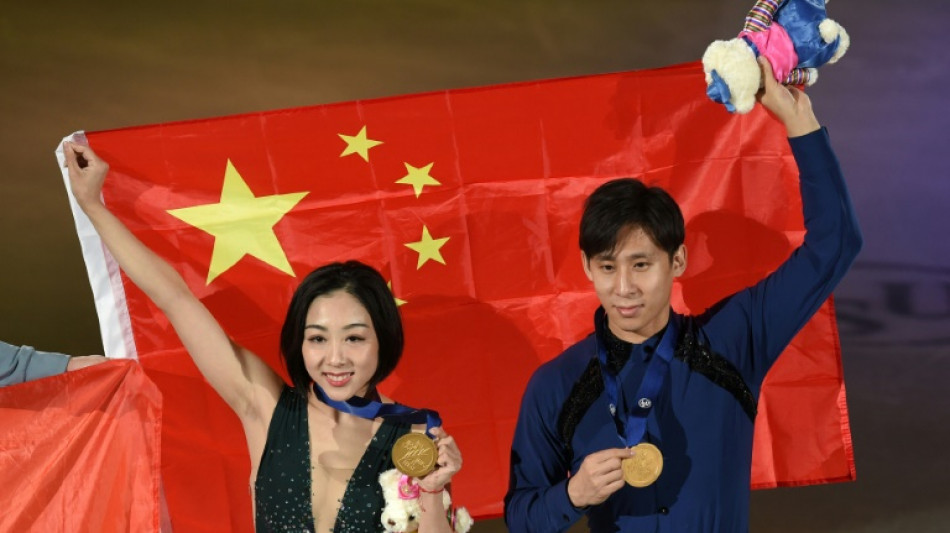
Olympic giants China face tough medal fight at home Games

 Braves rock Dodgers to level series, Brewers win thriller

 Most Asia stocks rally as 'Goldilocks' jobs data ease rate fears
 Sunken Silk Road city reveals Central Asia's lost history
 Three years on, Israeli rescuer cannot escape October 7
 Research into weight-loss drugs tipped for Nobel as award week opens

 US Supreme Court hears bid to shut the door on climate suits
 Chourio walk-off single lifts Brewers over Padres

 Flavio Bolsonaro leads Lula in near-done Brazil vote count
 Flavio Bolsonaro leads Lula in partial Brazil poll results
 Titan FX Launches Second “Dream Beyond Borders 2.0” Brand Commercial Featuring Keisuke Honda

 Patriots inflict first Bills defeat as Rams surge late

 Brazil's Indigenous back Lula as El Nino fuels forest fires
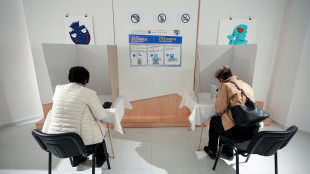
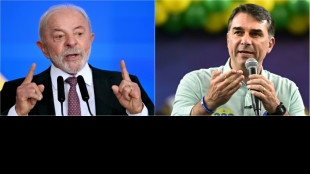 Brazil braces for results of election battle between Lula and Bolsonaro
 Indians protest election chief ahead of top court hearing
 'Verity' kills, Cruise bombs in N. American movie theaters
 Colts top Commanders in NFL London game

 Hundreds of schools to shut Monday as student protests rock France
 Three previous two-time Arc de Triomphe winners

 'Champion' Daryz wins second successive Arc in fine style
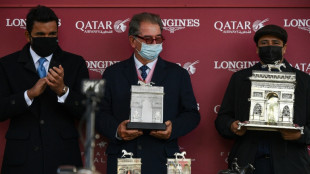
 Daryz wins second successive Prix de l'Arc de Triomphe
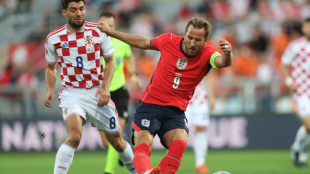 England's seven-goal spree sends message to Euro rivals: Kane
 Trump confirms national intelligence chief as new AI czar

 Up to 500 French schools to be totally or partly closed Monday: minister
 Sydney Roosters edge Knights in tense NRL grand final
 Sabalenka out of China Open in third round, Medvedev into semis
China topped the medals table at its 2008 Summer Olympics but expectations are much lower for next month's Beijing Games as the country attempts to build a winter sports industry nearly from scratch.
China did not appear at a Winter Olympics until 1980 at Lake Placid and has hardly sparkled since, winning one gold medal -- in short track speed skating -- at the last Games, in South Korea's Pyeongchang, in 2018.
Cold weather sports have not historically been popular in the country, where the prohibitive cost and relative lack of infrastructure had kept the pool of athletes small.
But a huge government-led push to promote snow and ice activities and a soaring middle class looks set to yield some results when the Games begin on February 4, and home athletes always tend to overperform at their own Olympics.
With foreign coaches drafted in to boost expertise, forecasters Gracenote expect China to win six golds at Beijing 2022 and enjoy its "best-ever Winter Olympics".
Norway, who topped the medals table in 2018, are predicted to do so again, ahead of the Russians and Germany.
- 'Big crisis' -
China set itself the goal of competing in all 109 events at Beijing 2022 -- nearly double the number the country qualified for at Pyeongchang.
The country has "no experience" in one-third of them, state media said.
Underlining the challenge, winter sports official Ni Huizhong admitted to Xinhua news agency last year in unusually stark terms that the country had "clear weaknesses and disadvantages" and was facing "a big crisis" in some sports.
China will compete in at least 96 events in the Chinese capital. In some, such as men's ice hockey, avoiding embarrassment on home soil will count as a small win.
China has had to be creative in its search to grow its small pool of winter sports athletes, including scouring martial arts schools of Buddhist monasteries.
Authorities also sent a group of teenagers with zero experience -- including a former gymnast and a sprinter -- to Norway in 2018 for a crash course in ski jumping in the hope of producing 2022 competitors.
China has also turned to naturalised athletes, including California natives Eileen Gu -- who looks set to be the face of the Games -- and ice skater Beverly Zhu.
With an eye on the future, the country is on course to open 5,000 winter sports schools by 2025 and has set up massive training bases for athletes offering wind tunnels and virtual reality simulators.
- Prestige -
Of China's 13 Winter Olympic golds, 10 have come in short track speed skating.
Wu Dajing won 500m gold in 2018 and will defend his title in Beijing, while there are also hopes in the relay events.
Pairs figure skaters Sui Wenjing and Han Cong will hope to go one better than their Pyeongchang silver, while US-born freestyle skier Gu, just 18, is hotly tipped for gold.
They are under pressure from the very top, with President Xi Jinping urging athletes to "struggle bravely and strive for success".
But medals will only be one part of what China hopes to reap from the Games.
It sees an opportunity to demonstrate its sophistication and prowess, even as the Covid-19 pandemic and diplomatic boycotts from a handful of countries over human rights concerns cast a shadow.
"By hosting the 2008 Summer Olympics (also in Beijing), China impressively demonstrated its economic development to the world," Jung Woo Lee, sport policy researcher at the University of Edinburgh, told AFP.
"(Now) China wants to display its cultural and technological merits to international audiences," Lee said, noting that Winter Olympics are "more exclusive competitions where the power of more advanced and affluent Western nations prevails".
"The staging of the Winter Olympics in their capital city can symbolically mean that China is no longer lagging behind Western democracies in terms of its international privilege," Lee said.
L.E.Campos--PC