Anti-doping agency sharpens its tools for Paris Olympics / Photo: Fabrice COFFRINI - AFP/File

 Schoolgirl Yu, 13, fastest again in bid for third Asian Games gold

 Oil prices fall after Trump hails 'good' talks with Iran
 AI political ads warp reality ahead of US midterms

 Kenneth Branagh embraces action hero role -- to get in shape

 'New one' Klopp promises fresh approach as Germany reign begins
 Milne returns to New Zealand squad for India T20 series

 US-led Americas coalition backs sanctions against crime groups

 'Star Wars' fans and art lovers line up for new Lucas museum

 Trump renames AI 'super intelligence' as leaders jostle over dangers

 Oil prices retreat as markets welcome US-Iran talks
 US refusing to give Sudan's de facto leader visa for UN: diplomatic sources, UN
 Macron urges world to choose UN over 'law of the jungle'
 All-rounder Jacks stars as England beat Sri Lanka in 1st ODI

 Man City peg back Bayern to start Women's Champions League
 Trump beats 'America first' drum at UN as allies tread carefully

 Snedeker backs Spaun for Ryder Cup after Presidents snub
 French prosecutors probe secret filming of women with smart glasses

 Trump renames AI "super intelligence," rejects international oversight
 Trump rejects international regulation of AI
 How is the EU approaching record fuel prices?

 Sri Lanka's Colombage strikes on debut as England dismissed for 265 in first ODI

 Hurricane Polo strengthens to top category 5 off Mexico

 11 hurt as teen opens fire outside school in western Turkey

 UN chief says 'Big Oil' treats atmosphere as open sewer

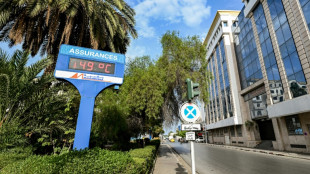 Tunisia says 2026 summer hottest on record

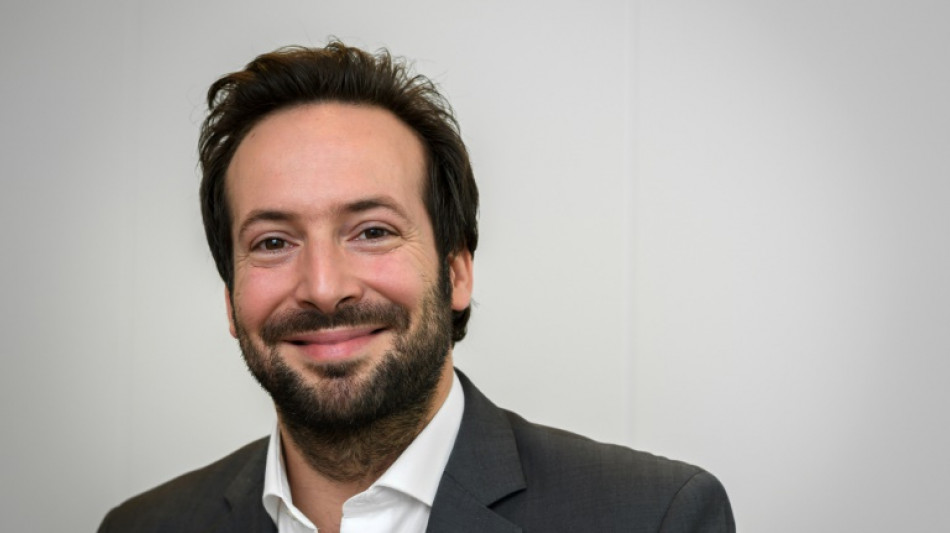
In the battle against drug use at the Paris Olympics, the International Testing Agency (ITA) plans to deploy a more streamlined, high-tech approach to identify and target potential cheats.
In an interview with AFP, Benjamin Cohen, Director General of the ITA, said potential tools as its disposal included biological and performance passports as well as a mountain of other data.
Upgraded software, possibly using artificial intelligence, could also help; an investigative unit aided by whistleblowers was making inroads; and increased cooperation with sports bodies and police was bearing fruit.
ITA, which was founded in 2018, runs the anti-doping programme for the Olympics, the Tour de France and "more than 65 international organisations", said Cohen.
The challenge was to refine the "risk analysis" and identify athletes to monitor using as little time and resources as possible, said Cohen, a Swiss lawyer who has headed the agency since its creation.
The problem is accentuated in the run-up to the Paris Games.
"We still have 30,000 potentially qualifying athletes and we cannot wait to have the final list to focus on the 11,000 participants," Cohen said.
"Certain doping practices enable athletes to achieve results very quickly," he said. "Traditionally the pre-Olympic period is high-risk time...the last moment to make a difference. Athletes know that they will be very closely monitored at the Olympics, so I would hope that very few, if any, will be tempted to take drugs in the Olympic Village in Paris."
At the Games, only medallists are automatically tested, but ITA wants to find ways to target potential dopers before the finish.
Cohen said ITA tries to identify patterns. They look at the demands of each discipline and the substances it might tempt athletes to use. Then ITA looks at delegations and "the history of doping in that country". Finally, it scrutinises each individual athlete and "the development of his or her performances, any suspicious biological passport profiles, suspicious anti-doping tests, and so on."
"That's hundreds of thousands of pieces of data."
- 'Risk analysis' -
"Today we have our own software, and the next stage" will involve "programming computers to extract this data, because we still do a lot of this work manually."
After that, the ITA hopes to "seize all the opportunities offered by artificial intelligence", provided "we use these new tools ethically."
"If it's done properly," he said. "AI will enable us to go much further in risk analysis and prediction."
ITA is developing a "performance passport" as a counterpart to the long-established biological passport.
The objective is to "predict results on the basis of what an athlete has done over the last four years", said Cohen.
"Artificial intelligence will enable us to say: 'this is really an unusual result, which could suggest doping'," he said. "It could help us flag them."
The performance passport project was initially tested in swimming and weightlifting, two indoor sports where athletes compete in identical environments each time.
Weightlifting also happens to be one of the two sports, along with athletics, that have returned, between them, the vast majority of positive tests at Summer Olympics.
In 2021, ITA carried out "a major investigation into weightlifting" and that enabled them to set up a specialised unit in cooperation with the sport.
- Focus on cycling -
It now has more than ten such units. "Cycling is a particular focus" but "other sports are beginning to understand the benefits of gathering intelligence, having anonymous sources and promoting whistleblowers.
"It's a new method that complements traditional testing."
Cohen said ITA has been working to build links with law enforcement and exploit 'synergies'.
"They are bearing fruit," he said, referring to the case of 23-year-old Italian cyclist Andrea Piccolo, arrested on June 21 by the Italian Carabinieri who caught him returning to the country with growth hormones.
"ITA asked the Italian authorities to open his luggage, which would not have been possible six years ago," Cohen said.
"We carry out the controls, we monitor the performances of these athletes, we know the networks, the doctors involved and the drugs they are taking. And they can seize and open suitcases and enter hotel rooms."
H.Portela--PC