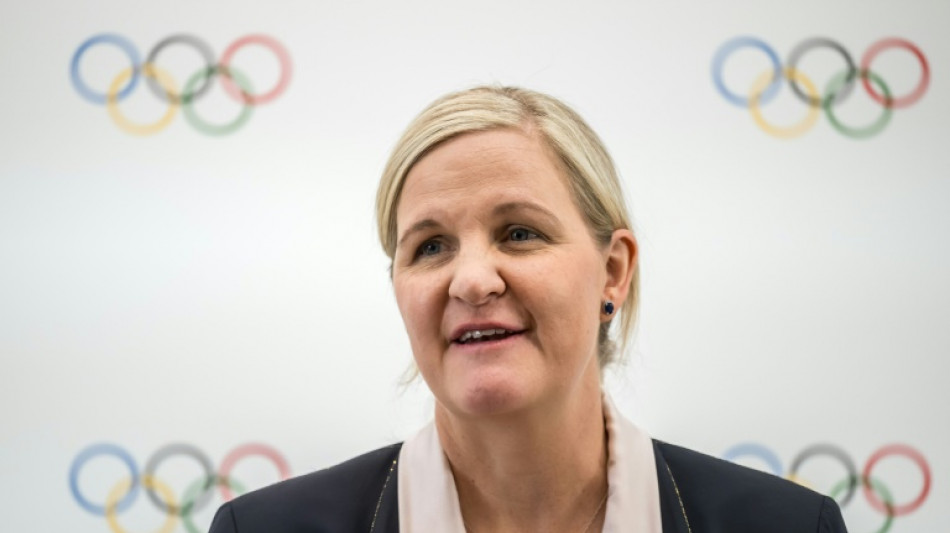
IOC presidential contenders deliver their vision for sport in post-Bach era / Photo: FABRICE COFFRINI - POOL/AFP

 J-VISIONS Vol. 4 Now Online: Read English Articles on Japanese Corporate IR
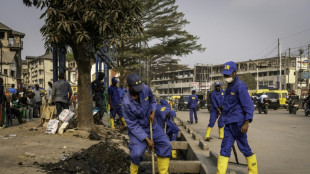 In DR Congo streets, ex-hoods get tough on litter -- and locals
 Noosha Aubel calls for accountability in Potsdam; a road disaster highlights leadership shortcomings
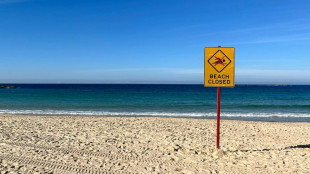 Surfer hospitalised after shark attack in Western Australia
 South Korea says 'serious shortage' of rooms with Asian Games days away
 Table tennis siblings with China-born parents vow to usher in 'Japan's era'
 Bougainville leader says violence won't stop Panguna mine re-opening

 South Korea aims to save seniors lost in digital age
 Russia's Stalin-admiring provincial leader waging an ultra-conservative crusade
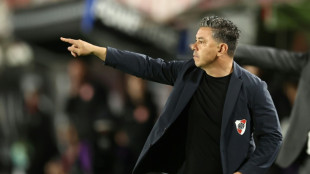 Marcelo Gallardo appointed as new Ecuador head coach
 'Widow's Bay' and 'The Pitt' tipped for success at Emmy Awards
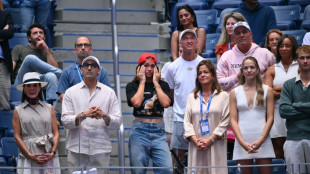 For club and comfort: Rodman makes it to Shelton's US Open final
 Houthis say Saudi Arabia launched over 50 strikes against them in 24 hours
 'Fed up': Thousands march against Sinaloa Cartel violence

 Controversial Zverev: from tennis nearly-man to multiple Grand Slam winner
 Swedish left-wing cheers far-right decline amid tight election race
 Yamal double helps Barca beat Levante, Atletico triumph
 Sassuolo stun Juve, Lobotka eases pressure on Allegri with Napoli winner
 Bills beat Texans and Ravens roll Colts in NFL openers
 US fight off spirited France to win 12th World Cup

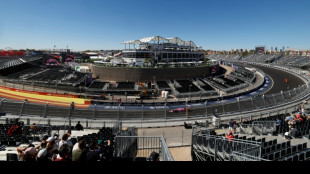 Drivers give cool reception to new Madring circuit
 Maresca makes flawless Man City start to leave Man Utd trailing
 Dozens arrested in major anti-LGBTQ raids in Turkey
 Leftwing opposition seen leading Sweden election, far-right losing ground
 Senegal goalkeeper Mendy retires from international football
Hope, experience, integrity and engaging with the youth of today were some of the messages the seven candidates bidding to become the next president of the International Olympic Committee delivered to their fellow members on Thursday.
The seven are vying to convince a majority of the 100-plus members to elect them and succeed Thomas Bach as arguably the most powerful person in global sport, in a vote slated for March 20 in Costa Navarino, Greece.
The candidates all have impressive CVs; two of them, Briton Sebastian Coe and Zimbabwe's Kirsty Coventry, are Olympic gold medallists and successful administrators since they retired from competition.
Bach steps down after a tumultuous 12-year tenure which has encompassed the Covid pandemic, the Russian doping scandal at the Sochi Winter Games in 2014 and Russia's invasion of Ukraine.
While Coventry would be the first woman and African to lead the Olympic movement, Juan Antonio Samaranch Junior is also seeking to make history by emulating his father of the same name who was president from 1980 to 2001.
"I hope it is neither a help nor a hindrance," Samaranch said of his father, who transformed the IOC into a commercial powerhouse during his tenure.
"He left office years ago and his legacy to me personally I appreciate very much.
"However, his recipes are not relevant now."
Samaranch, though, has built up a wealth of experience within the movement.
It was something the 65-year-old Spaniard was keen to emphasise to the media after making his presentation behind closed doors to the members and where no questions were permitted.
"I have more than 25 years inside the organisation, experience on the revenues side and helped organise the Beijing Winter Games during Covid," he said.
"So I have experience to deliver results under real pressure.
"I know the job and know how the administration works."
Coventry swatted aside suggestions she was the favoured candidate of Bach, saying he respected all of them and he would not vote.
The two-time Olympic swimming gold medallist recalled how she had seen the impact her gold medal had on her compatriots in 2004.
"I got back to Zimbabwe which was then very divisive and divided, but it sparked four days of peace," said the 41-year-old.
"I got to see the power of sport and that was why I was standing before (the members) today."
- 'I bring hope' -
Coventry faced questions over how she and her fellow members on the IOC Executive Board dealt with the controversy in the women's boxing competition at the Paris Olympics last year when Algerian Imane Khelif and Taiwanese Lin Yu Ting won golds despite previously failing gender tests.
"As a female athlete you want to be able to walk onto a level playing field, always," the Zimbabwean sports minister said.
"It is our job as the IOC to ensure we are going to create that environment and not just create a level playing field but an environment that allows for every athlete to feel safe. That is our job."
Coe for his part said he "felt very privileged and very honoured to be a small part of (the Olympic Movement)."
The ever-youthful looking 68-year-old two-time 1500 metres gold medallist said engaging with young people was of primary importance.
"The biggest challenge is for all of us to excite and engage with young people" he said.
"That will be critical as it is that cohort that is ultimately going to be future sponsors, thought leaders and politicians.
"We need to create among that group of people a lifelong bond with sport."
Frenchman David Lappartient, the head of the international cycling federation, has been touted as a dark horse.
With both the 2028 Olympics and the 2034 Winter Games taking part in the United States, the 51-year-old was keen to emphasise he would be firm with US president Donald Trump over the IOC's status.
"Our autonomy is non-negotiable will be my message," he said.
"Autonomy and political neutrality."
The United States is presently withholding funding from the World Anti-Doping Authority (WADA), but Prince Feisal Al-Hussein defended them vigorously.
"It is not for me to comment on US policies," said the Jordanian.
"We (the IOC) are the institution who helped establish WADA and I think they have been doing a terrific job."
Whilst the prince focused on integrity, for ski boss Johan Eliasch the message was one of hope.
"I bring hope that anything is possible," said the 62-year-old Anglo-Swedish environmentalist.
"In a world of division and disruption we have never needed hope more."
Gymnastics federation president Morinari Watanabe of Japan, bidding like the prince to become the first Asian president of the IOC, stuck to his idea of an Olympics held across the five continents, which even he has said is "crazy."
T.Resende--PC