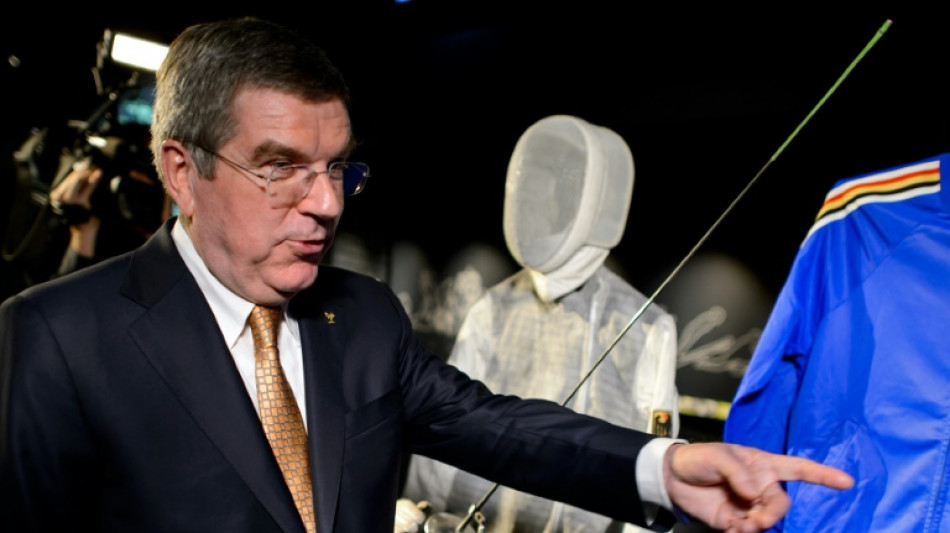
Outgoing IOC president Thomas Bach faced mammoth challenges / Photo: FABRICE COFFRINI - AFP

 Nepal flood death toll rises as rescuers scour tunnels
 France's Mistral sees value soar with 3 bn euro cash infusion

 Nepal glacier saw exceptional heat before collapse caused deadly floods: researcher
 Ethiopia boosts drone production to fight rebels
 Yemen rebels hit Saudi Arabia with wave of strikes, wounding 73

 Nepalis mark a year since deadly protests that toppled government
 Rubio launches Latin America tour to cement US influence
 France tries 14 over deadliest Channel migrant crossing disaster

 Australia threatens hefty fines if big tech fails 'duty of care'
 Zverev romps into quarter-finals as Darderi downed
 Kauai on tornado watch as Hurricane Lowell nears Hawaiian islands
 Pakistan roll the dice in search of consolation win over England
 Yen extends gains as traders eye rate hike, tech rallies again
 'The ber months': Christmas arrives early in the Philippines

 N. Korea calls Russia bridge a sign of tighter ties
 US sanctions threaten to crush Iranian students' dreams

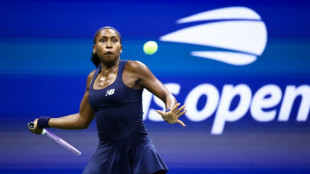 Former champ Gauff holds off Jovic to reach US Open quarter-finals
 OMP Asia Conferences to Showcase How Industry Leaders Kraft Heinz, Mars, Medac, And Nestlé Approach AI-Powered Supply Chain Planning At "Decision Velocity"
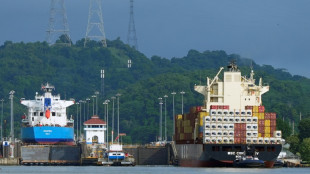 Panama Canal considering more cuts in transits due to El Nino

 Maresca agrees with Haaland that players started season jaded

 Hurricane warning issued for westernmost Hawaiian islands
 UK PM denounces 'politics of poison' after anti-migrant protests

 Comeback queen Zheng strikes again for US Open quarter-final berth
 Third absence for injured Hadjar as Lawson fills in again in Spain
 Far-right victory in Germany draws protesters in Berlin
Thomas Bach's eventful 12-year tenure as president of the International Olympic Committee comes to an end on Monday when he hands over the reins to Kirsty Coventry, the first woman and African to hold sport's most powerful political office.
The 71-year-old German lawyer, a 1976 Olympic team fencing champion, faced many challenges during his time in power.
AFP Sport picks out three:
- Russia 'the elephant in the room' -
President Vladimir Putin was the first person to ring Bach to congratulate him on his election in 2013 -- little did Bach realise how Russia was to dog his presidency.
The state-sponsored doping scandal at the 2014 Sochi Winter Games and Russia breaking the Olympic Truce twice, in 2014 and 2022, taxed his patience and that of the IOC movement.
Bach faced pressure from both sides before the 2024 Paris Games and in the end permitted Russian athletes to compete despite the invasion of Ukraine, but only after being strictly vetted and under a neutral flag.
For Michael Payne, a former head of IOC marketing, Russia was the "large elephant in the room" and Bach was in a "no-win situation."
His fellow former IOC marketing executive Terrence Burns, who lived and worked in Russia in the 1990s, said Bach was one of many leaders fooled by Putin.
"On doping he should have been harsher," Burns told AFP.
"But let's be honest, the whole thing was almost unbelievable.
"On Ukraine, you were damned if you do and damned if you don't.
"I don't think any western government or politician has ever figured out Russia... nor did he."
Hugh Robertson, now an IOC member and the British sports minister responsible for overseeing the delivery of the highly successful 2012 London Games, believes Bach played his hand well over the Paris Games.
"The balance he struck over Russian participation in Paris was in line with the Olympic Charter," Robertson told AFP.
"He took very strong action against the government, banned any events in Russia, any national representation and any national symbols."
- Calling Japan's bluff over Covid -
Bach had "a very tough presidency and never caught a break" said Payne, but he always held his nerve.
No more so than when Bach resisted calls from within Japan for the Tokyo Games to be cancelled, not just postponed to 2021, because of the Covid pandemic.
Payne says Bach's painful memories of missing the Moscow Games in 1980 due to a boycott linked to the Soviet invasion of Afghanistan, had left their mark. The German said the IOC would not pull the plug.
In addition, the ramifications of cancelling Tokyo would have been enormous for the IOC.
"Think about if Tokyo had not taken place," said Payne.
"Would Beijing (the 2022 Winter Games) have taken place as well?
"The Olympic movement losing four years is maybe not existential, but boy it would have been tough."
In the end the Games did go ahead but the majority of athletes performed in empty stadia as local organisers banned spectators.
Burns says it was a tour de force from Bach.
"Honestly, I think it was his sheer willpower that made those Games happen when everyone, and I mean everyone, in the world doubted him," said the American.
"Japan tried to pull out. He called their bluff. Smart."
Robertson saw it from "inside the bubble" as he was then chairman of the British Olympic Association (BOA).
"Of course it was a huge disappointment that there were no spectators but a generation of athletes got the chance to compete in an Olympic Games," said the 62-year-old.
"It probably would not have been the case had Bach not been in charge.
"I think athletes around the world owe Thomas Bach a huge vote of thanks."
- Robust finances -
Bach departs with the IOC's finances in rude health. He has boasted of a "60% growth in revenues" during his dozen years at the helm.
Payne says he has indeed increased revenues but the 67-year-old Irishman cautioned that "with increasing revenues partners become more demanding," adding "just because you have contracts locked up does not mean you do not change and evolve."
Robertson praises Bach for handing over to Coventry an IOC "in an extremely robust financial position."
He added the policy of locking sponsors into long-term deals "gave the IOC financial certainty at an exceptionally difficult time and we are seeing the benefit of that now."
Burns for his part draws on an aphorism of a former US president.
"Ronald Reagan used to say are you better off today than you were four years ago?
"By any measure, Bach enriched the IOC coffers.
"In the end that is all that matters."
- In summary -
"He will go down as one of the three great IOC presidents along with Pierre de Coubertin and Juan Antonio Samaranch." -- Payne
"A transformational president in unprecedented times." -- Burns
"Thomas Bach had the most difficult deck of cards to play of any IOC president. He has played them exceptionally well and left the IOC stronger than when he took over." -- Robertson
O.Gaspar--PC