Why fan violence still sullies Latin American football / Photo: Alejandro PAGNI - AFP

 Kiss's winning run ends as Argentina hold Australia to draw

 Alcaraz excited to face 'dangerous' Paul for US Open quarter-final berth

 Prince William to represent King Charles III at Norway late King Harald's funeral

 Inter and Roma roar back to win thrillers and share top spot

 Don't stop them now: fans party for Freddie Mercury's 80th birthday

 AFP photographer wins top prize for Madagascar protest coverage

 Keys: 'I felt like I couldn't play tennis'

 Simmonds stars as Pau upset Montpellier

 Inter roar back in five-goal thriller with Napoli

 Haaland keeps Man City perfect in Premier League, blunt Spurs held

 Hamilton worried by Ferrari pace while Antonelli prepares for a fight

 Vuelta stage 15 shortened due to extreme heat, Mas consolidates lead

 Putin meets US envoys for Ukraine war talks

 Modric available for Croatia in Nations League

 Potapova upsets 2025 US Open runner-up Anisimova

 Gasly a 'class act' says Alpine boss after Monza pole

 Athletic Bilbao crush Simeone's flat Atletico
 Stay far from battlefield, warns Japanese director in Vietnam War film

 Tens of thousands of Croatians protest over hazardous waste

 Haaland heads unconvincing Man City top of Premier League

 US envoys in Moscow as Russia and Ukraine vow not to hit capitals during talks

 Motorsport governing body rejects Alpine boss's claims of bias
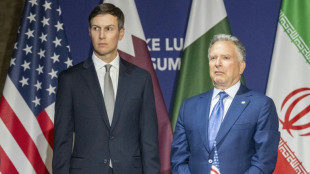
 US envoy on West Bank visit says Israel has responsibility for Palestinians
 Ethiopian Miss World contestant spotlights pain of sister's murder

 'Leader' Raphinha rising to Barca striker challenge

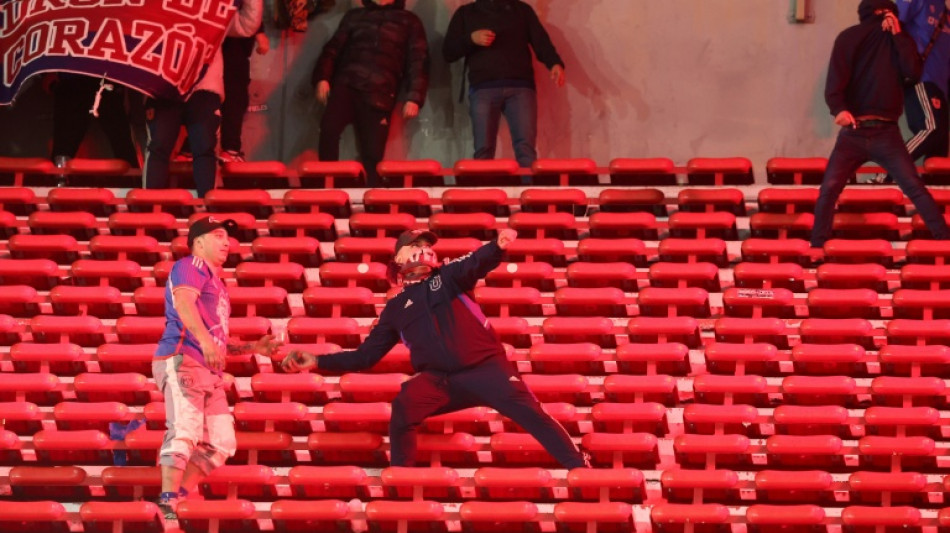
Images of a fan jumping from the stands to escape a beating as bottles, rocks and seats fly through the air at a game between Chilean and Argentine clubs in Buenos Aires on Wednesday highlight the enduring problem of violence in Latin American football.
Over 100 people were arrested over the bloody battles between supporters of Universidad de Chile and Argentina's Independiente, which left 19 people injured, three seriously.
From Mexico to Argentina, Brazil, Colombia, Chile and Ecuador, stadium violence continues to mar the beautiful game in football-mad Latin America.
Here is a quick overview of the situation:
- What causes the violence? -
Argentina, Brazil, Chile, Colombia, Honduras, Ecuador, Peru and Uruguay have all enacted laws over the past two decades to tackle hooliganism, including, in some cases, with prison sentences.
But the violence continues unabated.
So far this year in Chile, twelve matches were suspended due to violence, according to the players' union.
In April, two fans died during a stampede outside a Santiago stadium before a Copa Libertadores match between local side Colo Colo and Brazil's Fortaleza.
In Argentina, more than 100 people have died in the last 20 years, 157 in Brazil between 2009 and 2019, and 170 died in Colombia between 2001 and 2019, according to academic and NGO studies.
There's an idea "that stadiums are spaces where it's legitimate to commit acts of violence, not just physical violence, but also racism and homophobia," Argentine sociologist Diego Murze, author of the book "Football, Violence, and the State," told AFP.
According to Murze, there's a "tribal logic that has always prevailed in football," including a culture of provocation between fans that has "re-emerged in recent years."
For many fans, "football is a channel for frustration," says Colombian sociologist German Gomez, author of the book "Football and Hooligans, an Urban Phenomenon."
Gomez attributed it to "a poeticization of what a team's victory means in the lives of these fans, which leads to that loss of emotional control when a match is won, and even when it is lost."
- Has tighter scrutiny worked?
Security has been stepped up at stadiums around the continent, with some requiring biometric identification for entry and installing video surveillance of the stands.
"In Argentina, they monitor you more in a soccer stadium than at the airport," Murze said,
But the technology, while useful to identify banned offenders, is often powerless to prevent violence by hitherto unknown individuals with masked faces.
The Colombian sociologist accused Conmebol, South America's football governing body, of being lax on violence, saying it doesn't "issue exemplary sanctions against soccer clubs because... closing a soccer club can mean significant financial losses."
- What more can be done? -
In Argentina, visiting fans are not allowed at local first division games.
Several clubs in the World Cup title holder, as well as in Chile and Uruguay, were forced to play behind closed doors last year as punishment for fan violence.
Murze argued that clubs need to professionalize their security apparatus, as they currently "rely entirely on what the state and the police can do."
Following the deaths of the two fans in Chile in April, the Chilean government ended the "Safe Stadium" program, an initiative created in 2011 to combat football violence, without success.
The program prohibited drums and banners from stadiums and left stadium security in the hands of private individuals.
The government has pledged to replace it with new rules for all mass events.
"Mitigating football violence in South America must be driven by actions that promote education and football culture," said Gomez.
P.Mira--PC