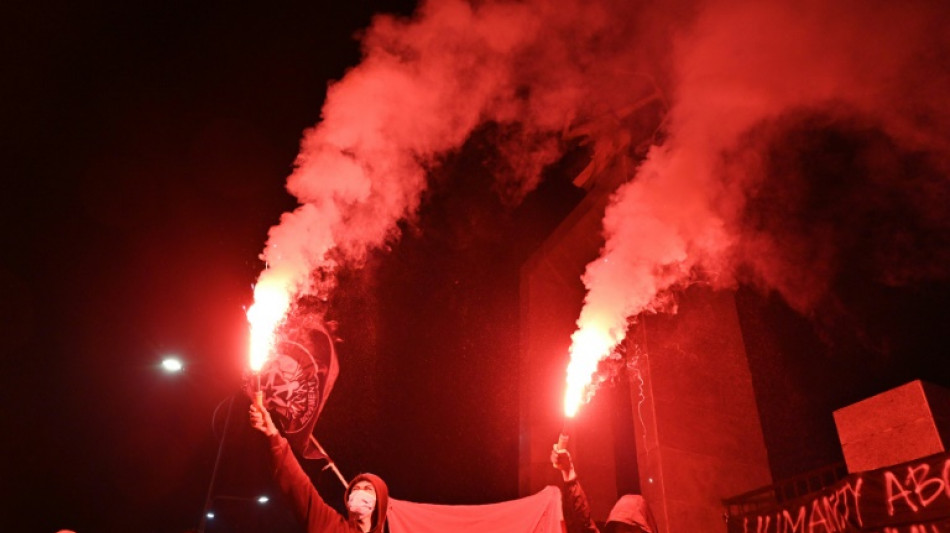
Indonesian football faces pivotal moment after stadium disaster / Photo: ADEK BERRY - AFP

 Number of missing in Nepal, China floods soars past 2,400
 Trump announces deal for huge US stake in Venezuelan oil reserves

 Kane confirms talks on Bayern extension
 Trump govt. mulls deal to give away part of Yosemite park
 Indian release of Sonia Gandhi memoir uncertain after publisher clarification

 Cities show cleaner transport policies can reduce severe air pollution

 Four patients harmed in Nashville hospital medication mix-up
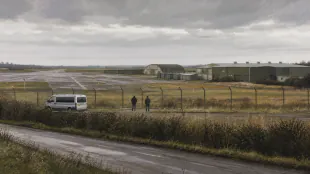 Essex council hires private guards as Wethersfield asylum centre expands

 Haakon VIII becomes Norway's king after Harald V dies at 89
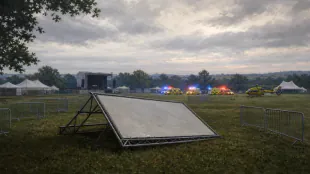 Six injured after sign falls at Christian festival in West Sussex

 Dubai airport expands scanners that keep laptops and liquids in bags
 Kuwait and Pakistan sign military cooperation agreement

 Ramos strikes as AC Milan beat Venezia

 Odisha faces very heavy rain as Sri Ganganagar reaches 41.4C
 Scammers in China exploit Microsoft Teams and other workplace apps to target victims

 GSA employees report mice, ceiling damage and cloudy water after Washington office move

 Cara and former scraper develop open-source tool to alert artists when work appears in AI datasets

 Google expands easier file sharing between Android phones and Apple devices
 UK chefs turn to induction cooking to reduce kitchen heat, energy use and pollution
 Restored Cheshire wetland becomes key UK breeding site for black-necked grebes
 Bayern steamroll Stuttgart in Bundesliga opener

 England pace quartet might keep Archer going until he is 40

 Driven by distraction? Trump steps up stunts as US midterms loom
 Springboks a wounded beast, warns All Blacks captain Savea

 Trump announces new US 'Space Academy'

The deadly stampede at an Indonesian football stadium has shaken the foundations of the country's most popular sport and was the culmination of decades of mismanagement and violence, experts say.
The tragedy a week ago that killed 131 people, including 32 children, in the aftermath of a top-tier match has forced officials and fans to confront failings in every aspect of the game in the country.
Experts on Indonesian football speak of shaky infrastructure, mismanagement, hours-long waits to leave outdated stadiums and the potential for heated passions to descend into violence that has killed scores since the 1990s.
"This is a wake-up call, one that has cost us greatly," Indonesian football commentator Mohamad Kusnaeni told AFP.
President Joko Widodo visited the site of the tragedy on Wednesday, ordering an audit of all stadia and pointing to the country's 78,000-seater national stadium in Jakarta as the standard he expects across the 18-team league.
The gates at the 42,000-capacity Kanjuruhan stadium in East Java's Malang were big enough to fit only two people at a time and some were not open on time, officials said.
"You could see and sense that something bad could potentially happen," Indonesian football pundit Pangeran Siahaan told AFP.
"There's a lot of dangers every time you go into a football stadium in Indonesia."
Many stadiums in Indonesia have not met international standards for hosting sports events, said Kusnaeni.
Some do not have single seating but instead benches that allow more people to stand and crowd together, while making it harder for security to spot a threatening incident before it happens.
Widodo said the seated Gelora Bung Karno Stadium in Jakarta allowed all spectators to exit safely within 15 minutes, and all stadiums should be brought in line.
"We must learn from it. Minor punishments have made negligence in the football scene repeatedly happen," said Akmal Marhali, coordinator of football watchdog Save Our Soccer and member of the fact-finding task force investigating the disaster.
"There must be progressive change and steps that turn the page."
Stricter measures such as banning clubs from Indonesia's football association, or PSSI, could help ensure better security and fan conduct.
- Inspired by Italian ultras -
Preventive measures were put in place before the match "due to the intense rivalry and... the culture of the spectators", PSSI deputy secretary general Maike Ira Puspita told AFP, refusing to discuss police conduct.
Persebaya Surabaya fans were barred from the stadium because of fear of fan violence led by diehard "ultra" fans.
But when Arema FC supporters -- known as "Aremania" -- flooded the pitch to express their anger with the home team, it set off a chain of events worsened by a violent police response that sparked a stampede leaving many trampled or suffocated to death.
Supporters said they were not to blame for what unfolded after Arema's first home defeat to their fiercest rivals for more than two decades.
National police appeared to blame "anarchic" fans before it suspended nine officers and sacked the local police chief.
The disaster has put a focus on Indonesia's "ultra" groups, which can almost look like battle-trained militias, listening in uniform to anointed commanders who gee them up with megaphones.
Groups in this sub-culture, such as the Curva Nord Persija in Jakarta, engage in organised chanting and choreographed visual displays inspired by Italian ultras.
Players travel in armoured vehicles to away games and away fans are now banned from the biggest derbies because home team hooligans have in some cases laid in wait with weapons on highways to attack their adversaries' coaches.
Some fans wear jerseys bearing the slogan "sampai mati", or until death. Mobs in some cases have beaten rival fans to death.
- 'God's intervention' -
Experts say that the bad blood between Arema and Persebaya Surabaya is really to do with the rivalry between East Java's two biggest cities, Malang and Surabaya.
But there is a glimmer of hope that something good may come out of one of the worst disasters in football history.
"This is the momentum for all supporters to realise that football is about supporting your favourite team and not about hating the rival team," the commentator Kusnaeni said.
"The supporters must change their philosophy."
The owners of Persebaya Surabaya and Arema have communicated with each other to discuss the rivalry. Fan representatives also met.
"Maybe this is God's intervention to unite the supporters of Arema with Persebaya," Danny Agung Prasetyo, coordinator of the Arema DC supporter group, told AFP.
A.P.Maia--PC