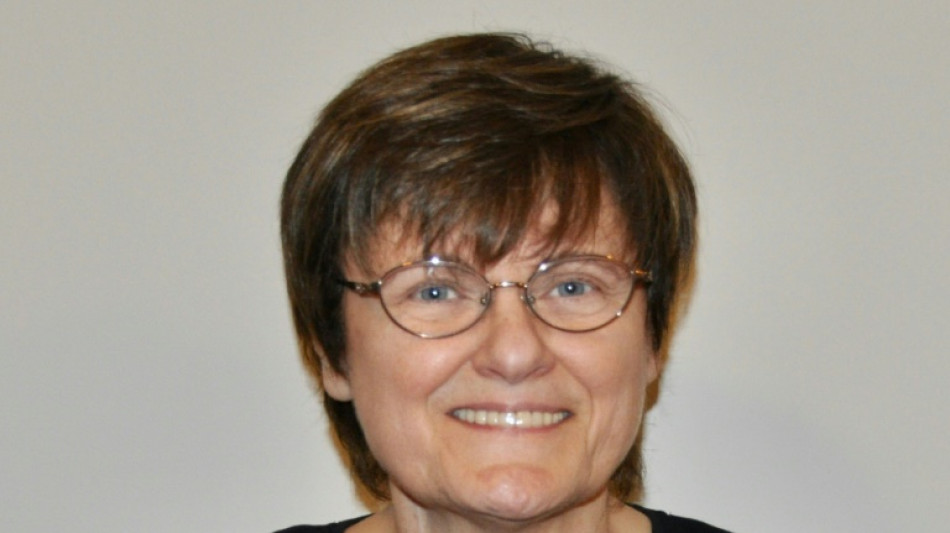
Katalin Kariko, scientific maverick who paved way for mRNA vaccines / Photo: Handout - FAMILY HANDOUT/AFP

 ALEX BODI AND AMBASSADOR GUM DOMINIC MATIOK OF THE REPUBLIC OF SOUTH SUDAN MEET IN BERLIN TO DISCUSS THE POSSIBILITY OF AN HONORARY CONSULATE IN BUCHAREST
 Lula, Bolsonaro wrap up campaigns ahead of Brazil's knife-edge vote

 Toulouse edge Castres in Top 14 derby

 Murakami homer propels White Sox to MLB playoff win over Guardians
 Israel targets top Hamas leader in deadly Gaza strike on anniversary

 Houthis say struck oil facility near Riyadh, as Saudis hit Sanaa

 AI needs safety layers like nuclear plants: ex-OpenAI engineer
 MVP Judge will miss Yankees' MLB playoff series against Rays

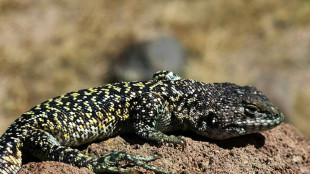 New lizard species discovered in Peru

 Fernandes hails Portugal's 'greatest symbol' Ronaldo, calls for unity

 Grandidier-Nkanang double takes Pau to Top 14 summit despite Vannes fightback
 Trainer Scott gets perfect Arc boost with top notch double

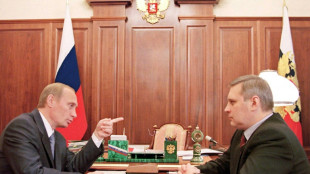 Ex-PM says Putin cannot admit 'mistake' over Ukraine
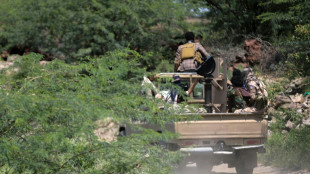 Houthis say Saudi Arabia launches dozens of strikes on Yemen capital

 Qatar and Abu Dhabi F1 Grand Prix to go ahead - F1 boss

 South Korea lift gloom with smash-and-grab Games football gold

 Ireland news conference before Israel game cut short amid tensions

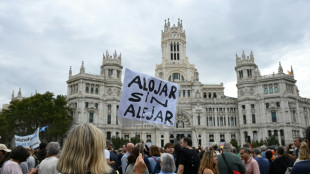 Protests over housing flare in Spain after relief measures rejected

 Zverev thrashes Shang to set up Djokovic quarter-final at China Open

 Turkey football ref chief jailed pending trial for graft
 North Korea says test of intermediate-range strategic missile included use of AI
 Rampant Sayers leads Hong Kong to third men's rugby gold in a row

 Ethiopia's Tigray rebels abandon regional capital as govt advances
 Bulgaria's Tsar Samuel returns 'home' after 1,000 years

 'Glad it's over': Kim powers to Games gold and military exemption

Hungarian-born scientist Katalin Kariko's obsession with researching a substance called mRNA to fight disease once cost her a faculty position at a prestigious US university, which dismissed the idea as a dead end.
Now, her pioneering work -- which paved the way for the Pfizer/BioNTech and Moderna Covid-19 vaccines -- has won her the Nobel Prize in Medicine.
Kariko, 68, spent much of the 1990s writing grant applications to fund her research into "messenger ribonucleic acid" -- genetic molecules that tell cells what proteins to make, essential to keeping our bodies alive and healthy.
She believed mRNA held the key to treating diseases where having more of the right kind of protein can help -- like repairing the brain after a stroke.
But the University of Pennsylvania, where Kariko was on track for a professorship, decided to pull the plug after the grant rejections piled up.
"I was up for promotion, and then they just demoted me and expected that I would walk out the door," she told AFP in an interview from her home in Philadelphia in December 2020.
Kariko didn't yet have a green card and needed a job to renew her visa. She also knew she wouldn't be able to put her daughter through college without the hefty staff discount.
She decided to persist as a lower-rung researcher, scraping by on a meagre salary.
It was a low point in her life and career, but "I just thought...you know, the (lab) bench is here, I just have to do better experiments," she said.
The determination runs in the family -- her daughter Susan Francia did go to UPenn, where she earned a master's degree, and won gold medals with the US Olympic rowing team in 2008 and 2012.
- Twin breakthroughs -
By the late 1980s, much of the scientific community was focused on using DNA to deliver gene therapy, but Kariko believed that mRNA was also promising since most diseases are not hereditary and don't need solutions that permanently alter our genetics.
First though, she had to overcome a major problem: in animal experiments, synthetic mRNA was causing a massive inflammatory response as the immune system sensed an invader and rushed to fight it.
Kariko, together with her main collaborator and co-winner Drew Weissman, discovered that one of the four building blocks of the synthetic mRNA was at fault -- and they could overcome the problem by swapping it out with a modified version.
They published a paper on the breakthrough in 2005. Then, in 2015, they found a new way to deliver mRNA into mice, using a fatty coating called "lipid nanoparticles" that prevent the mRNA from degrading, and help place it inside the right part of cells.
Both these innovations were key to the Covid-19 vaccines developed by Pfizer and its German partner BioNTech, where Kariko is now a senior vice president, as well as the shots produced by Moderna.
Both work by giving human cells the instructions to make a surface protein of the coronavirus, which simulates an infection and trains the immune system for when it encounters the real virus.
- New treatments -
Though she does not want to make too much of it, as a foreign-born woman in a male-dominated field, Kariko occasionally felt underestimated -- saying people would approach after lectures and ask "Who's your supervisor?"
"They were always thinking, 'That woman with the accent, there must be somebody behind her who is smarter or something,'" she said.
Yet the Nobel is just the latest accolade for Kariko, who has won the Breakthrough Prize, the L'Oreal-UNESCO prize for women in science awards, among many others.
It is a far cry from the time when her late mother would call every year after prize announcements to ask why she hadn't been chosen.
"I never in my life get (federal) grants, I am nobody, not even faculty," she would reply with a laugh.
To which her mother would reply: "But you work so hard!"
F.Santana--PC



