
US slaps TV provider with first-ever space debris fine / Photo: JOE RAEDLE - GETTY IMAGES NORTH AMERICA/AFP/File

 ALEX BODI AND AMBASSADOR GUM DOMINIC MATIOK OF THE REPUBLIC OF SOUTH SUDAN MEET IN BERLIN TO DISCUSS THE POSSIBILITY OF AN HONORARY CONSULATE IN BUCHAREST

 Lula, Bolsonaro wrap up campaigns ahead of Brazil's knife-edge vote

 Toulouse edge Castres in Top 14 derby

 Murakami homer propels White Sox to MLB playoff win over Guardians

 Israel targets top Hamas leader in deadly Gaza strike on anniversary

 Houthis say struck oil facility near Riyadh, as Saudis hit Sanaa

 AI needs safety layers like nuclear plants: ex-OpenAI engineer

 MVP Judge will miss Yankees' MLB playoff series against Rays

 New lizard species discovered in Peru

 Fernandes hails Portugal's 'greatest symbol' Ronaldo, calls for unity

 Grandidier-Nkanang double takes Pau to Top 14 summit despite Vannes fightback

 Trainer Scott gets perfect Arc boost with top notch double

 Ex-PM says Putin cannot admit 'mistake' over Ukraine

 Houthis say Saudi Arabia launches dozens of strikes on Yemen capital

 Qatar and Abu Dhabi F1 Grand Prix to go ahead - F1 boss

 South Korea lift gloom with smash-and-grab Games football gold

 Ireland news conference before Israel game cut short amid tensions
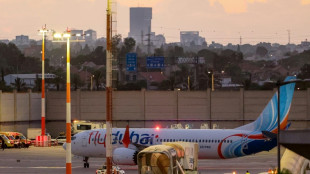
 Protests over housing flare in Spain after relief measures rejected

 Zverev thrashes Shang to set up Djokovic quarter-final at China Open

 Turkey football ref chief jailed pending trial for graft

 North Korea says test of intermediate-range strategic missile included use of AI

 Rampant Sayers leads Hong Kong to third men's rugby gold in a row

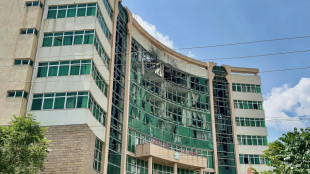 Ethiopia's Tigray rebels abandon regional capital as govt advances

 Bulgaria's Tsar Samuel returns 'home' after 1,000 years

 'Glad it's over': Kim powers to Games gold and military exemption

US authorities said they have issued a "breakthrough" first-ever fine over space debris, slapping a $150,000 penalty on a TV company that failed to properly dispose of a satellite.
On Monday the Federal Communications Commission (FCC) came down on Dish for "failure to properly deorbit" a satellite called EchoStar-7, in orbit since 2002.
"This marks a first in space debris enforcement by the Commission, which has stepped up its satellite policy efforts," the FCC, which authorizes space-based telecom services, said in a statement.
As the geostationary satellite came to the end of its operational life, Dish had moved it to an altitude lower than the two parties had agreed on, where it "could pose orbital debris concerns," the FCC said.
The commission said Dish, a US satellite television provider, pledged in 2012 to elevate the satellite to 300 kilometers (190 miles) above its operational arc.
But with fuel running low, it retired the satellite at an altitude just over 120 kilometers above the original arc.
"As satellite operations become more prevalent and the space economy accelerates, we must be certain that operators comply with their commitments," said FCC enforcement bureau chief Loyaan Egal.
"This is a breakthrough settlement, making very clear the FCC has strong enforcement authority and capability to enforce its vitally important space debris rules."
The FCC said the settlement "includes an admission of liability from the company and an agreement to adhere to a compliance plan and pay a penalty of $150,000."
In a statement Tuesday, Dish appeared to counter the FCC over disposal requirements, and argued that the commission's enforcement arm made "no specific findings that EchoStar-7 poses any orbital debris safety concerns."
"As the Enforcement Bureau recognizes in the settlement, the EchoStar-7 satellite was an older spacecraft that had been explicitly exempted from the FCC's rule requiring a minimum disposal orbit," a Dish spokesperson said in a statement.
"DISH has a long track record of safely flying a large satellite fleet and takes seriously its responsibilities as an FCC licensee."
- Collision risks -
The US aviation regulator, FAA, recently announced its intention to reduce space debris by requiring private companies to dispose of the upper stages of rocket launch vehicles by, for example, returning them to the Earth's atmosphere or moving them to a less congested "graveyard orbit."
The new regulation, which has yet to be definitively adopted, already exists for government space missions.
"If left unchecked, the accumulation of orbital debris will increase the risk of collisions and clutter orbits used for human spaceflight and for satellites," the Federal Aviation Administration said.
The European Space Agency estimates that around one million pieces of debris larger than a centimeter -- big enough to "disable a spacecraft" -- are in Earth's orbit.
They are already causing problems, from a near-miss in January last year involving a Chinese satellite, to a five-millimetre hole knocked into a robotic arm on the International Space Station in 2021.
With satellites now crucial for GPS, broadband and banking data, collisions pose significant risks on Earth.
A.Aguiar--PC



