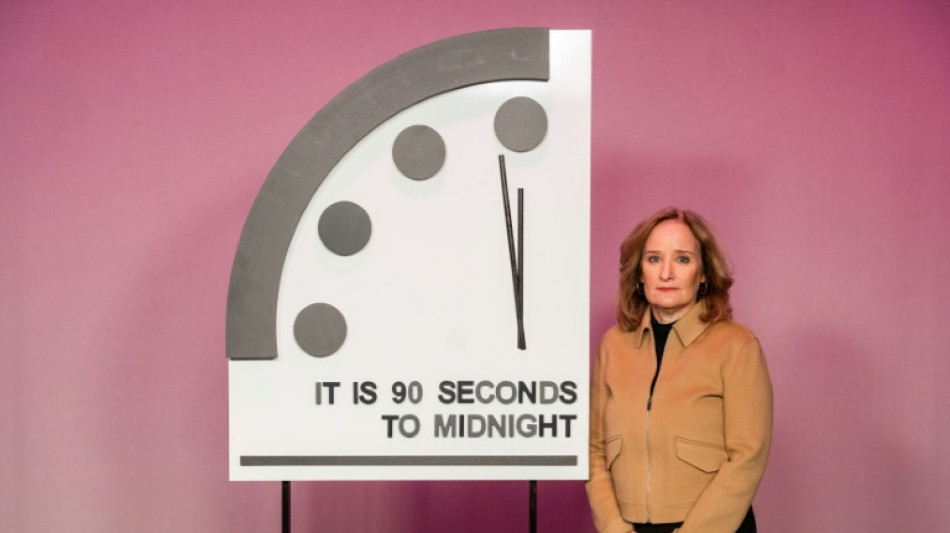
'Doomsday Clock' remains at 90 seconds to midnight / Photo: Handout - Hastings Group Media/AFP

 Latvian partial election results suggest pro-European choice

 In Egypt's Sinai, Gazan builds school for children displaced by war

 Trump tariffs a mixed bag for US auto industry

 Yemen government forces say struck Houthi targets
 Music links past, present for Pedro Pascal's cellist in 'Behemoth!'

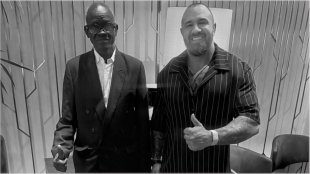 ALEX BODI ȘI AMBASADORUL REPUBLICII SUDANUL DE SUD, GUM DOMINIC MATIOK, DISCUTĂ LA BERLIN DESPRE POSIBILITATEA ÎNFIINȚĂRII UNUI CONSULAT ONORIFIC LA BUCUREȘTI
 Dodgers step up World Series three-peat bid with 5-3 win over Braves
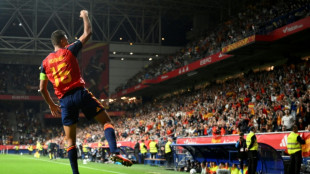 Spain break down Czechs as England outclass Croatia in Nations League

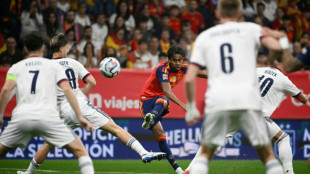 Yamal on target as Spain hold off Czech Republic

 Latvian exit polls suggest pro-European choice
 Lula, Bolsonaro wrap up campaigns ahead of knife-edge election
 Tuchel hails 'complete' England after Croatia demolition

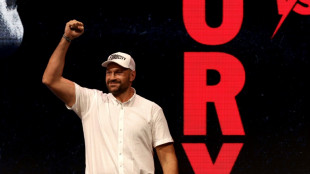 Fury to invite Trump to lead ring walk before Joshua showdown

 Fashion industry in 'precarious moment', says Vivienne Westwood supremo

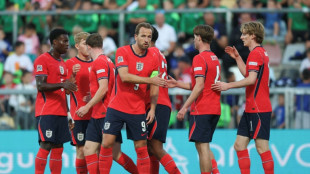 Seventh heaven for England in Nations League rout of Croatia
 Storms, flooding cause chaos on Greek holiday island of Crete

 #IAmJaneDoe: online support campaign in US university rape case

 Brazil shine on Selecao's first visit to India
 Zverev sets up Djokovic quarter-final at China Open, Rybakina out
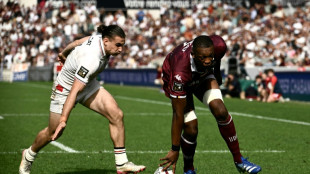 Happier at home, Bordeaux hammer Lyon in Top 14
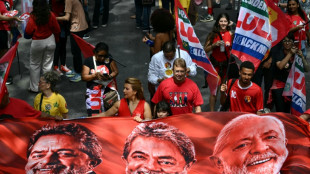 Lula, Bolsonaro in final push for votes ahead of knife-edge election

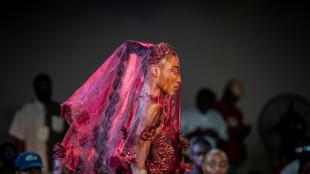 Boisterous fashion week barnstorms 'sleepy' Nigerian capital
 UAE investigators say flydubai co-pilot was planning 'terrorist act'
 Rahul smacks century in India v Windies ODI
 Daryz seeks to join exclusive club of dual Arc winners
The symbolic "Doomsday Clock" was held at 90 seconds to midnight Tuesday, reflecting existential threats to humanity posed by potential nuclear escalation from the war in Ukraine and the multiplying impacts of the climate crisis following Earth's hottest recorded year.
Set by top scientists and security experts, the timing of the clock remains the same as last year and the closest it has ever been to midnight in its more than 75-year-history.
"Trends continue to point ominously towards global catastrophe," said Rachel Bronson, president and CEO of the Bulletin of Atomic Scientists. "The war in Ukraine poses an ever present risk of nuclear escalation, and the October 7 attack in Israel and war in Gaza provides further illustration of the horrors of modern war, even without nuclear escalation."
Rather than abandoning nuclear weapons, countries that possess them are upgrading their arsenals, while massive floods, fires and other climate disasters threatened billions of lives and livelihoods in a year that saw record-shattering temperatures caused by mankind's reluctance to turn away from fossil fuels.
"Biological research aimed at preventing future pandemics has proven useful, but also presents the risks of causing one," Bronson said, while recent advances in artificial intelligence (AI) raise questions about how to control a technology "that could improve or threaten civilization in countless ways."
-War in Ukraine looms large -
Russia's invasion of Ukraine, now just a month away from its second anniversary, was the principal reason behind the clock being moved to 90 seconds before midnight in 2023, and continued to overshadow this year's update.
Moscow's thinly veiled threats of nuclear war, its attacks on nuclear sites, and its erosion of international norms of conduct have all contributed to heightened risk, the Bulletin said, while Israel's war in Gaza threatens to evolve into a wider regional conflict involving nuclear states.
Meanwhile, "traditional nuclear arms control really has come to an end for now," said Alex Glaser, a Princeton University professor of mechanical and aerospace engineering. Russia withdrew from the New Strategic Arms Reduction Treaty (New START) and the Comprehensive Nuclear-Test-Ban Treaty (CTBT), which the United States never ratified to begin with.
China is increasing its arsenal, which now stands at 500 nuclear weapons, "and for the first time, at least in my adult life, there is now talk in Washington that the US nuclear arsenal will have to increase also in order to match... Russia and China combined," Glaser added.
On climate, Ambuj Sagar, a professor at the Indian Institute of Technology Delhi said there had been a "mixed story," hailing $1.7 trillion invested in clean energy at the climate COP in Dubai as a sign of moving in the right direction, albeit "not as fast or as deeply" as required.
The clock was originally set at seven minutes to midnight in 1947.
The furthest from midnight it has ever been is 17 minutes, following the end of the Cold War in 1991.
The Bulletin was founded in 1945 by Albert Einstein, J. Robert Oppenheimer and other scientists who worked on the Manhattan Project, which produced the first nuclear weapons. The idea of the clock symbolizing global vulnerability to catastrophe followed two years later.
X.M.Francisco--PC



