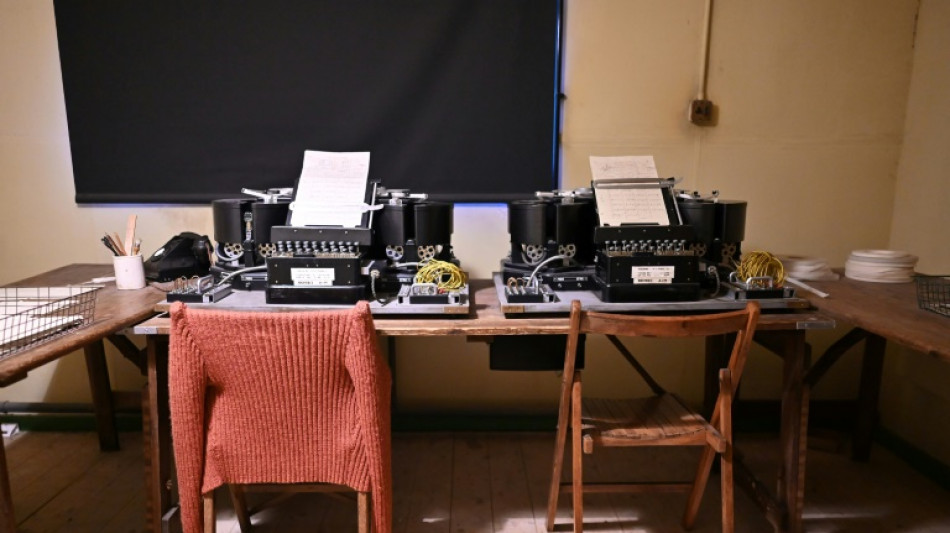
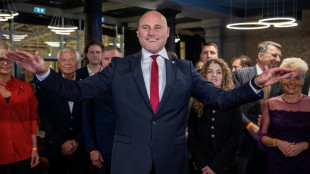
Secret UK women's codecracking army gets belated recognition for WWII work / Photo: Justin TALLIS - AFP

 Asian Games set to close after records, rancour and rain
 Cry for help as French-Swiss lake dries up
 Sabalenka swept out of China Open in third round
 US urges 'restraint' as Ethiopia's Tigray crisis rocks region
 Teens on target again as USA down Mexico 3-0
 World records prove Asian Games were a hit, says top official

 US prison chief who oversaw botched execution resigns

 'Chaotic' Asian Games threaten Japan hopes of hosting Olympics again

 Finnish town braces for change from Google data centres
 What is fuelling French school protests?
 Without lawyers, migrant children face deportation from the US
 Three-peat seeking Dodgers open playoffs with a win, Rays hold off Yankees

 Brazil votes in nail-biter polls closely watched by Trump

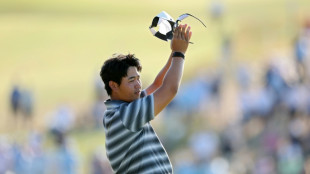 'Just be you': Kim reveals Tiger text that inspired him to gold
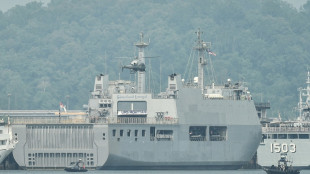 Myanmar migrants returned to war-torn nation from Malaysia
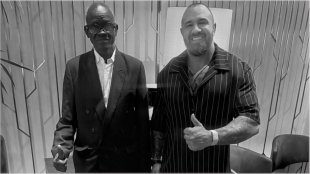
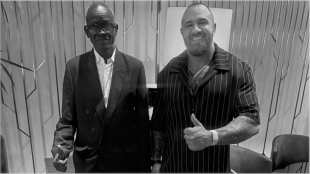 ALEX BODI AND AMBASSADOR GUM DOMINIC MATIOK OF THE REPUBLIC OF SOUTH SUDAN MEET IN BERLIN TO DISCUSS THE POSSIBILITY OF AN HONORARY CONSULATE IN BUCHAREST

 Lula, Bolsonaro wrap up campaigns ahead of Brazil's knife-edge vote
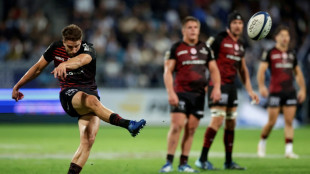 Toulouse edge Castres in Top 14 derby

 Murakami homer propels White Sox to MLB playoff win over Guardians
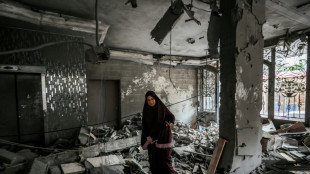 Israel targets top Hamas leader in deadly Gaza strike on anniversary

 Houthis say struck oil facility near Riyadh, as Saudis hit Sanaa

 AI needs safety layers like nuclear plants: ex-OpenAI engineer

 MVP Judge will miss Yankees' MLB playoff series against Rays

 New lizard species discovered in Peru

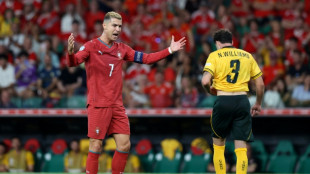 Fernandes hails Portugal's 'greatest symbol' Ronaldo, calls for unity

During World War II, dozens of women Cambridge University students worked around the clock in complete secrecy to crack Nazi codes, but only now are the unsung heroes getting recognition.
At least 77 women from the women-only Newnham College were drafted to Bletchley Park, the code-breaking centre north of London, during the conflict.
It was there that mathematician Alan Turing decoded messages encrypted by the Nazis' Enigma machine, in particular those sent by German U-boats submarines in the North Atlantic.
Historians widely acknowledge that Bletchley played a key role in bringing down Adolf Hitler.
But the story of the Cambridge women has only recently been revealed thanks to research started by Sally Waugh five years ago.
The 69-year-old former Newnham student and teacher said she wanted to highlight the role of women in this period, often ignored in history books.
"Nobody was ever able to say thank you," she told AFP.
"I had no idea that people from Newnham went to work at Bletchley Park".
Then one day, she came across an article mentioning the name of an old friend, Jane Monroe, who died in 2005.
When Monroe, a mathematician from Newnham, was asked what she had done during the war, she replied unfazed: "Oh, I made tea," said Waugh.
"She was in reality a code breaker. She was a friend but she didn't tell me."
Monroe was unable to talk about her role as she had signed the Official Secrets Act, which restricts the publication of government information deemed sensitive.
- D-Day -
The article mentioned three other women, whom Waugh tracked down in the university's archives.
"I thought, if there are four of them, I wonder if there are any more?" she recalled.
In fact, Waugh found around 20 names and then cross-referenced her information with Bletchley Park.
Together they were able to identify almost 80 women.
The only one whose name has so far gone down in history is mathematician Joan Clarke, who was recruited in 1940 and worked with the celebrated Enigma decoder and computer scientist Turing, to whom she was briefly engaged.
She became deputy head of her unit and after the war continued to work in intelligence. Keira Knightley won an Oscar nomination for her portrayal of Clarke in the 2014 film "The Imitation Game".
Also on the list is Violet Cane, another mathematician with a gift for statistics. She worked at Bletchley's naval section between 1942 and 1945.
German speaker Elizabeth Langstaff was given the tasks of reconstructing German messages from raw decryptions, interpreting abbreviations and analysing the results over months.
At the end of 2023, a Newnham archivist uncovered a letter dated January 28, 1939, in which the head of the university confirmed to Bletchley Park that "in the event of emergency we should be able to find for you about six students proficient in Modern Languages, in order for work to be carried out at the Foreign Office".
Newnham, which was founded in 1871, eventually sent Bletchley mathematicians, linguists, historians and even archaeologists to analyse aerial photographs.
"Newnham women were represented in most key areas of Bletchley Park's work," Jonathan Byrne, Oral History Officer at Bletchley Park Trust, told AFP.
That included decrypting German signals encrypted by Enigma, producing intelligence reports, understanding the activities of the Nazis by analysing signal networks and studying diplomatic signals.
Around 50 of women were believed to have been on duty on June 6, 1944 -- "D-Day", when Allied forces landed on the beaches of Nazi-occupied northern France.
"Although the work they were involved in contributed to Allied planning for the liberation, most would have not known when the invasion was happening," explained Byrne, though some may have suspected.
"German signal traffic in France increased in response to the invasion, making early June 1944 a busy time at Bletchley Park," he explained.
L.Torres--PC



