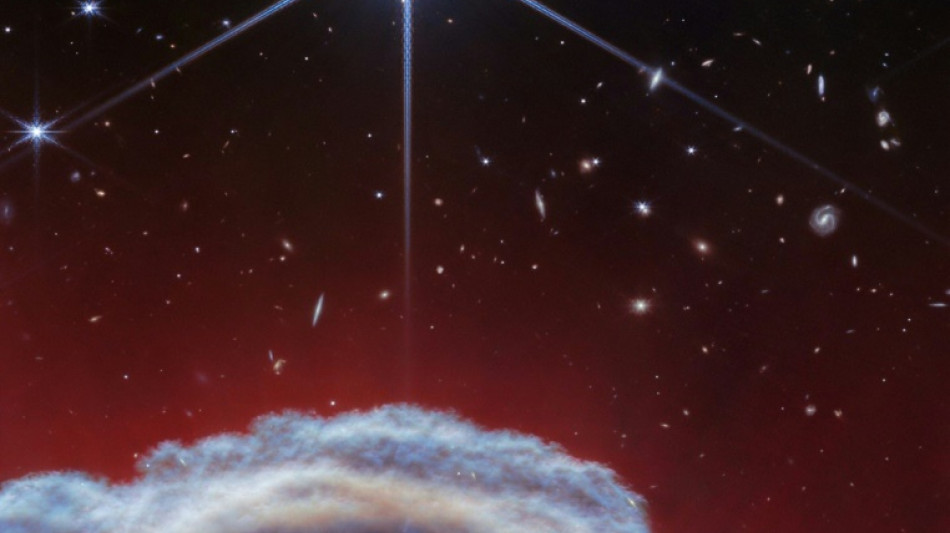
Webb telescope takes stunning images of Horsehead Nebula's 'mane' / Photo: - - ESA, NASA, CSA, STScI/AFP

 Asian Games set to close after records, rancour and rain

 Cry for help as French-Swiss lake dries up

 Sabalenka swept out of China Open in third round

 US urges 'restraint' as Ethiopia's Tigray crisis rocks region

 Teens on target again as USA down Mexico 3-0

 World records prove Asian Games were a hit, says top official

 US prison chief who oversaw botched execution resigns

 'Chaotic' Asian Games threaten Japan hopes of hosting Olympics again

 Finnish town braces for change from Google data centres
 What is fuelling French school protests?

 Without lawyers, migrant children face deportation from the US

 Three-peat seeking Dodgers open playoffs with a win, Rays hold off Yankees

 Brazil votes in nail-biter polls closely watched by Trump

 'Just be you': Kim reveals Tiger text that inspired him to gold

 Myanmar migrants returned to war-torn nation from Malaysia
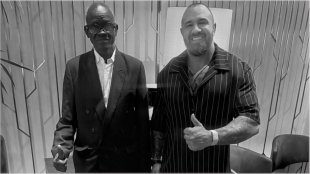
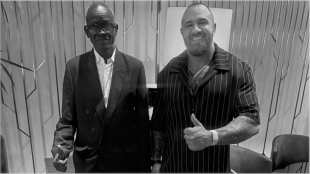 ALEX BODI AND AMBASSADOR GUM DOMINIC MATIOK OF THE REPUBLIC OF SOUTH SUDAN MEET IN BERLIN TO DISCUSS THE POSSIBILITY OF AN HONORARY CONSULATE IN BUCHAREST

 Lula, Bolsonaro wrap up campaigns ahead of Brazil's knife-edge vote

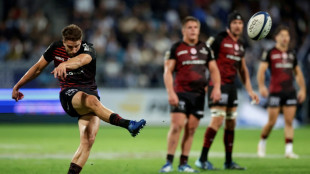 Toulouse edge Castres in Top 14 derby

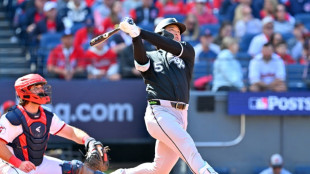 Murakami homer propels White Sox to MLB playoff win over Guardians

 Israel targets top Hamas leader in deadly Gaza strike on anniversary
 Houthis say struck oil facility near Riyadh, as Saudis hit Sanaa

 AI needs safety layers like nuclear plants: ex-OpenAI engineer

 MVP Judge will miss Yankees' MLB playoff series against Rays

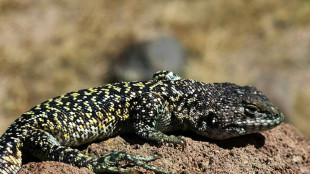 New lizard species discovered in Peru

 Fernandes hails Portugal's 'greatest symbol' Ronaldo, calls for unity

NASA's James Webb telescope has captured the most detailed infrared images ever taken of the Horsehead Nebula, one of the most majestic and recognizable objects in the night sky, the space agency said Monday.
The new observations show the top of the "horse's mane," revealing for the first time the small scale structures on the edge of the giant cloud of dust and gas.
Located roughly 1,300 light years away in the constellation Orion ("The Hunter"), the iconic silhouette of a horse's head and neck rises from what look like churning waves of interstellar foam.
Webb, the most powerful space observatory ever built, is able to detect infrared light at unprecedented resolutions, revealing objects that cannot be seen using the visible spectrum in optical telescopes.
"An international team of astronomers has revealed for the first time the small-scale structures of the illuminated edge of the Horsehead," a NASA statement said.
As ultraviolet light evaporates the dust cloud, particles are swept away by the outflow of heated gas -- a process Webb has now shown in action.
The observations have also given astronomers new insights into how dust blocks and emits light, and a better idea of the nebula's multidimensional shape.
The work was the result of an study led by Karl Misselt of the University of Arizona, and published Monday in Astronomy & Astrophysics.
The Horsehead Nebula has fascinated space enthusiasts since its discovery in 1888 by the renowned Scottish astronomer Williamina Fleming.
While it appears shadowy in optical light, the nebula comes to life when viewed through infrared wavelengths, taking on transparent and ethereal hues.
This delicate pillar of hydrogen gas infused with dust is being steadily worn away by the radiation of a nearby star. Astronomers estimate the Horsehead will disappear in another five million years.
A.Seabra--PC



