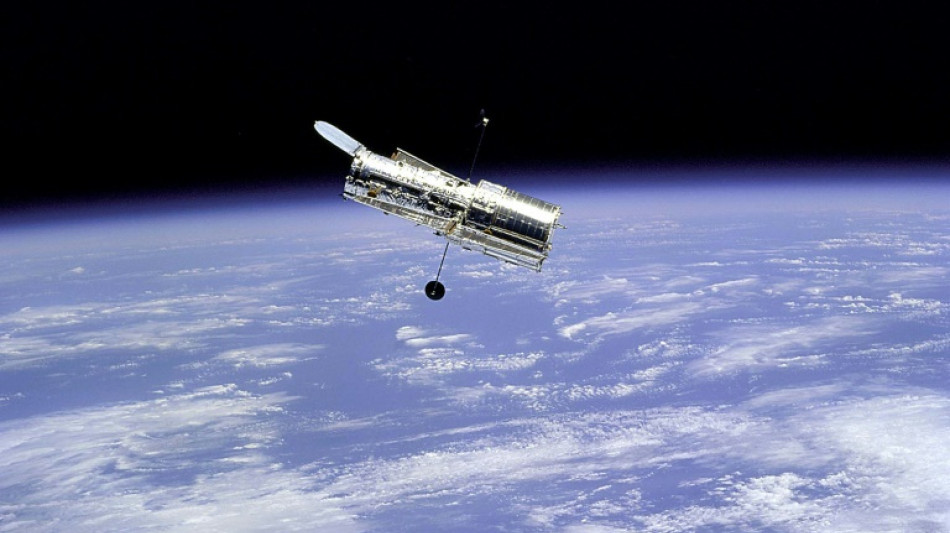
Hubble trouble: Veteran space telescope forced to take it easy / Photo: NASA - NASA/AFP/File

 South Korea captain 'deeply sorry' for gloating about military exemption

 Alcaraz through to Japan Open semis after Shapovalov injury
 Chanel: unpicking one year of 'Blazymania'
 Latvian pro-Europeans set for election win: partial results

 China swim sensation Yu Zidi, 13, says 'I'm no prodigy'

 Yu Zidi to Ohashi: Asian Games stars who can light up LA Olympics
 'Act before it's too late': Tokyo residents fight for more trees

 'Disappointing' as South Korea flag mishap sees Games end on sour note
 Pre-COP host Tuvalu at frontline of climate change
 Hungary's dwindling paprika producers battle to save signature spice

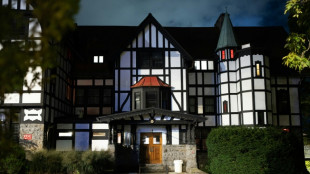 Cornell president vows review in wake of alleged student gang rape

 Latvian partial election results suggest pro-European choice

 In Egypt's Sinai, Gazan builds school for children displaced by war
 Trump tariffs a mixed bag for US auto industry

 Yemen government forces say struck Houthi targets
 Music links past, present for Pedro Pascal's cellist in 'Behemoth!'

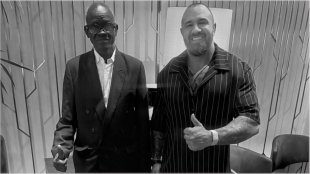 ALEX BODI ȘI AMBASADORUL REPUBLICII SUDANUL DE SUD, GUM DOMINIC MATIOK, DISCUTĂ LA BERLIN DESPRE POSIBILITATEA ÎNFIINȚĂRII UNUI CONSULAT ONORIFIC LA BUCUREȘTI
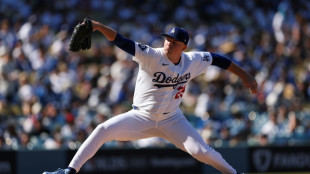
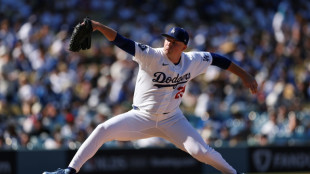 Dodgers step up World Series three-peat bid with 5-3 win over Braves
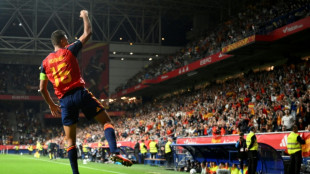 Spain break down Czechs as England outclass Croatia in Nations League
 Yamal on target as Spain hold off Czech Republic
 Latvian exit polls suggest pro-European choice

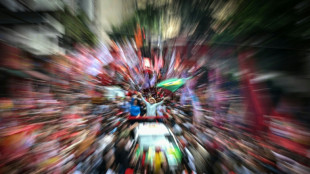
 Lula, Bolsonaro wrap up campaigns ahead of knife-edge election

 Tuchel hails 'complete' England after Croatia demolition

 Fury to invite Trump to lead ring walk before Joshua showdown

 Fashion industry in 'precarious moment', says Vivienne Westwood supremo

The venerable Hubble Space Telescope, which has revolutionized astronomical discovery since its launch in 1990, will ease into retirement with a scaled-back observing schedule, NASA officials said Tuesday.
One of the three gyroscopes that control the direction in which the telescope points has become unstable in recent months, leading to intermittent "safe mode" episodes -- most recently on May 24.
"After completing a series of tests and carefully considering our options, we have made the decision that we will transition Hubble to operate using only one of its three remaining gyros," said NASA's Mark Clampin, director of the astrophysics division.
The other gyro will be kept powered up in reserve for potential future use.
The transition, which should be completed by mid-June, will reduce Hubble's efficiency at carrying out science observations by 12 percent, dropping from 85 orbits a week to 74, said Patrick Crouse, project manager for the Hubble Space Telescope mission.
Over the course of a year, it will still be able to view the full night sky. It will no longer be able to track objects that are closer than Mars -- though such targets were rare anyway, added Crouse.
NASA calculates there is a greater than 70 percent chance of operating with this configuration through 2035. At the end of the telescope's life, the US space agency plans to safely de-orbit or otherwise dispose of the popular science instrument.
"We do not see Hubble as being on its last legs, we do think it's a very capable observatory, (poised) to do exciting science with other observatories in orbit and those that will join us in orbit," said Crouse.
- Most distant star -
Named for astronomer Edwin Hubble, the telescope was launched in 1990 and operates about 320 miles (515 kilometers) above Earth.
Between 1993 and 2009 astronauts visited Hubble five times on repair missions.
NASA and SpaceX previously said they were studying a possible mission that would re-boost Hubble's orbit, which gradually decays over time due to Earth's gravitational pull, and part of that review also considered ways to mitigate against the loss of gyros.
But Clampin said ideas of adding extra gyros to the outside of the telescope were "just notional concepts -- we never even got to the point of actually looking at what that would look like, and how we would do that."
Arguably among the most valuable instruments in scientific history, Hubble continues to make important discoveries, including in 2022 when it detected the farthest individual star ever seen -- Earendel, whose light took 12.9 billion years to reach us.
Clampin said despite its diminished capacity, Hubble keeps performing a "breadth of great science," from investigating objects in our solar system to studying early galaxies to collaborating with the newer James Webb Space Telescope to probe the atmospheres of exoplanets.
While Webb, now the premier space telescope, excels in infrared detection, Hubble's primary focus on visible light provides a complementary capability, enhancing their combined scientific impact.
X.M.Francisco--PC



