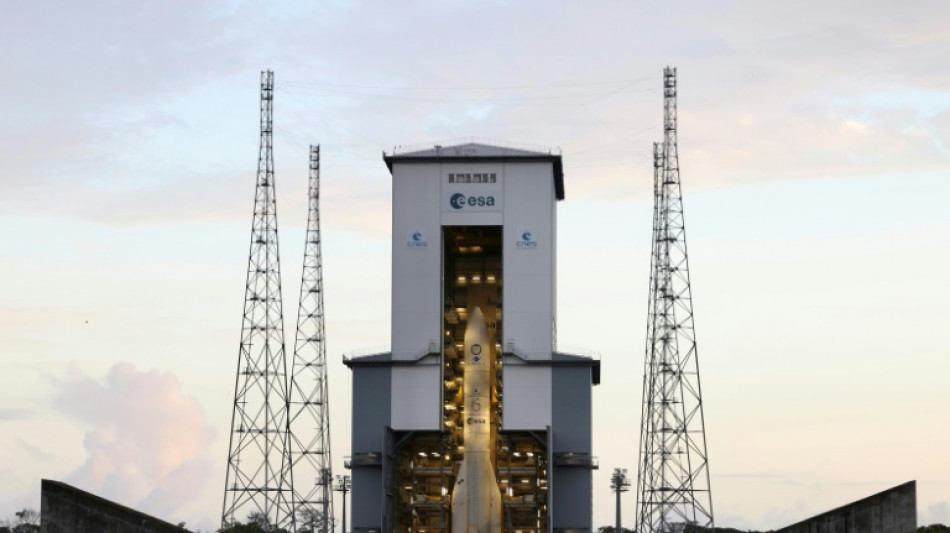
Europe's new Ariane 6 rocket blasts off for first time / Photo: Jody AMIET - AFP

 South Korea captain 'deeply sorry' for gloating about military exemption
 Alcaraz through to Japan Open semis after Shapovalov injury
 Chanel: unpicking one year of 'Blazymania'
 Latvian pro-Europeans set for election win: partial results
 China swim sensation Yu Zidi, 13, says 'I'm no prodigy'
 Yu Zidi to Ohashi: Asian Games stars who can light up LA Olympics

 'Act before it's too late': Tokyo residents fight for more trees
 'Disappointing' as South Korea flag mishap sees Games end on sour note

 Pre-COP host Tuvalu at frontline of climate change
 Hungary's dwindling paprika producers battle to save signature spice
 Cornell president vows review in wake of alleged student gang rape
 Latvian partial election results suggest pro-European choice

 In Egypt's Sinai, Gazan builds school for children displaced by war

 Trump tariffs a mixed bag for US auto industry

 Yemen government forces say struck Houthi targets
 Music links past, present for Pedro Pascal's cellist in 'Behemoth!'
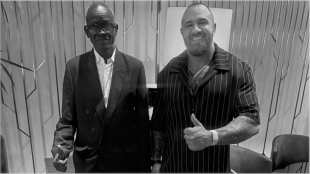
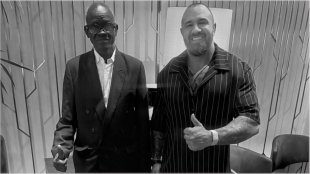 ALEX BODI ȘI AMBASADORUL REPUBLICII SUDANUL DE SUD, GUM DOMINIC MATIOK, DISCUTĂ LA BERLIN DESPRE POSIBILITATEA ÎNFIINȚĂRII UNUI CONSULAT ONORIFIC LA BUCUREȘTI
 Dodgers step up World Series three-peat bid with 5-3 win over Braves
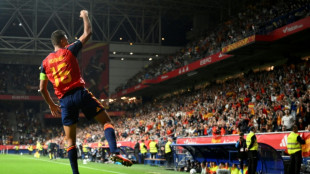 Spain break down Czechs as England outclass Croatia in Nations League
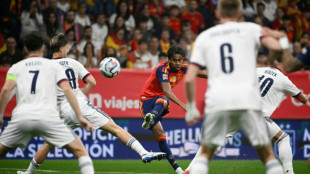 Yamal on target as Spain hold off Czech Republic
 Latvian exit polls suggest pro-European choice
 Lula, Bolsonaro wrap up campaigns ahead of knife-edge election
 Tuchel hails 'complete' England after Croatia demolition

 Fury to invite Trump to lead ring walk before Joshua showdown

 Fashion industry in 'precarious moment', says Vivienne Westwood supremo

Europe's new Ariane 6 rocket blasted off for the first time smoothly on Tuesday, carrying with it the continent's hopes of regaining independent access to space.
The much-delayed inaugural flight of the European Space Agency's most powerful rocket yet launched from Europe's spaceport in Kourou, French Guiana at 4pm local time (1900 GMT).
Crews on the ground at the launch site, which is surrounded by jungle on the South American coast, applauded as the rocket soared into clear skies.
Ariane 6's first launch, which was originally planned for 2020, is hoped to bring an end to a difficult time for European space efforts.
Since the last flight of its workhorse predecessor, Ariane 5, a year ago, Europe has been unable to launch satellites or other missions into space without relying on rivals such as Elon Musk's US firm SpaceX.
ESA chief Josef Aschbacher said it was a "very important moment for Europe".
"We are re-establishing independent access to space for Europe," he said just before the launch.
- 'First sigh of relief' -
Earlier Tuesday, the giant metal structure housing the rocket was rolled away, unsheathing the 56-metre (183 feet) behemoth in light rain, an AFP journalist observed.
After a positive weather report, the rocket's tanks were filled with liquid hydrogen and liquid oxygen.
The planned time for liftoff was delayed by an hour after routine checks revealed a small data issue that was resolved, according to the ESA.
Tony dos Santos, Kourou technical manager, said that teams on the ground would only be able to "breathe our first sigh of relief when the first satellites have been released".
That is expected an hour and six minutes after liftoff. The entire flight is scheduled to take nearly three hours.
The mission will be considered successfully complete when the rocket's reusable upper stage splashes down into the Pacific Ocean.
In Kourou, more than 200 experts were concealed in a bunker near the launch site, checking for any potential problems before liftoff.
They were in constant contact with the Jupiter control room, the communications hub between the teams -- and data sent from the rocket.
A large number of armed forces also watched over the launch, including three fighter jets deployed to deter any curious aircraft nearby.
Successful inaugural flights are by no means guaranteed. Historically, nearly half of the first launches of new rockets have ended in failure. That includes Ariane 5, which exploded moments after liftoff in 1996.
But out of 117 launches over nearly 20 years, only one other Ariane 5 flight completely failed.
- Europe's 'return' -
Space has become big business and competition is soaring, particularly from SpaceX's fully re-usable Falcon 9 rockets.
Yet in recent years Europe has found itself without an independent way to give lucrative satellites a ride into space.
Russia pulled its Soyuz rockets, long used for European launches at Kourou, after Moscow invaded Ukraine in 2022.
Later that year, Europe's Vega-C light launcher was grounded after a launch failure. Ariane 6 delays compounded the crisis.
Tuesday's launch will mark Europe's "return" to the space scene, ESA space transportation director Toni Tolker-Nielsen said.
Selected by the ESA back in 2014, Ariane 6 will able to place satellites in geostationary orbit 36,000 kilometres above Earth, as well as satellite constellations a few hundreds of kilometres up.
The rocket's maiden flight will carry 17 different "passengers", including 11 university micro-satellites, as well as re-entry capsules and small scientific experiments.
One more Ariane 6 launch is scheduled for this year, followed by six in 2025 then eight in 2026.
In the future, it is booked to launch some of Amazon's Kuiper constellation of internet satellites.
J.Pereira--PC



