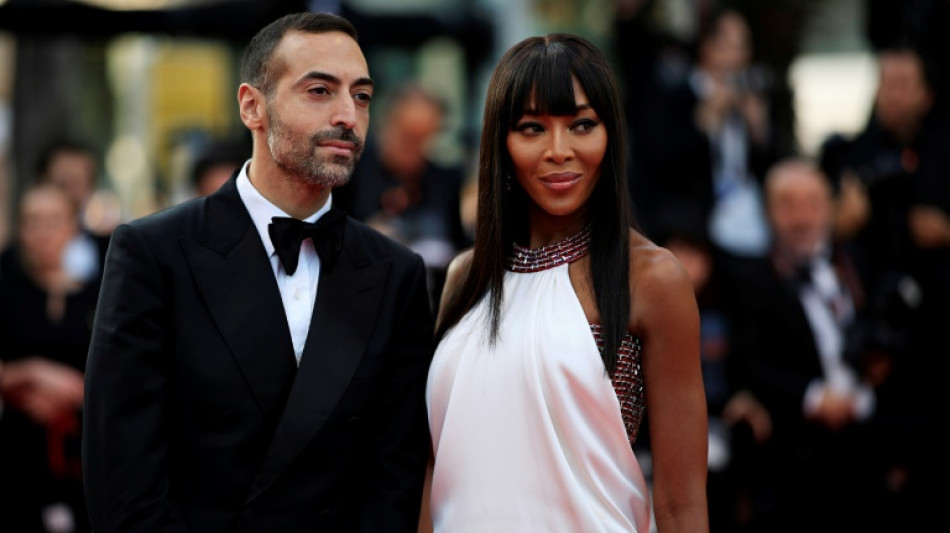
Saudia Arabia's growing cinema soft power / Photo: Valery HACHE - AFP

 2 killed, 13 wounded in bus blast near Syrian capital: state media
 All Blacks skipper Taylor cautiously recovering from calf strain
 UN chief denounces Russia, Ukraine for civilian deaths
 UEFA turn up the pressure on Infantino and repeat boycott threat
 Rodri approves Barcelona transfer talks with Man City: Barca source to AFP
 Venezuela unable to tally missing from cataclysmic quakes
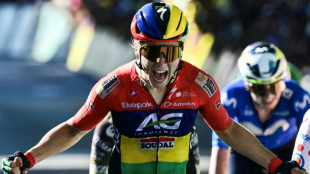 Le Court sprints to stage six Tour de France Femmes win
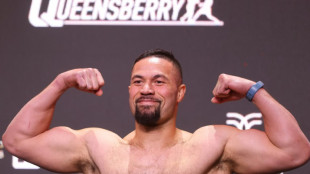 Doping body says Parker's positive cocaine test caused by nutritionist
 UEFA says boycott of World Cups stands despite FIFA backdown on private investment

 Rheinmetall sales keep surging despite cancelled naval frigate project
 Pogacar teammate Del Toro gets new UAE deal after Tour podium
 Stocks tread water with earnings, tech in focus
 Inevitable AI Group Raises $6M From Aleph to Launch AI-Native SaaS Companies
 Forlan named new Uruguay head coach
 UEFA chief Ceferin: 'Underdog' leader taking fight to FIFA's Infantino
 Salah completes move to Turkey's Trabzonspor
 UK clears Paramount's takeover of Warner Bros
 North Korea fires ballistic missile: South Korea military
 'Don't have to hide': Thai IDs, legal work give hope to Myanmar refugees
 Stocks mixed with tech firms back under pressure
 How Blundell's old school tactic ended England's 'Bazball' era
 Israel reports troop deaths as Lebanon talks underway in Rome
 Seeds Rybakina, Pegula, Gauff reach third round at WTA Toronto

 Police raid South Korea FA in probe into World Cup coach appointment
 Low water on Germany's Rhine river threatens new blow to economy
Accompanying Naomi Campbell on the red carpet at the Cannes Film Festival last week was one of cinema's most powerful men -- and he represents a country where cinemas were banned until five years ago.
Mohammed Al Turki, 36, heads Saudi Arabia's Red Sea Film Foundation, his name splashed all over posters and movie credits at the world's biggest cinema gathering on the French Riviera.
The foundation, formed two years ago, holds its own annual festival and has already financed 168 movies, including eight in the official selection at Cannes this year.
Among them was festival opener "Jeanne du Barry" about a French prostitute falling in love with King Louis XV, played by Johnny Depp.
Others seemed equally at odds with traditional Saudi values -- female-focused films such as "Four Daughters" about the religious radicalisation of Tunisian girls, or "Goodbye Julia" about a Sudanese woman and her overbearing conservative husband.
"We have learned to respect other cultures," Emad Iskandar, director of the Red Sea Film Foundation, told AFP.
He said the foundation focuses on Arab and African filmmakers, though the precise definition seems flexible: the French director of "Jeanne du Barry", Maiwenn, qualified thanks to her Algerian father.
"As long as we have the resources, we want to serve the region, but also take the opportunity to learn more," Iskandar added.
Al Turki's foundation also sponsored a gala for women, attended by Catherine Deneuve, Katie Holmes and supermodel Campbell.
"MO!! Proud of all your doing @redseafilm creating history of many 1st's and Changing the narrative," Campbell wrote of Al Turki on her Instagram.
- Whitewashing? -
Saudi largesse for the arts has boomed under the kingdom's de facto ruler, Crown Prince Mohammed bin Salman, with billions pouring into previously taboo areas such as music, fashion and sports.
Human Rights Watch says this is designed to "whitewash its dismal rights record" and that, despite recent reforms, Saudi Arabia continues to repress civil society, execute dissidents, discriminate against women and bury the investigation into the 2018 murder of journalist Jamal Khashoggi.
But most Saudis back the reforms, and its officials say it is absurd to expect the kingdom to turn into a liberal paradise overnight.
Accusations of whitewashing "sadden us more than anything else," said Iskander.
"Come to visit and get to know Saudi Arabia and then talk about us. The West has arrived where it is after years of wars and debates. We are a 90-year-old state -- be patient."
In any case, the relentless PR campaign is working. The Saudi presence at Cannes felt less controversial than that of Depp, still widely branded as toxic since his court battle with ex-wife Amber Heard.
Cannes director Thierry Fremaux celebrated the kingdom's interest in "producing films and allowing artists to emerge".
"Saudi Arabia is evolving," he told Variety.
- 'More and more present' -
All over Cannes were adverts calling on producers and directors to shoot in Saudi Arabia, while its pavilion showed off the work of its own young directors.
"Every year Saudi Arabia asks for a bigger pavilion, more facilities, to be more and more present," said Guillaume Esmiol, head of the Cannes Film Market that runs alongside the festival.
Saudi Arabia is not the only country in the region investing massively in cinema: rival Qatar financed 13 films at Cannes this year, including three in the main competition.
Some have little or no connection to the Middle East.
"We have a lot of French productions," Fatma Hassan Alremaihi, Doha Film Institute CEO, told AFP.
"We don't want to be insular, we want our filmmakers to be open to other regions and other filmmakers and work with them."
She had no qualms that such investments were aimed at spreading Qatar's soft power.
"Who doesn't do that? The US does that with their Hollywood films... At least we are doing what we believe in, and we are not losing our identity at the same time."
F.Cardoso--PC