Croatia targets latest climate-change threat: mosquitoes
/ Photo: DENIS LOVROVIC - AFP

 Trump's ex-lawyer all set for confirmation as US attorney general

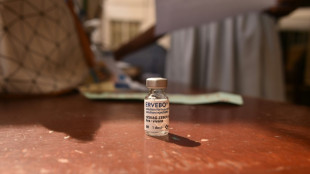 WHO urges Ervebo vaccine trial in DR Congo Ebola outbreak

 Hardline Trump ally De la Espriella to take office in Colombia

 Cambridge to review hiring process amid plagiarism row

 STARTRADER in Discussions with Trustpilot to Consolidate Review Profiles

 US unexpectedly loses jobs in blow to Trump's economy claims

 Call for Infantino to resign comes in wake of wave of support

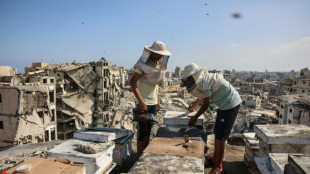 Gaza beekeeper starts again on rooftop amid ruins of war

 MEXC Lists New Ondo Tokenized Stock Pairs Spanning AI Infrastructure, Semiconductor and Rare Earth Sectors

 Fleming 'like me, but better': McCullum on new England Test coach

 European stocks rise before US jobs report

 Meta ordered to pay $567 mn in US over 'public nuisance' child harm

 Saudi Arabia, Turkey and Pakistan to sign defence pact amid regional violence
 PU Prime Expands Gold Trading with the Launch of XAUUSD247

 Oil extends gains and stocks mostly down on fresh Hormuz worries

 Four dead, 15 injured in Thailand school shooting: deputy minister

 Military shake-up poses little threat to Ukraine's drone revolution

 Camels find unlikely home in outback Australia

 Pacific nations fail to agree on statement condemning China missile test

 Anguish and hope: why a Tibetan set himself on fire in New York

 Oil extends gains and stocks fall on fresh Hormuz worries

 Venezuela's political transition talks wrap first day in Caracas

 South Africa coach Erasmus wary of struggling Argentina

 Actress, engineer, jihadist's widow among Syria's new women MPs

 Battling Norrie survives match point to oust de Minaur

Hordes of buzzing but sterile mosquitoes are being let loose in Zagreb as Croatia gets ahead of worries that climate change could bring tropical diseases to the Mediterranean nation.
The release is part of a pilot project focused on eradicating invasive Asian Tiger mosquitoes known for carrying sicknesses like Dengue Fever, Chikungunya and Zika.
The species has appeared to thrive in the country and across the region in recent years due in part to climate change -- with the warmer weather providing fertile ground for the mosquito.
"It's too early to say whether this one will yield results," Zagreb resident Kruno Lokotar told AFP. "But I'm glad that we are not just sticking with spraying."
Croatia's effort centres on a method that uses sterilised male mosquitoes -- which once released into the wild will mate with females and neutralise the potential for future offspring.
The Zagreb project kickstarted in June, when 100,000 mosquitoes were released in a high-risk area with thick foliage where mosquitoes often congregate.
"If we release a sufficient number of sterile males during a certain period in an area, the mosquito population in that area will decrease," Ana Klobucar, a medical entomologist of the Zagreb-based teaching institute of public health who is overseeing the project, told AFP.
The plan is rooted in the Sterile Insect Technique (SIT) -- a method that has been used for decades across the world to combat various harmful insects, but is still being tested for its effectiveness against mosquitoes in urban areas.
Croatia started using it for mosquitoes last year in northern Istria peninsula.
This year a total of 1.2 million specially treated insects will be released there over a three-month period, entomologist Nediljko Landeka of the regional public health institute told AFP.
- Climate change impact -
The insects -- which have been rendered sterile after exposure to gamma rays -- are sourced from a laboratory in Italy, and shipped 500 kilometres (310 miles) to Croatia in special boxes.
Once received, Klobucar and her assistants carefully remove plastic bowls with the insects from cardboard tubes before they are later dispersed in local gardens in the target area.
Croatia's programme coincides with increasingly dire warning from experts that global warming could make swaths of Europe more vulnerable to infectious diseases spread by mosquito bites.
The presence of the Asian Tiger mosquito in Croatia was first recorded in 2004 after arriving in Europe in the late 1970s, with experts suggesting they made the journey in used tyres that arrived in Albania from China.
The breed has now spread to more than a dozen European countries, with the Mediterranean region having been hit the hardest, according to official figures.
As the mercury rises across the globe, the Asian Tiger mosquito is moving further north including in areas that were considered too cold for the species to thrive, including in Switzerland and Germany.
"We are afraid that together with the species, viruses could also easily adapt in the future to new environments," warned Greek entomologist Antonios Michaelakis.
Michaelakis -- who is also a researcher at the Benaki Phytopathological Institute in Athens -- has been instrumental in sharing his experiences from a programme in Greece with his Croatian counterparts.
In Greece in 2019, the project succeeded in slashing the population of Asian Tiger mosquitoes by 90 percent, he told AFP.
During a trial of the technique last year in Croatia's Istria, up to 14 percent of mosquito eggs in the area were found to be sterile and jumped to nearly 60 percent this year, Landeka added.
Nogueira--PC