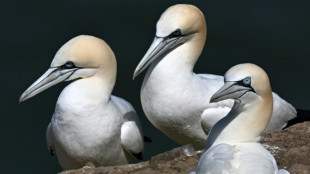
Ireland's fishermen fear species migration as sea temperatures soar / Photo: Paul Faith - AFP

 Austrian writer Stefan Zweig, who fled Nazis, honoured in London

 Mexico and Peru reestablish ties after asylum spat
 Dollar drops, stocks climb as weak US jobs data eases rate fears

 Japan defender Tomiyasu joins Crystal Palace

 Celtic boss O'Neill out of hospital after 'small procedure'
 Man City reject Barcelona bid for Rodri - reports

 US unexpectedly loses jobs in blow to Trump ahead of midterms

 Dollar drops, stocks climb after surprise US jobs miss

 Thai students in disbelief after deadly school shooting

 McLaren boss glad of 'harmony' between F1 teammates Norris and Piastri

 Saudi Arabia, Turkey and Pakistan sign defence pact amid regional war

 Maradona bloated, bedridden and resigned before death, says icon's masseur

 Infantino and the failed investment plan -- What they said
 Thailand teen kills seven in home, school shooting

 Volt Funded Launches Globally with Evaluation Program Offering Up to 90% Profit Share
 Indonesia battles Mount Bromo wildfire as El Nino takes root

 STARCARES Revamps Basketball Court at the University of Lagos for Future Healthcare Professionals
 Eight dead, including teen suspect's grandparents, in Thailand shooting

 Indonesia traps monkey to end rampage that wounded 18 people

 Food security fears mount as UK farmers battle drought
 Houthi missile attacks kill 58 Saudi-backed Yemeni govt forces
 Chinese activist held in Bangkok finds Canada refuge

 Kiss takes reins as Wallabies face Japan
 North Korea touts dog soup and other home-cooked recipes to beat the heat

 UK observatory nervously watches growing space junk threat

When he finished school Daragh McGuinness knew he wanted to join a fishing crew but now, at 23, he fears climate change may kill off the industry that has sustained his family for generations.
"It's a massive problem," he told AFP in the pilothouse of the Atlantic Challenge trawler, where he works as a deckhand, docked in the port of Killybegs in northwest Ireland.
"It could really finish the fishing, in Ireland anyway at least."
Soaring temperatures in the North Atlantic Ocean over the summer months have raised fears that fish could be pushed to colder waters, heaping pressure on the already struggling industry.
At the end of July, the US National Oceanic and Atmospheric Administration (NOAA) announced that average surface temperatures in the North Atlantic had reached a new record high of 24.9 degrees Celsius (76.8 degrees Fahrenheit).
The Atlantic Challenge, like many vessels sailing out of Killybegs, catches blue whiting and mackerel, which are highly prized on international markets, returning to port one or two days after a catch so produce is fresh.
"It would just concern you that you would be pushed further, too far north and then it wouldn't be viable to come back to Killybegs," McGuinness explained.
Sean O'Donoghue, chief executive of the Killybegs Fishermen's Organisation, said climate change was having a "dramatic effect" on white fish stocks such as cod which prefer colder waters.
- 'Extreme' -
He feared it was "only a matter of time" before so-called pelagic fish such as mackerel, blue whiting and herring move north permanently.
"If we continue with the warming of the waters, it is inevitable, the pelagic species will move totally out of the waters. And we could end up that we have very little fish," he said.
Among trends emerging, he added, were more mackerel being caught by the Icelandic fleet, while his members were catching more species like anchovies and sardines, which are typically found in warmer southern waters, prompting "overall concern".
The temperature record set in July was particularly worrying as it came weeks before the North Atlantic typically reaches peak temperatures in September.
In June, the NOAA recorded what it characterised as a Category 4 or "extreme" marine heatwave off the coasts of Ireland and the United Kingdom.
Glenn Nolan, who heads oceanographic and climate services at Ireland's Marine Institute, said the month saw "significant" temperatures, 4-5 degrees in excess of what would be normal off the country's coast in the summer months.
"When you're seeing a temperature at 24.5 or 21, as we saw in some of the coastal bays around the county of Galway... it's way above what you would ordinarily expect," he said.
Nolan said he expected a specific study attributing the spike in temperatures in June and July to climate change in due course.
- Double whammy -
The UN's Intergovernmental Panel on Climate Change (IPCC), which assesses the science related to climate change, has attributed the intensity of marine heatwaves to global warming for decades, he noted.
"The IPCC have already looked at marine heatwaves in general and they have high confidence that they can attribute them to manmade climate change," the Galway-based expert said.
Nolan said the extreme temperatures could create the conditions for changes to fish migration, and pointed to algal blooms in warm waters causing "problems typically for shellfish and finfish".
For Irish fishing, the situation is a double whammy, as the industry has been hit by lost EU fishing quotas after Brexit, the UK's departure from the bloc at the end of 2020.
EU member Ireland saw a 15-percent cut to fishing quotas by 2025 as part of the last-minute trade deal between London and Brussels.
"Unfortunately the deal that was done disproportionally hit Ireland," said O'Donoghue.
"The net effect of it is that Ireland is paying 40 percent of the transfer of fish to the UK (from the EU)."
He now wants to see changes to EU fisheries policy to reflect the impact of the Brexit cuts on Ireland's fleet and to mitigate the effects of climate change on his members' catch.
"We're not happy with the way things are on the Common Fisheries Policy at the moment. They need to be changed and Brexit and climate change have to be taken on board," O'Donoghue said.
V.Dantas--PC