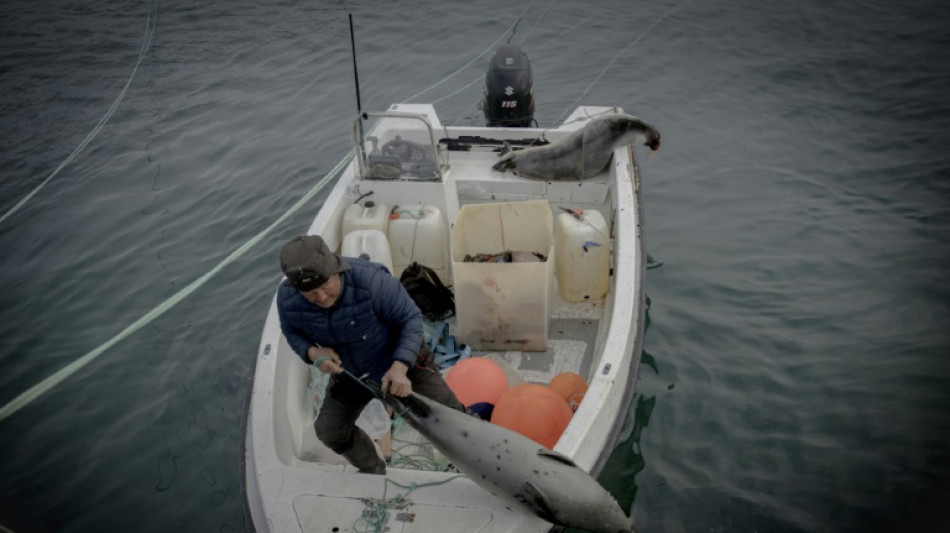
Inuit hunters blame cruise ships as narwhal disappear / Photo: Olivier MORIN - AFP

 Austrian writer Stefan Zweig, who fled Nazis, honoured in London

 Mexico and Peru reestablish ties after asylum spat
 Dollar drops, stocks climb as weak US jobs data eases rate fears

 Japan defender Tomiyasu joins Crystal Palace

 Celtic boss O'Neill out of hospital after 'small procedure'

 Man City reject Barcelona bid for Rodri - reports

 US unexpectedly loses jobs in blow to Trump ahead of midterms

 Dollar drops, stocks climb after surprise US jobs miss

 Thai students in disbelief after deadly school shooting

 McLaren boss glad of 'harmony' between F1 teammates Norris and Piastri

 Saudi Arabia, Turkey and Pakistan sign defence pact amid regional war

 Maradona bloated, bedridden and resigned before death, says icon's masseur

 Infantino and the failed investment plan -- What they said

 Thailand teen kills seven in home, school shooting

 Volt Funded Launches Globally with Evaluation Program Offering Up to 90% Profit Share

 Indonesia battles Mount Bromo wildfire as El Nino takes root

 STARCARES Revamps Basketball Court at the University of Lagos for Future Healthcare Professionals

 Eight dead, including teen suspect's grandparents, in Thailand shooting

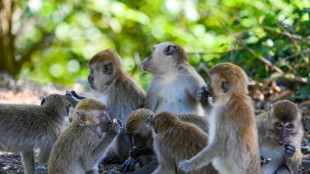 Indonesia traps monkey to end rampage that wounded 18 people

 Food security fears mount as UK farmers battle drought
 Houthi missile attacks kill 58 Saudi-backed Yemeni govt forces

 Chinese activist held in Bangkok finds Canada refuge

 Kiss takes reins as Wallabies face Japan

 North Korea touts dog soup and other home-cooked recipes to beat the heat

 UK observatory nervously watches growing space junk threat

To hunt the narwhal, whose long tusk was the unicorn horn of medieval myth, you need absolute silence.
So much so that the Indigenous hunters of the Scoresby Sound in eastern Greenland forbid their children from throwing pebbles into the water lest they spook the spiral-tusked whales.
Taught to hunt by his grandfather, Peter Arqe-Hammeken, 37, tracks narwhal during the brief Arctic summer.
But they are getting rarer and rarer.
For in this fjord brimming with icebergs, the quiet of the hunt has been broken by new arrivals -- cruise passengers rushing to see Inuit culture before it is too late.
This summer around 60 vessels ranging from sailing boats to large cruise ships arrived at the village of Ittoqqortoormiit at the mouth of the fjord system -- the largest in the world -- in the month when it was free of ice.
While some view Arctic tourism as a means to reinvigorate this remote community some 500 kilometres (310 miles) from the nearest settlement, others worry it could destroy the last surviving Inuit hunting societies.
"A week ago there were hunters out there, trying to catch narwhals. But there were a couple of ships going into them," Arqe-Hammeken told AFP, who said cruise ships were scaring off the wildlife.
"When they come to the village, it's okay. But when they come to the hunting ground, that's not good."
In the swiftly warming Arctic, where temperatures are rising up to four times faster than the global average, the Inuit are threatened at every turn.
- Vanishing hunting grounds -
"Hunters live from hunting here. They have kids," said Arqe-Hammeken, who was born and bred in Ittoqqortoormiit and fears for their traditional way of life, of which narwhal meat is a key part.
"Narwhals are very important for the community" and for Greenland food culture, said teacher Jorgen Juulut Danielsen, a former mayor of the village, with "mattak" -- raw narwhal skin and blubber -- a traditional delicacy.
The Inuit hunt the toothed whales with harpoons and rifles under strict quotas, with the once lucrative export of the tusks banned since 2004.
But climate change is squeezing the narhwal's habitat and scientists warn that they will disappear totally from eastern Greenland if hunting is not banned.
Numbers have fallen so much that hunters could not find enough to reach the quota in 2021.
Weaker ice because of warming is also making it difficult to stalk seals -- another staple of the local diet -- at their breathing holes in the ice.
"There's no ice now when before there was ice the whole year," said Arqe-Hammeken, looking out to sea from Ittoqqortoormiit.
His grandfather used to regale him with tales of catching seals just outside the village. Now hunters must journey deep into the fjord to find them.
"Thirty years ago there were a lot of hunters. Today there are only 10 or 12," said Arqe-Hammeken.
- Pollution from afar -
Nothing grows on the barren tundra, and with cargo ships only making it through the icy fjord once a year "it's important we get (our nutrients) from the animals we hunt here locally," said Mette Pike Barselajsen, who runs the local travel agency Nanu Travel.
"What we hunt is very important for our culture," she added, with traditional clothes like polar bear trousers and sealskin kamik boots still used for hunting and for religious ceremonies.
But in July a study in the Lancet Planetary Health found that the villagers had some of the world's highest concentrations of cancer-causing PFAS in their blood from eating seal, narwhal and polar bear, even though they live far from the sources of the pollution.
The "forever chemicals" from trainers, waterproof clothing, carpets, fire foam and pesticides are carried north on ocean currents before mounting the food chain to the Inuit.
With so much against them, some hunters are shifting to fishing halibut to supplement their income, said Danielsen. Others are turning to tourism.
- Last-chance tourism -
Ittoqqortoormiit and its colourful houses could hardly be more scenic, perched on a rocky peninsula overlooking the mouth of Scoresby Sound surrounded by glaciers.
Its once quiet paths are now filled with groups of cruise tourists snapping pictures of polar bear hides hanging from the houses.
"One wonders how people live here," said Christiane Fricke, a tourist from Germany drawn like many to experience the traditional culture before it disappears.
Many hunters are already guiding tourists or taking them dog sledding.
"It's a huge help for the hunters to have income from tourism as well," said Barselajsen.
But others are afraid that the cruise ships are making hunting unfeasible.
Danielsen, the former mayor, admitted there is conflict between those eager to embrace tourism and those who fear it could erode indigenous culture, especially hunting narwhals.
"Tourism definitely poses a threat to the traditional way of hunting and fishing in Ittoqqortoormiit," said geographer Marianna Leoni of Finland's University of Oulu, who knows the village well.
But the authorities are "desperately looking for any sort of opportunity to keep the village alive," she told AFP.
Tourists pay up to 20,000 euros ($21,000) for the cruises, with almost all of the money going to foreign companies. So the Greenland government is introducing a cruise passenger tax so locals get a share of the windfall.
But with the charge less than seven euros a tourist, the Inuit are not getting "much in return", said Leoni.
V.Dantas--PC