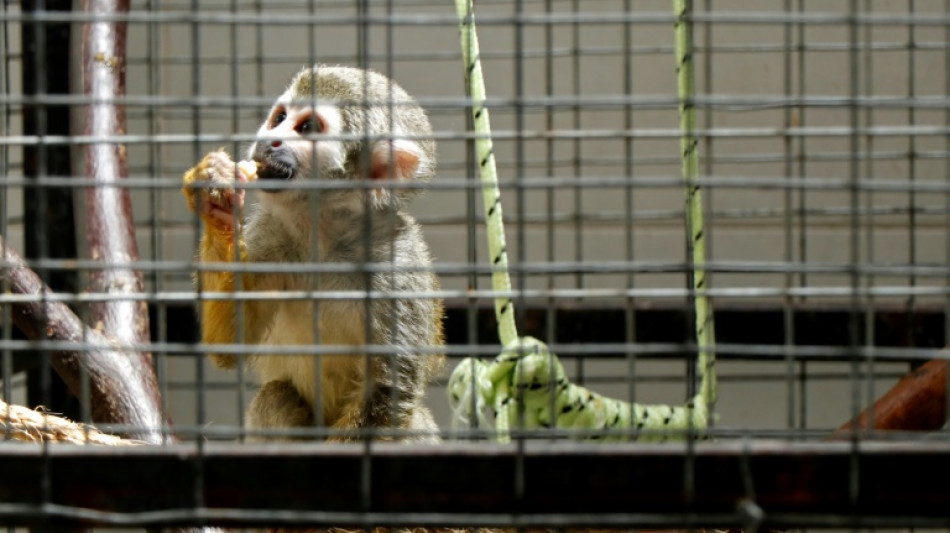
Like Escobar, Ecuador's drug lords build 'narco-zoos' / Photo: Galo PAGUAY - AFP

 Saudi Arabia, Turkey, Pakistan sign defence pact amid regional war

 Trump renews effort to remove US Fed Governor Lisa Cook

 Abelardo de la Espriella, the flamboyant millionaire taking power in Colombia

 Germany holds security meeting over explosive drone amid Russia protest

 Austrian writer Stefan Zweig, who fled Nazis, honoured in London

 Mexico and Peru reestablish ties after asylum spat

 Dollar drops, stocks climb as weak US jobs data eases rate fears

 Japan defender Tomiyasu joins Crystal Palace
 Celtic boss O'Neill out of hospital after 'small procedure'

 Man City reject Barcelona bid for Rodri - reports

 US unexpectedly loses jobs in blow to Trump ahead of midterms

 Dollar drops, stocks climb after surprise US jobs miss

 Thai students in disbelief after deadly school shooting

 McLaren boss glad of 'harmony' between F1 teammates Norris and Piastri
 Saudi Arabia, Turkey and Pakistan sign defence pact amid regional war

 Maradona bloated, bedridden and resigned before death, says icon's masseur

 Infantino and the failed investment plan -- What they said

 Thailand teen kills seven in home, school shooting

 Volt Funded Launches Globally with Evaluation Program Offering Up to 90% Profit Share

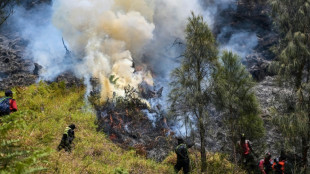 Indonesia battles Mount Bromo wildfire as El Nino takes root

 STARCARES Revamps Basketball Court at the University of Lagos for Future Healthcare Professionals

 Eight dead, including teen suspect's grandparents, in Thailand shooting

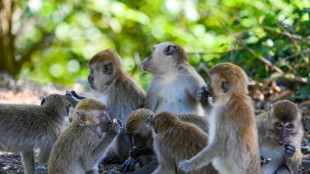 Indonesia traps monkey to end rampage that wounded 18 people

 Food security fears mount as UK farmers battle drought
 Houthi missile attacks kill 58 Saudi-backed Yemeni govt forces

A pair of jaguars discovered in a cage on a ranch exposed a cruel new fashion among Ecuador's drug lords. In the style of Colombian cocaine baron Pablo Escobar, they are erecting private, illegal zoos as a status symbol.
In May, police came upon the sorry sight of the two endangered felines perched on a log surrounded by iron bars.
They were held on a property owned by Wilder Sanchez Farfan -- alias "Gato" (The Cat) -- a suspected drug lord with ties to Mexico's Jalisco New Generation cartel and wanted in the United States.
He was arrested in Colombia in February.
Along with the jaguars, police have also found parrots, parakeets and other exotic birds Farfan is believed to have imported from China and South Korea.
The phenomenon is a relatively new one that coincides with the rise of an underground drug industry in Ecuador in the last few years, said Darwin Robles, head of the police's Environmental Protection Unit (UPMA).
"Where there is drug trafficking, you can be sure that there will be... wildlife trafficking," he told AFP.
The purpose? "To demonstrate their power, their purchasing power, their economic capacity," said Robles.
Police seized more than 6,800 wild animals in 2022 and nearly 6,000 in 2021 in Ecuador, one of the world's most biodiverse countries.
The South American country, wedged between major cocaine producers Colombia and Peru, recently went from being a mere transit stop to a drug trafficking hub in its own right, with a correlated explosion in violent crime.
- 'Status symbol' -
The jaguars and birds found at Farfan's property were taken to rehabilitation centers to receive medical and other attention.
But in most cases, a return to their natural habitat has been impossible.
Police have also found turtles, snakes, furs and animal heads on other drug kingpins' properties.
"Having an animal is a status symbol... It demonstrates an individual's rank within a network" of organized crime, an official for the US-based Wildlife Conservation Society (WCS) told AFP.
The official asked not to be named for fear of reprisal from trafficking groups.
Owning a spotted cat, for example, is a start, but having a jaguar is much more prestigious -- just like expansive properties, luxury cars, works of art or jewelry, the official explained.
In Ecuador, wildlife trafficking is punishable by up to three years in prison -- much less than in many of its neighbors.
After Escobar was gunned down by police in 1993, his private collection of flamingos, giraffes, zebras and kangaroos were placed in zoos.
But a herd of hippos was left to fend for itself, reproducing unchecked and now posing a major headache for environmental authorities.
There are today more than 100 of the two-ton African beasts wandering freely around a part of northwestern Colombia, clashing with humans and displacing local fauna.
There are fears Ecuador's drug lords will leave a similarly negative environmental footprint.
- Monkeys, parrots, porcupines -
At the Tueri wildlife hospital in Quito, wild cats, monkeys, porcupines, parrots and owls receive treatment after falling victim to trafficking. Many arrive underfed or injured.
Only about one in five recover sufficiently to return to their natural home, say clinic staff.
Many don't survive the ordeal. Others will live out their days in shelters as they no longer know how to live in the wild.
Traffickers do not understand the harm they are wreaking, said the WCS official.
"To have a monkey at your house, it means you caused a hunter to kill its family," explained the official.
One of the shelters that receives animals that cannot be rewilded, is the Jardin Alado Ilalo in Quito.
"These birds no longer identify themselves as animals in their natural state... and have to stay in places like these."
L.Mesquita--PC