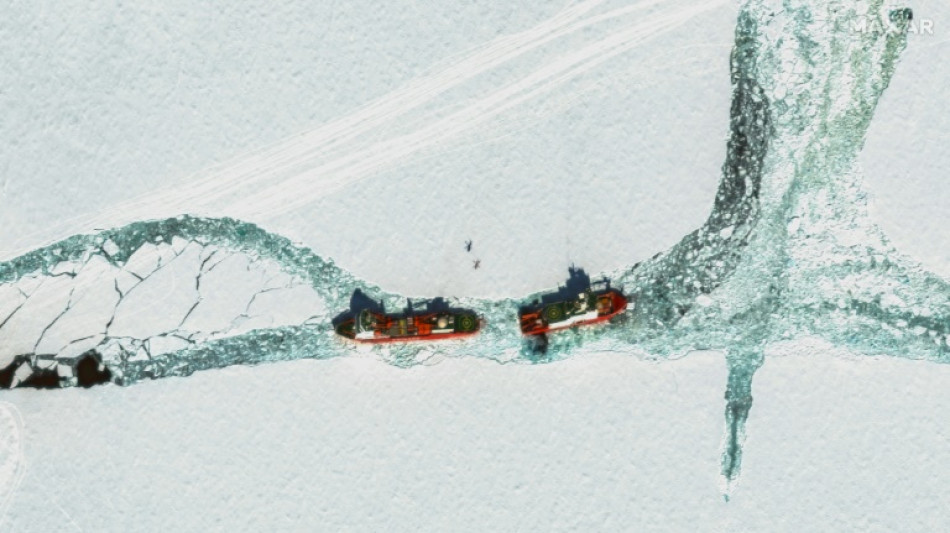
Despite record low ice, nations again fail to agree Antarctic reserves / Photo: Handout - Satellite image ©2023 Maxar Technologies/AFP

 Saudi Arabia, Turkey, Pakistan sign defence pact amid regional war

 Trump renews effort to remove US Fed Governor Lisa Cook

 Abelardo de la Espriella, the flamboyant millionaire taking power in Colombia

 Germany holds security meeting over explosive drone amid Russia protest

 Austrian writer Stefan Zweig, who fled Nazis, honoured in London

 Mexico and Peru reestablish ties after asylum spat

 Dollar drops, stocks climb as weak US jobs data eases rate fears

 Japan defender Tomiyasu joins Crystal Palace

 Celtic boss O'Neill out of hospital after 'small procedure'

 Man City reject Barcelona bid for Rodri - reports

 US unexpectedly loses jobs in blow to Trump ahead of midterms

 Dollar drops, stocks climb after surprise US jobs miss

 Thai students in disbelief after deadly school shooting

 McLaren boss glad of 'harmony' between F1 teammates Norris and Piastri

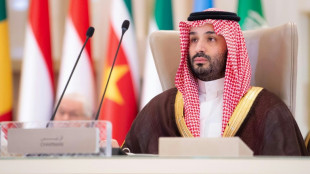 Saudi Arabia, Turkey and Pakistan sign defence pact amid regional war

 Maradona bloated, bedridden and resigned before death, says icon's masseur

 Infantino and the failed investment plan -- What they said
 Thailand teen kills seven in home, school shooting

 Volt Funded Launches Globally with Evaluation Program Offering Up to 90% Profit Share
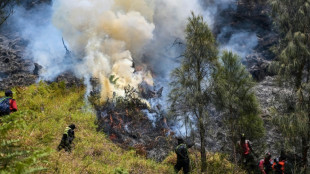 Indonesia battles Mount Bromo wildfire as El Nino takes root

 STARCARES Revamps Basketball Court at the University of Lagos for Future Healthcare Professionals
 Eight dead, including teen suspect's grandparents, in Thailand shooting

 Indonesia traps monkey to end rampage that wounded 18 people

 Food security fears mount as UK farmers battle drought
 Houthi missile attacks kill 58 Saudi-backed Yemeni govt forces
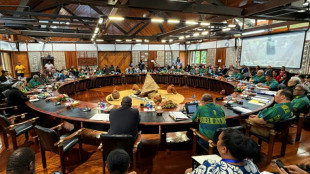
A multinational group on Antarctic conservation failed to break a years-long deadlock and agree new marine reserves in the region, despite record low ice, environmental groups said Friday.
The Commission for the Conservation of Antarctic Marine Living Resources ended a fortnight of meetings in Australia once again unable to reach a deal on three new marine protected areas (MPAs).
The proposed sanctuaries around Antarctica would safeguard nearly four million square kilometres (1.5 million square miles) of ocean from human activities, in the largest act of ocean protection in history.
"It's frustrating that discussions for MPAs have been ongoing for more than a decade and utterly disappointing that CCAMLR has been unable to make significant progress again, particularly following a year of unprecedented and concerning change for Antarctica," said WWF's Antarctic conservation manager Emily Grilly.
The areas were first proposed in 2010, before being scaled down in 2017, in an attempt to win more support.
But their creation has persistently been blocked by China and Russia, including most recently at the commission's June meeting in Chile.
NGOs including WWF had expressed hope that the commission might now act given record low levels of sea-ice in the region and evidence of "mass deaths of vulnerable species".
Greenpeace said the gridlock was all the more notable given successful negotiations to reach the UN ocean treaty earlier this year.
"Another year, another failed Antarctic Ocean Commission meeting. The Commission can always agree to new fishing licenses, but can’t agree on a concrete pathway forwards on protection," said Jehki Harkonen, Greenpeace International's ocean policy advisor.
CCAMLR did not immediately publish a statement on the outcome of its meeting.
- Rapidly changing region -
The proposed protected areas would have limited human activity, particularly fishing, and environmentalists say they would be key to helping species recover in the rapidly changing region.
"We can't stop all the effects of climate change in the short term, but we can take the pressure off in other ways," Grilly said.
But there has historically been little appetite for the project from Beijing and Moscow, who have expressed concerns about compliance issues and fishing rights.
The CCAMLR, which regulates fisheries, is comprised of 26 member countries plus the EU. They include the United States, Russia, China, the UK, France, India, Japan, host Chile, Brazil and South Africa.
This year, sea ice around Antarctica hit its lowest winter levels since records began 45 years ago, the US National Snow and Ice Data Center said.
The measurement was preliminary, as continued winter conditions could cause additional ice formation, but it correlates with a trend of declining ice seen since August 2016.
There is debate among scientists over the cause of the shift, with some reluctant to establish a formal link with global warming.
Climate models have struggled in the past to predict changes in the Antarctic ice pack.
The effect on wildlife in the region is already clear, however, with scientists in August reporting a "catastrophic breeding failure" of emperor penguins as sea ice gave way beneath fledgling chicks.
Thousands of baby penguins are believed to have died, with all but one of five sites monitored by scientists experiencing 100 percent loss.
P.Cavaco--PC