-
 Rybakina advances while Andreeva exits at Toronto
-
Amazon behind massive private gas plant for new data centers

-
 Shelton storms to Montreal win as title defence solidifies
-
Apple and OpenAI escalate legal battle over devices

-
 All Blacks need to improve says coach after opening win against Stormers
-
All Blacks strike late to secure opening win against Stormers
-
 Spain imposes border checks on Italy as migrant showdown grows
-
Saudi Arabia, Turkey, Pakistan sign defence pact amid regional war
-
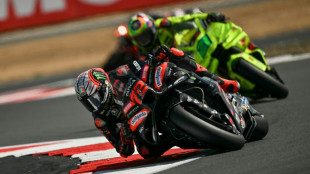 Bezzecchi smashes Silverstone track record in MotoGP qualifying
-
Trump renews effort to remove US Fed Governor Lisa Cook
-
 Rashid Khan takes six wickets as Afghanistan thrash Ireland
-
Abelardo de la Espriella, the flamboyant millionaire taking power in Colombia
-
 Flintoff quits England Lions role after Sydney Thunder appointment
-
Germany holds security meeting over explosive drone amid Russia protest

-
 Movement, El Vecino and RISE Partner to Launch First Digital Dollar Wallet for Mexican Remittances
-
Austrian writer Stefan Zweig, who fled Nazis, honoured in London
-
 FIFA chief Infantino travels to Colombia for presidential inauguration
-
Mexico and Peru reestablish ties after asylum spat
-
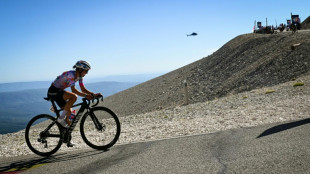 Niewiadoma seizes Tour de France Femmes lead on Mont Ventoux
-
Dollar drops, stocks climb as weak US jobs data eases rate fears

-
 Trump's ex-lawyer all set for confirmation as US attorney general
-
Japan defender Tomiyasu joins Crystal Palace
-
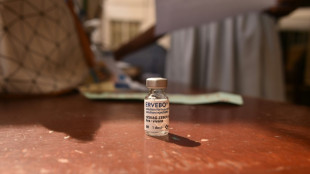 WHO urges Ervebo vaccine trial in DR Congo Ebola outbreak
-
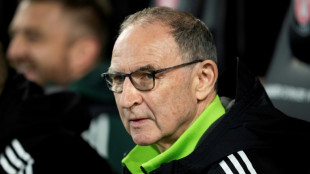
Celtic boss O'Neill out of hospital after 'small procedure'
-
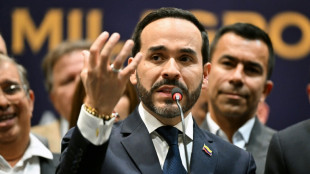 Hardline Trump ally De la Espriella to take office in Colombia
-
Man City reject Barcelona bid for Rodri - reports

-
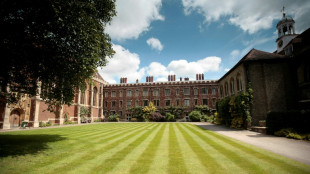 Cambridge to review hiring process amid plagiarism row
-
US unexpectedly loses jobs in blow to Trump ahead of midterms

-
 STARTRADER in Discussions with Trustpilot to Consolidate Review Profiles
-
Dollar drops, stocks climb after surprise US jobs miss

-
 US unexpectedly loses jobs in blow to Trump's economy claims
-
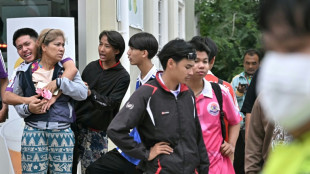
Thai students in disbelief after deadly school shooting
-
 Call for Infantino to resign comes in wake of wave of support
-
McLaren boss glad of 'harmony' between F1 teammates Norris and Piastri
-
 Gaza beekeeper starts again on rooftop amid ruins of war
-
Saudi Arabia, Turkey and Pakistan sign defence pact amid regional war
-
 MEXC Lists New Ondo Tokenized Stock Pairs Spanning AI Infrastructure, Semiconductor and Rare Earth Sectors
-
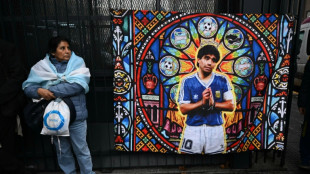
Maradona bloated, bedridden and resigned before death, says icon's masseur
-
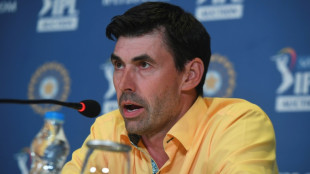 Fleming 'like me, but better': McCullum on new England Test coach
-
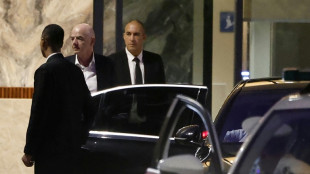
Infantino and the failed investment plan -- What they said
-
 European stocks rise before US jobs report
-
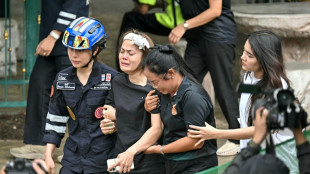
Thailand teen kills seven in home, school shooting
-
 Meta ordered to pay $567 mn in US over 'public nuisance' child harm
-
Volt Funded Launches Globally with Evaluation Program Offering Up to 90% Profit Share

-
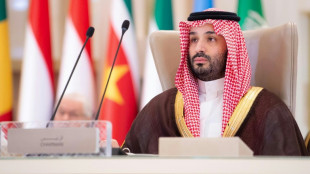 Saudi Arabia, Turkey and Pakistan to sign defence pact amid regional violence
-
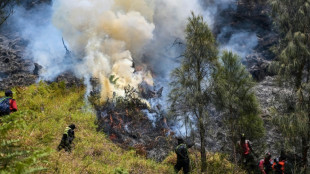
Indonesia battles Mount Bromo wildfire as El Nino takes root
-
 PU Prime Expands Gold Trading with the Launch of XAUUSD247
-
STARCARES Revamps Basketball Court at the University of Lagos for Future Healthcare Professionals

-
 Oil extends gains and stocks mostly down on fresh Hormuz worries
-
Eight dead, including teen suspect's grandparents, in Thailand shooting

Kuwait's Sheikh Nawaf: a short but tumultuous reign
Sheikh Nawaf al-Ahmad Al-Sabah served as Kuwait's emir for just three years but spent decades in top posts through the House of Sabah's tumultuous rule of the oil-rich state.
Sheikh Nawaf, who died on Saturday aged 86, was defence minister when Iraq invaded in 1990, setting off a war that drew in armies from around the world to end the occupation.
He was interior minister when Kuwaiti security forces battled Islamist militants in January 2005.
Despite the episodes that have deeply marked Kuwait's history, Sheikh Nawaf's low-key style never saw him fall out of favour.
He was named crown prince in 2006 by his half-brother Sheikh Sabah al-Ahmad Al-Sabah and took over as emir when he died in September 2020 at the age of 91.
The current crown prince, Sheikh Mishal al-Ahmad al-Sabah, another half-brother, is 83 and much attention will now be focused on whether a younger ruler is brought in by the family.
Sheikh Nawaf showed a rare sign of public emotion when he was formally sworn in by the Gulf state's Gulf state's national assembly in 2020.
Born in 1937, Sheikh Nawaf was the fifth son of Kuwait's late ruler from 1921 to 1950 Sheikh Ahmad al-Jaber Al-Sabah.
He received secondary schooling in Kuwait but did not go on to higher education.
He started his political career at 25 as governor of Hawalli province, where he remained until 1978, before taking on the role of interior minister for a decade.
- Battered economy -
Sheikh Nawaf became defence minister two years before the start of the seven-month Iraqi occupation in 1991.
After the liberation by a US-led international force, he was named minister for social affairs and excluded from the government formed after the first post-war election in 1992.
Sheikh Nawaf returned as deputy commander of the national guard in 1994 and in 2003 became interior minister again.
This period was marked by a series of deadly clashes between Kuwaiti security forces and Islamic militants in January 2005.
On becoming emir, Sheikh Nawaf had to steer the economy through a crisis caused by a fall in oil prices that saw Kuwait's credit rating cut by international agencies in 2020.
He acknowledged the "serious" challenges in his inauguration speech and the government spent heavily -- doubling public debt in 18 months -- to guide the state through the Covid-19 pandemic.
He made few dramatic changes, however.
Kuwait has maintained its hardline stance on Israel even as Bahrain and the United Arab Emirates have established relations. It remains a diplomatic rarity in maintaining close relations with both Saudi Arabia and its regional rival Iran.
Mohammed al-Faily, an expert in constitutional law at Kuwait University, said Sheikh Nawaf was generally considered "a calm person who, when it calls for it, can take firm decisions".
The future for the royal family remains uncertain.
There are bitter divisions within the Sabah family, with lurid accusations of corruption and political conspiracies lodged by some members against rivals.
Kuwait's constitution stipulates only that the ruler should be a descendant of the nation's founder, Mubarak Al-Sabah. By tradition, the throne had alternated between the Salem and Jaber branches of the family.
But that pattern has been broken this decade, with Sheik Sabah, Sheikh Nawaf and the heir-apparent Sheikh Mishal all from the Jaber clan.
P.L.Madureira--PC