-
 British Grand Prix stays on MotoGP calendar until 2028
-
UEFA says boycott of World Cups stands despite FIFA backdown on private investment
-
 Britain's EasyJet flies into US hands as takeover confirmed
-
Rheinmetall sales keep surging despite cancelled naval frigate project

-
 Real Madrid sign Ivory Coast winger Yan Diomande
-
Pogacar teammate Del Toro gets new UAE deal after Tour podium

-
 How online disinformation fuelled Ceuta migrant surge
-
Stocks tread water with earnings, tech in focus
-
 Inevitable AI Group Raises $6M From Aleph to Launch AI-Native SaaS Companies
-
Forex Expo Dubai Announces Opportunity to Win Up to 150 Grams of Gold This September 2026

-
 Suspected Ebola death on boat heading for DR Congo capital
-
Forlan named new Uruguay head coach

-
 England selector North not 'hung up' on Stokes absence
-
UEFA chief Ceferin: 'Underdog' leader taking fight to FIFA's Infantino
-
 UK Anti-Doping confirm former world champ Parker's ban lifted
-
Salah completes move to Turkey's Trabzonspor

-
 French winemakers dread 'smoky taste' after wildfires
-
UK clears Paramount's takeover of Warner Bros

-
 Stocks diverge with earnings, tech in focus
-
North Korea fires ballistic missile: South Korea military

-
 England recall batsman Lawrence for Pakistan series
-
'Don't have to hide': Thai IDs, legal work give hope to Myanmar refugees

-
 Siemens shares plunge on disappointing guidance raise
-
Stocks mixed with tech firms back under pressure
-
 New Australia coach Kiss gives Japan starts to Ross, Amatosero
-
How Blundell's old school tactic ended England's 'Bazball' era

-
 'Stretch our money': Romanians face highest EU inflation
-
Israel reports troop deaths as Lebanon talks underway in Rome

-
 Iran says close to Hormuz plan with Oman, but reopening depends on US
-
Seeds Rybakina, Pegula, Gauff reach third round at WTA Toronto

-
 Messi scores twice to set Leagues Cup record in Miami victory
-
Police raid South Korea FA in probe into World Cup coach appointment

-
 Asian stocks mostly down with tech firms back under pressure
-
Low water on Germany's Rhine river threatens new blow to economy

-
 Back to the future as world champion Springboks host All Blacks
-
Ex-Wallabies Foley, Phipps rejoin Waratahs ahead of home World Cup

-
 India youth protests highlight mistrust in 'lapdog' media
-
Rising Kenyan lakes push crocodiles closer to homes
-
 Pacific islands alarmed by Trump-backed push for deep-sea mining
-
Istanbul cymbals: From Ottoman war tool to pulse of global music

-
 Erratic rains dictate menu at three-star Michelin restaurant in Brazil
-
Myanmar ex-junta chief on first Thailand trip as civilian leader
-
 Zverev, Auger-Aliassime and Medvedev exit Montreal Masters
-
Environmental disaster looms as tanker leaks off Oman

-
 Loar Holdings Inc. Reports Q2 2026 Record Results and Upward Revision to 2026 Outlook
-
Google-parent Alphabet shakes up AI division

-
 Embattled Infantino sees minnows Malawi reach WAFCON quarter-finals
-
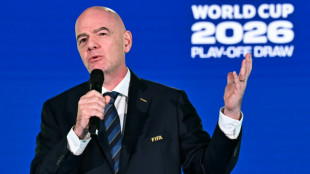
FIFA back Infantino, apologise for World Cup privatisation plan
-
 Seeds Rybakina, Pegula and Gauff advance at WTA Toronto event
-
Auger-Aliassime out of Montreal ATP event with injury

EU backs plan to downgrade wolf protection status
EU member states on Wednesday voted in favour of lowering the protection status of wolves, a move decried by conservationists that paves the way for a relaxation of tight hunting restrictions.
Grey wolves were virtually exterminated in Europe a century ago, but their numbers have rebounded thanks to conservation efforts, triggering howls of protest from farmers angered at livestock losses.
Representatives for the bloc's 27 countries backed a proposal to push for changes to an international wildlife convention that would see the species downgraded from "strictly protected" to "protected".
The European Commission, which initially put forward the plan, welcomed its approval by a wide majority of member states during a meeting in Brussels. Only two voted against, according to a diplomatic source.
"Adapting the protection status will be an important step to address the challenges posed by increasing wolf population while keeping the overall objective to achieve and maintain a favourable conservation status for the species," commission spokesman Adalbert Jahnz told reporters.
In 2023, there were breeding packs of grey wolves in 23 European Union countries, with a total population estimated at around 20,300 animals, bringing the elusive creatures into more frequent contact with humans.
In announcing plans to revise the species' status last year, Commission chief Ursula von der Leyen said the "concentration of wolf packs in some European regions has become a real danger especially for livestock".
In late 2022, von der Leyen herself lost her beloved pony Dolly to a wolf that crept into its enclosure on her family's rural property in northern Germany -- leading some to suggest the matter had become personal.
- 'Politically motivated' -
The wolf became a "strictly protected" species under the 1979 Bern Convention, to which the EU is a party.
The text allows for the animal to be killed or captured only when it poses a threat to livestock, health or safety.
The commission's proposal would loosen such rules by demoting wolves to "protected" species, which would allow hunting to resume under strict regulation.
But animal rights activists fear that by sending the wrong message the change could result in large numbers of wolves being shot dead.
Already in 2022, several Austrian regions authorised the killing of wolves in what environmental groups argued was a breach of current European laws.
More than 300 environmental and animal protection organisations opposed a status downgrade, arguing it was premature since while population numbers have grown, their recovery is still ongoing.
In a letter, they said there was no evidence that culling reduced depredation on farmed animals. Hunting was no replacement for other prevention measures, such as fencing, they argued.
"We see this as a proposal that is politically motivated and not at all based on science," Sabien Leemans, senior policy officer at environmental group WWF, told AFP.
- Small impact -
This year has seen rolling protests by farmers in Brussels and around Europe against the bloc's environmental rules.
A 2023 EU report found that the overall impact of wolves on livestock was "very small". Only 0.065 percent of the bloc's 60 million sheep were mauled to death every year and just over 18 million euros ($20 million) was paid to compensate for wolf damages annually.
Deaths could however be concentrated in certain areas, the report said, adding that horses, dogs and other animals were also sometimes slain -- but no fatal wolf attacks on people have been recorded in Europe over the past 40 years.
Wednesday's vote, once formally adopted by the bloc's environment ministers, will give the EU a mandate to push for a change in the Bern Convention at its next standing committee meeting scheduled for December.
A two-thirds majority is required to alter the text, which was signed by 50 countries, including the 27 EU members.
If the convention is changed, the commission will then be allowed to move to amend related EU rules.
"Today's decision... empowers rural communities to take the necessary steps to protect themselves," said Herbert Dorfmann, a lawmaker with the conservative European People's Party (EPP), the largest group in the European Parliament.
But Leemans of the WWF warned it risked opening a "Pandora's box". Some countries are already pushing to ease hunting rules for brown bears too, he argued -- a concern dismissed by the commission.
"What we're talking about is the wolf, and only the wolf," said Jahnz.
T.Vitorino--PC