'Invisibility' and quantum computing tipped for physics Nobel / Photo: Jonathan NACKSTRAND - AFP/File

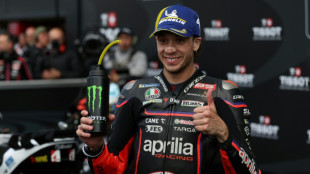 British Grand Prix stays on MotoGP calendar until 2028
 Britain's EasyJet flies into US hands as takeover confirmed
 Real Madrid sign Ivory Coast winger Yan Diomande
 How online disinformation fuelled Ceuta migrant surge
 Inevitable AI Group Raises $6M From Aleph to Launch AI-Native SaaS Companies
 Suspected Ebola death on boat heading for DR Congo capital
 England selector North not 'hung up' on Stokes absence
 UK Anti-Doping confirm former world champ Parker's ban lifted
 French winemakers dread 'smoky taste' after wildfires
 Stocks diverge with earnings, tech in focus
 England recall batsman Lawrence for Pakistan series

 Siemens shares plunge on disappointing guidance raise
 New Australia coach Kiss gives Japan starts to Ross, Amatosero
 'Stretch our money': Romanians face highest EU inflation

 Iran says close to Hormuz plan with Oman, but reopening depends on US
 Messi scores twice to set Leagues Cup record in Miami victory
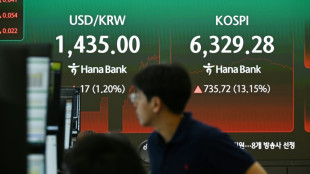 Asian stocks mostly down with tech firms back under pressure
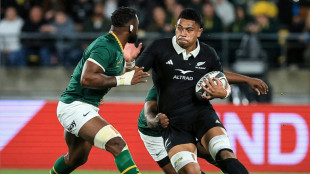 Back to the future as world champion Springboks host All Blacks
 India youth protests highlight mistrust in 'lapdog' media
 Pacific islands alarmed by Trump-backed push for deep-sea mining
 Erratic rains dictate menu at three-star Michelin restaurant in Brazil

 Zverev, Auger-Aliassime and Medvedev exit Montreal Masters
 Loar Holdings Inc. Reports Q2 2026 Record Results and Upward Revision to 2026 Outlook
 Embattled Infantino sees minnows Malawi reach WAFCON quarter-finals
 Seeds Rybakina, Pegula and Gauff advance at WTA Toronto event
An "invisibility cloak", an atomic force microscope or quantum computing are some of the scientific achievements that could win a Nobel prize in physics Tuesday.
The award, to be announced at 11:45 am (0945 GMT) in Stockholm, is the second Nobel of the season after the Medicine Prize on Monday was awarded to American scientists Victor Ambros and Gary Ruvkun.
The US duo were honoured for their discovery of microRNA and its role in how genes are regulated.
Predicting a winner is always tricky but this year, Nobel buzz has spotlighted, among others, Israeli-British physicist David Deutsch, a professor at the University of Oxford, and American mathematician Peter Shor.
David Pendlebury, head of analytics group Clarivate, which keeps an eye on potential Nobel science laureates, told AFP the duo might be honoured "for their work in quantum algorithms and quantum computing".
Pendlebury said the two researchers were among their top picks given the number of citations their papers had received.
At the same time, he said it would be "surprising" if the Nobel jury awarded quantum mechanics again, just two years after Alain Aspect of France, John Clauser of the United States and Austria's Anton Zeilinger won for their work into quantum entanglement.
- 'Invisibility cloak' -
In the field of quantum mechanics, other notables are Israeli Yakir Aharonov and Briton Michael Berry, who have both made discoveries which now bear their names.
Another favourite who has been speculated about as a potential winner for years is Britain's John B. Pendry, who has become famous for his "invisibility cloak", in which he uses materials to bend light to make objects invisible.
Italian-American Federico Capasso has also been mentioned for research into photonics -- the science of light waves -- and contributing to the invention and development of the quantum cascade laser.
Lars Brostrom, science editor at Swedish Radio, said one potential winner could be Swiss physicist Christoph Gerber "for the invention of the atomic force microscope together with Gerd Binnig and Calvin Quate".
The Nobel prize only honours living scientists and Quate died in 2019, but if Germany's Binnig were to share the honour it would be his second Nobel Prize in Physics after he won it in 1986 for the "design of the scanning tunneling microscope".
Another pick for Brostrom would be Canadian-American astronomer Sara Seager.
Brostrom told AFP that Seager could be awarded for "new ways to find signatures of life in planetary atmospheres, how to analyse the atmospheres of exoplanets to find those that could harbour life".
The Nobel jury has a tradition of honouring multiple researchers at once, and another trio among those speculated about is Canadian-born Allan MacDonald, Israeli Rafi Bistritzer and Spain's Pablo Jarillo-Herrero.
The three already won the 2020 Wolf Prize in Physics "for pioneering theoretical and experimental work on twisted bilayer graphene", a discovery that has been hailed as having the potential to lead to an energy revolution.
- 'Slow light' -
Physics World's online editor Hamish Johnston speculated in a podcast ahead of the prize that Danish physicist Lene Hau might be in line for a nod "for her work on slow light".
In 1999, Hau and her team managed to slow down light by passing it through a cloud of atoms that had been deep chilled into a slow-moving state known as Bose-Einstein condensate.
Two years later, they managed to stop it completely, before speeding it back up.
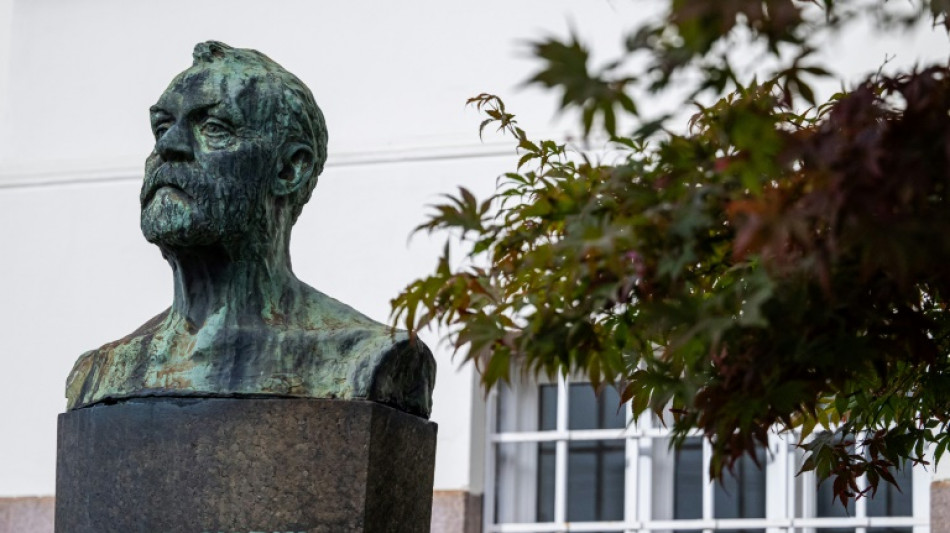
Awarded since 1901, the Nobel Prizes honour those who have, in the words of prize creator and scientist Alfred Nobel, "conferred the greatest benefit on humankind".
Last year, the Nobel Prize in Physics went to France's Pierre Agostini, Hungarian-Austrian Ferenc Krausz and Franco-Swede Anne L'Huillier for research using ultra quick light flashes that enable the study of electrons inside atoms and molecules.
The physics prize will be followed by the chemistry prize on Wednesday, with the highly watched literature and peace prizes to be announced on Thursday and Friday respectively.
The economics prize wraps up the 2024 Nobel season on October 14.
The winners will receive their prize, consisting of a diploma, a gold medal and a $1 million cheque, from King Carl XVI Gustaf at a formal ceremony in Stockholm on December 10, the anniversary of the 1896 death of scientist Alfred Nobel who created the prizes in his last will and testament.
Ferreira--PC