-
 British Grand Prix stays on MotoGP calendar until 2028
-
UEFA says boycott of World Cups stands despite FIFA backdown on private investment
-
 Britain's EasyJet flies into US hands as takeover confirmed
-
Rheinmetall sales keep surging despite cancelled naval frigate project
-
 Real Madrid sign Ivory Coast winger Yan Diomande
-
Pogacar teammate Del Toro gets new UAE deal after Tour podium
-
 How online disinformation fuelled Ceuta migrant surge
-
Stocks tread water with earnings, tech in focus
-
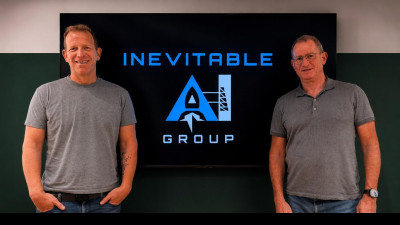 Inevitable AI Group Raises $6M From Aleph to Launch AI-Native SaaS Companies
-
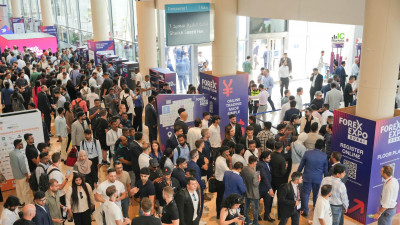
Forex Expo Dubai Announces Opportunity to Win Up to 150 Grams of Gold This September 2026
-
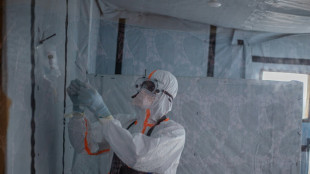 Suspected Ebola death on boat heading for DR Congo capital
-
Forlan named new Uruguay head coach
-
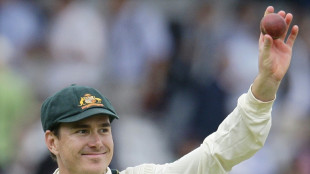 England selector North not 'hung up' on Stokes absence
-
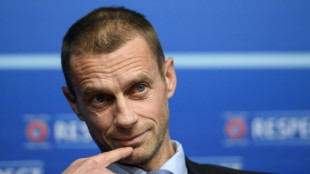
UEFA chief Ceferin: 'Underdog' leader taking fight to FIFA's Infantino
-
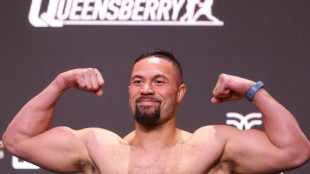 UK Anti-Doping confirm former world champ Parker's ban lifted
-
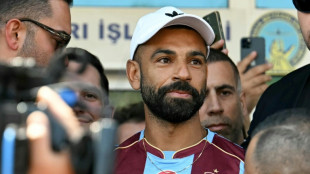
Salah completes move to Turkey's Trabzonspor
-
 French winemakers dread 'smoky taste' after wildfires
-
UK clears Paramount's takeover of Warner Bros
-
 Stocks diverge with earnings, tech in focus
-
North Korea fires ballistic missile: South Korea military
-
 England recall batsman Lawrence for Pakistan series
-
'Don't have to hide': Thai IDs, legal work give hope to Myanmar refugees
-
 Siemens shares plunge on disappointing guidance raise
-
Stocks mixed with tech firms back under pressure
-
 New Australia coach Kiss gives Japan starts to Ross, Amatosero
-
How Blundell's old school tactic ended England's 'Bazball' era
-
 'Stretch our money': Romanians face highest EU inflation
-
Israel reports troop deaths as Lebanon talks underway in Rome
-
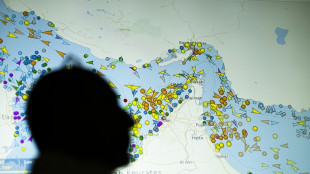 Iran says close to Hormuz plan with Oman, but reopening depends on US
-
Seeds Rybakina, Pegula, Gauff reach third round at WTA Toronto
-
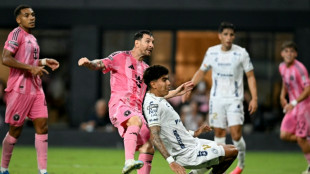 Messi scores twice to set Leagues Cup record in Miami victory
-
Police raid South Korea FA in probe into World Cup coach appointment
-
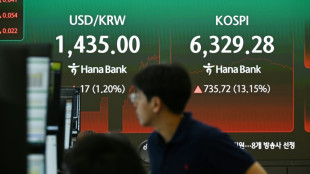 Asian stocks mostly down with tech firms back under pressure
-
Low water on Germany's Rhine river threatens new blow to economy
-
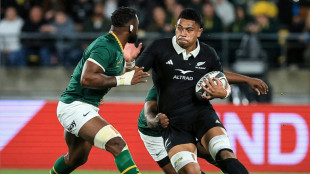 Back to the future as world champion Springboks host All Blacks
-
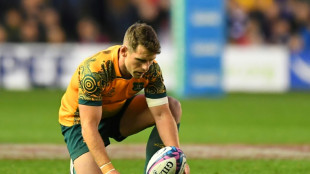
Ex-Wallabies Foley, Phipps rejoin Waratahs ahead of home World Cup
-
 India youth protests highlight mistrust in 'lapdog' media
-
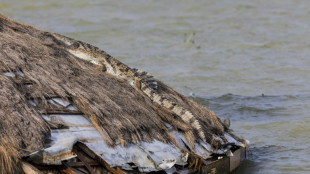
Rising Kenyan lakes push crocodiles closer to homes
-
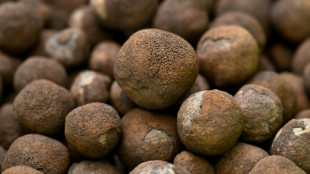 Pacific islands alarmed by Trump-backed push for deep-sea mining
-
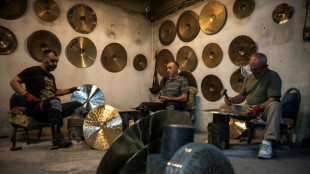
Istanbul cymbals: From Ottoman war tool to pulse of global music
-
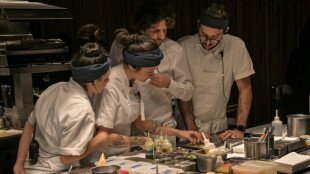 Erratic rains dictate menu at three-star Michelin restaurant in Brazil
-
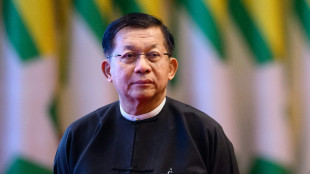
Myanmar ex-junta chief on first Thailand trip as civilian leader
-
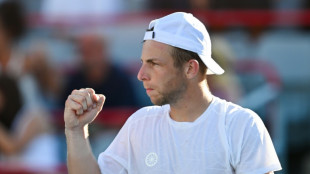 Zverev, Auger-Aliassime and Medvedev exit Montreal Masters
-
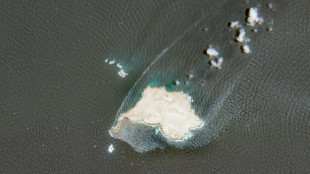
Environmental disaster looms as tanker leaks off Oman
-
 Loar Holdings Inc. Reports Q2 2026 Record Results and Upward Revision to 2026 Outlook
-
Google-parent Alphabet shakes up AI division
-
 Embattled Infantino sees minnows Malawi reach WAFCON quarter-finals
-
FIFA back Infantino, apologise for World Cup privatisation plan
-
 Seeds Rybakina, Pegula and Gauff advance at WTA Toronto event
-
Auger-Aliassime out of Montreal ATP event with injury
Scientists sound AI alarm after winning physics Nobel
American Geoffrey Hinton and British-Canadian John Hopfield won the Nobel physics prize on Tuesday for their pioneering work on the foundations of artificial intelligence, with both sounding the alarm over the technology they helped bring to life.
The pair's research on neural networks in the 1980s paved the way for today's deep-learning systems that promise to revolutionise society but have also raised apocalyptic fears.
"In the same circumstances, I would do the same again, but I am worried that the overall consequence of this might be systems more intelligent than us that eventually take control," Hinton, 76, told reporters after the announcement.
Hinton, known as "the Godfather of AI", raised eyebrows in 2023 when he quit his job at Google to warn of the "profound risks to society and humanity" of the technology.
In March last year, when asked whether AI could wipe out humanity, Hinton replied: "It's not inconceivable."
The pair were honoured "for foundational discoveries and inventions that enable machine learning with artificial neural networks," the jury said.
Ellen Moons, chair of the Nobel Committee for Physics, told a press conference that these tools have become part of our daily lives, including in facial recognition and language translation.
"Humans carry the responsibility for using this new technology in a safe and ethical way," she said.
Hopfield, a professor emeritus at Princeton, was spotlighted for having created the "Hopfield network," also known as associative memory, which can be used to "store and reconstruct images and other types of patterns in data".
The physicist joined Hinton in calling for a deeper understanding of modern AI systems to prevent them spiralling out of control, calling recent advances in the technology "very unnerving".
"You don't know that the collective properties you began with are actually the collective properties with all the interactions present, and you don't therefore know whether some spontaneous but unwanted thing is lying hidden in the works," the physicist told a gathering at his university via video link.
- 'Exceed people's intellectual ability' -
The jury said Hinton, a 76-year-old professor at the University of Toronto, used the Hopfield network as a foundation for a new network: "the Boltzmann machine".
Hinton was credited with inventing "a method that can autonomously find properties in data, and so perform tasks such as identifying specific elements in pictures."
"I'm flabbergasted, I had no idea this would happen," Hinton told reporters in a phone interview as the laureates were announced in Stockholm.
Hinton said he was an avid user of AI tools such as ChatGPT, and said he believed the technology will have "a huge influence".
"It will be comparable with the industrial revolution. But instead of exceeding people in physical strength, it's going to exceed people in intellectual ability," Hinton said.
- Nobel season -
The Nobel Prize in Physics is the second Nobel of the season after the Medicine Prize on Monday was awarded to American scientists Victor Ambros and Gary Ruvkun.
The US duo was honoured for their discovery of microRNA and its role in how genes are regulated.
Awarded since 1901, the Nobel Prizes honour those who have, in the words of prize creator and scientist Alfred Nobel, "conferred the greatest benefit on humankind".
Last year, the Nobel Prize in Physics went to France's Pierre Agostini, Hungarian-Austrian Ferenc Krausz and Franco-Swede Anne L'Huillier for research using ultra quick light flashes that enable the study of electrons inside atoms and molecules.
The physics prize will be followed by the chemistry prize on Wednesday, with the highly watched literature and peace prizes to be announced on Thursday and Friday respectively.
The economics prize wraps up the 2024 Nobel season on October 14.
The winners will receive their prize, consisting of a diploma, a gold medal and a $1 million cheque, from King Carl XVI Gustaf in Stockholm on December 10, the anniversary of the 1896 death of scientist Alfred Nobel who created the prizes in his will.
J.Oliveira--PC